



















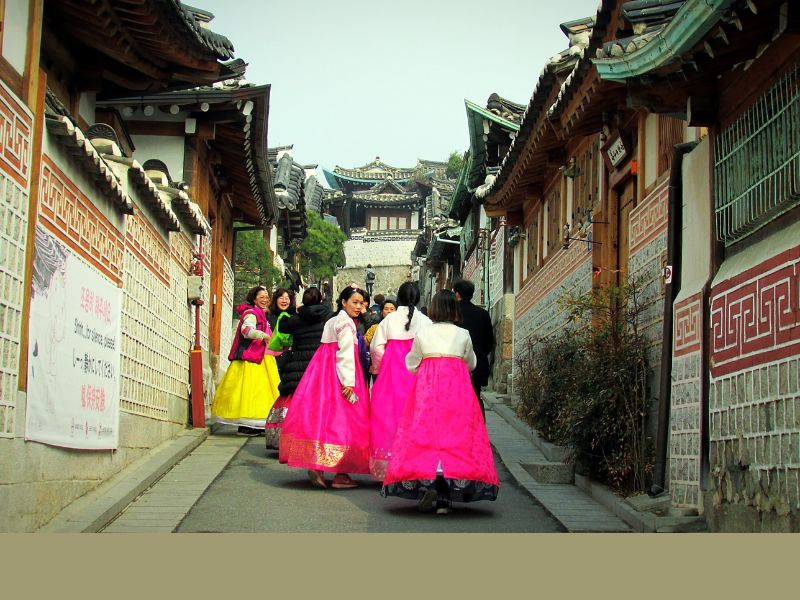
Seoul, located on the banks of the Han River, has been the capital of Korea since 1394, with the exception of a brief period between 1399 and 1405. Following the division of the country in 1948, it continued to serve as the capital of South Korea. The city suffered extensive damage during the Japanese occupations (1592–1598 and 1910–1945) and the Korean War (1950–1953).
Today, Seoul is a beautiful and well-organized city where modern and traditional architecture blend harmoniously. With its wide boulevards, skyscrapers, temples and palaces, it has a distinctive character. The historic district of Seoul lies north of the Han River, which runs through the city. Gangnam, the district made famous worldwide by the song Gangnam Style, is located in the modern part of the city, south of the river.
Armed with a map, I tried to explore Seoul in a very short time. When I left the city, I couldn't help wishing I had more time to discover it.
Text and Photographs: Sevgin Akış Roney
Seoul City Walls (Hanyangdoseong)
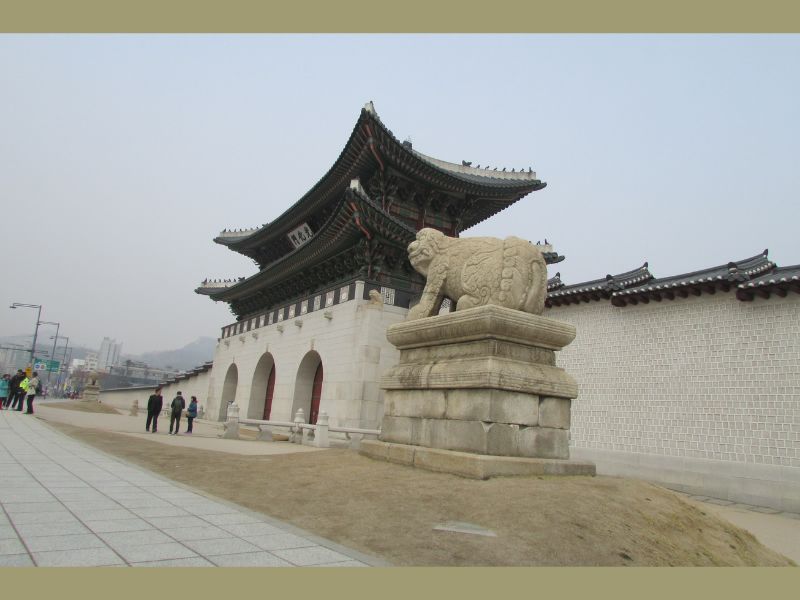
The walls surrounding Seoul's historic district are said to stretch for 18.6 kilometres. Built between 1396 and 1398, they originally had eight gates: four large and four small. Two of these gates were completely destroyed during the Japanese occupations.
Sungnyemun, also known as Namdaemun (South Gate), is the oldest and largest of them all. It was set on fire in an arson attack in 2008 and reopened five years later following restoration. It is regarded as Korea's number one national treasure. Although I didn't go inside, I took a photograph of it from the outside.
Another gate I photographed was Heunginjimun, also known as Dongdaemun (East Gate), which is apparently the second-largest gate. I would certainly have loved to walk along the city walls if I had had more time.
Palaces
There are six palaces within the historic walled city, and all of their names end with the word "gung", meaning "palace". Like most traditional buildings in the Far East, they are made entirely of wood. Five of them were built during the Joseon Dynasty.
Gyeongbokgung, which suffered several attacks during the Japanese occupations, is the oldest of these palaces. Changdeokgung, included on UNESCO's World Heritage List, is one of Seoul's major tourist attractions, particularly because its gardens are a fine example of traditional Korean garden design.
Unfortunately, due to my limited time, I couldn't visit any of the palaces dating back to the Joseon period. The only palace I managed to see was Unhyeongung, which was built in the second half of the 19th century for the father of Emperor Gojong. It was smaller than the others, which made it possible to visit in a short time.
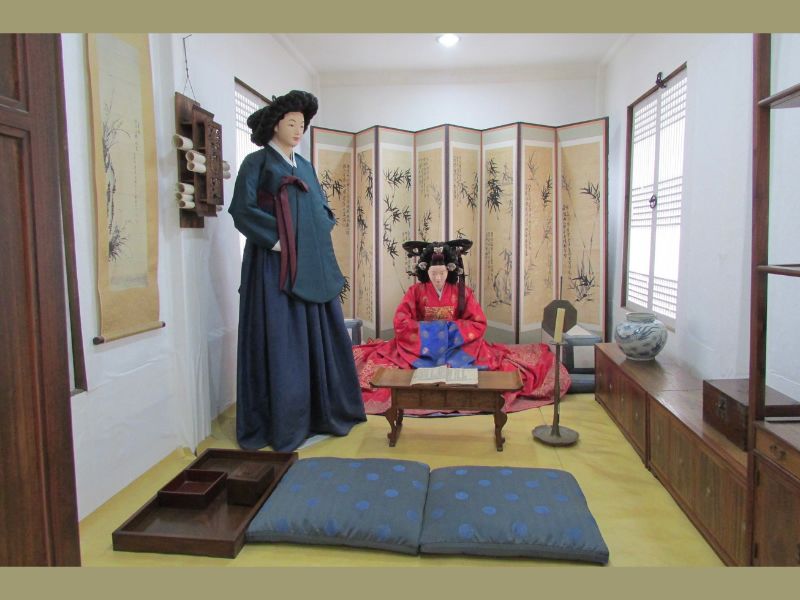
I was struck by the simplicity of the place. Seeing floor seating and bedding in a royal palace was certainly surprising for someone like me, who comes from a society that loves grand and magnificent palaces!
Shopping Districts: Myeong-dong, Insa-dong, Namdaemun and Dongdaemun
In fact, South Korea as a whole, and Seoul in particular, could be described as one enormous shopping mall. There is a wide range of shopping opportunities, from multi-storey shopping centres to lively night markets.
On the day I arrived in Seoul, the first place I visited was the famous shopping (and financial) district of Myeong-dong. The area's landmark is a cathedral of the same name, which is more than a hundred years old and is said to be the first Catholic church built in Korea.
The crowded streets were full of shops belonging to well-known brands, small boutiques, neon signs, restaurants and street vendors. What caught my attention first was the sheer number of cosmetics shops. Later, when I heard that South Korea has one of the highest rates of cosmetic surgery in the world, the abundance of such shops no longer surprised me. Apparently, men are almost as interested in cosmetics as women! Before returning to my room, I satisfied my hunger with some delicious food from the street vendors. Insa-dong consists of a long main street and several smaller streets branching off it. The area is home to antique shops, art galleries, traditional handicraft and souvenir stores, museums, cafés and restaurants.
Although Insa-dong, which became pedestrian-only in the 2000s, was crowded and rather touristy, I didn't find it particularly appealing. Nevertheless, I would recommend it to anyone who enjoys shopping. The history of Namdaemun Market, located very close to Sungnyemun Gate, dates back to the Joseon Dynasty. In addition to retail shops, there are also wholesale businesses. Almost everything imaginable is sold here, from kitchenware and stationery to clothing and toys.
I quickly walked around Namdaemun in the late afternoon, and it reminded me of the Tahtakale and Mahmutpaşa areas of Istanbul. Dongdaemun, located near Heunginjimun Gate, is one of Seoul's largest shopping districts. Life never seems to stop here, and the area is particularly lively late at night. Traditional and modern shops stand side by side, selling almost everything, although Dongdaemun is especially famous for its textile products.
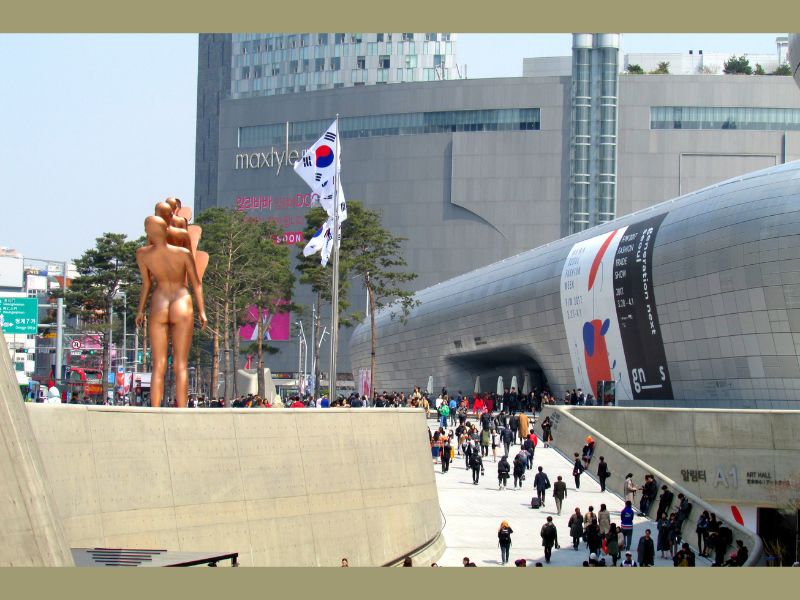
With various fashion festivals held throughout the year, it is a favourite destination for young designers. Dongdaemun Design Plaza (DDP), designed by the world-famous Iraqi-British architect Zaha Hadid, is a fascinating cultural and arts centre. Covered with aluminium panels, its enormous structure resembles a giant spaceship.
Completed in 2013, the DDP houses exhibition and conference halls, a museum and several small galleries. By chance, I happened to visit during a fashion and handicrafts week. The crowds of young people wandering around the DDP in their extravagant outfits created quite a visual spectacle! Almost all of them seemed eager to pose, so I took plenty of photographs.
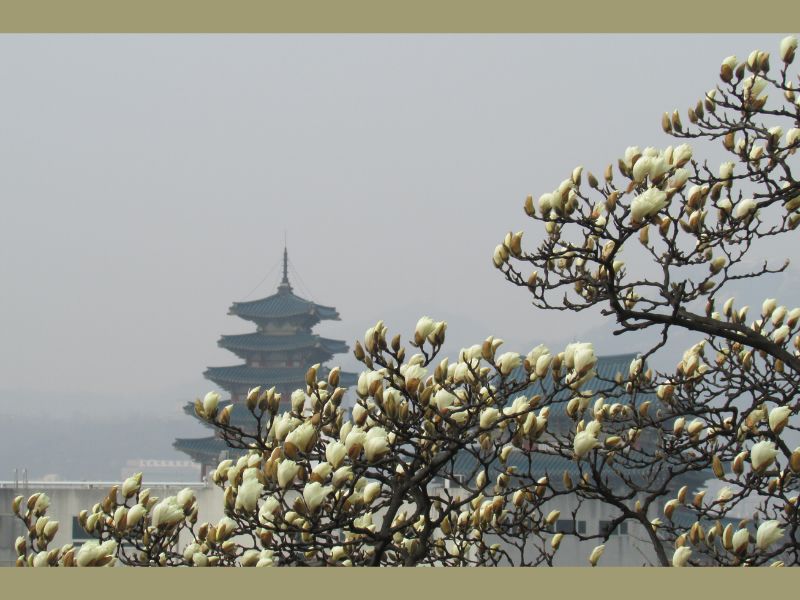
Bukchon and Namsangol Hanok Villages
In my opinion, Bukchon Hanok Village is one of the most interesting neighbourhoods in Seoul.
"Hanok" is the Korean word for traditional Korean houses. One of their most important features is that they remain cool in summer and warm in winter. Their designs therefore vary according to the geography of the area in which they are located, as well as the social status of their owners.
This historic neighbourhood, which once housed hundreds of residences belonging to members of the royal family and aristocrats, naturally provides a popular setting for filmmakers.
I saw many women (and a few men!) walking through the streets wearing hanbok, the traditional Korean costume. At first, I thought a film was being shot. Then I realised that anyone could rent these traditional outfits and stroll around in them!
The following day, I visited Namsangol Hanok Village. This was an artificial village where five restored traditional houses, each representing a different social class ranging from a general to a carpenter, were displayed across a large area.
I didn't find it particularly appealing. However, if you happen to visit, make sure to look for the "Millennium Time Capsule" monument in one corner of the village garden. It was created in 1994 to mark the 600th anniversary of Seoul becoming the capital of Korea. A surprise awaits you!
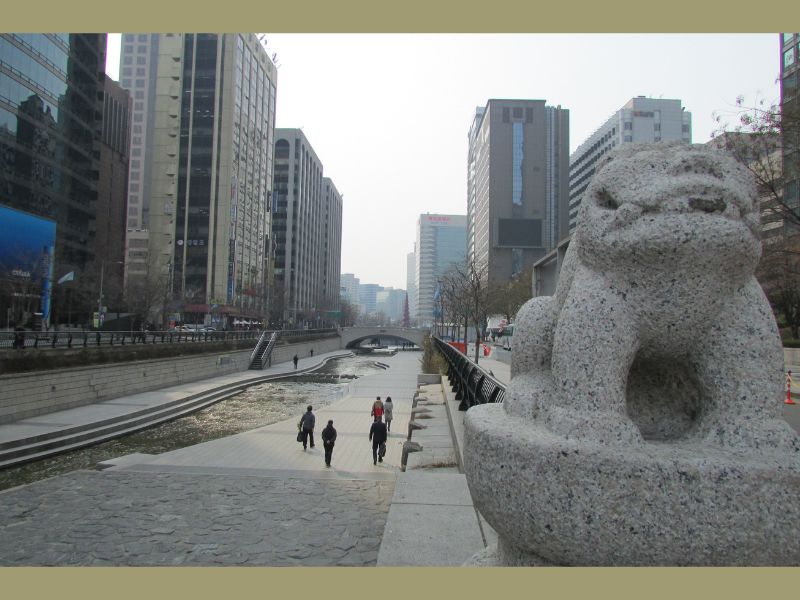
Cheonggyecheon Stream
Restored in the early 2000s, Cheonggyecheon has become a pleasant place for walking. It begins at Cheonggye Plaza, where a giant sculpture resembling a red-and-blue striped snail stands, and flows all the way to the Han River.
According to different sources, the stream is either approximately 11 or 8.5 kilometres long. There are 22 bridges crossing it.
Seoul residents enjoy spending time walking along Cheonggyecheon, parts of which are beautifully illuminated at night.
I also spent a long time walking along the stream, crossing its bridges and occasionally going down to the water's edge. During my walk, I spotted a duck with an unusually bright colour that I had never seen before.
Later that same night, I happened to see a similar duck on television, following its owner just like a dog. I was quite surprised! I subsequently learned that this species, known as the Mandarin duck, is native to East Asia and symbolises fidelity.
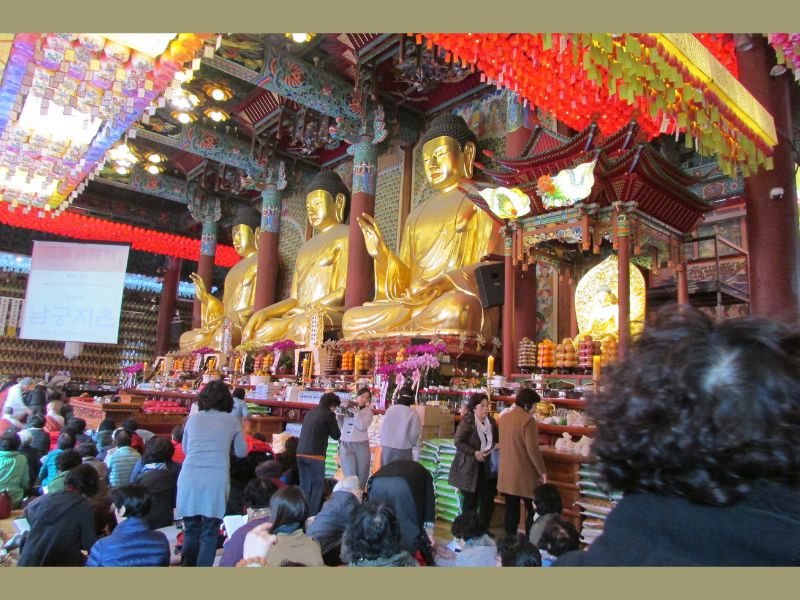
Jogyesa Temple and Jongmyo Shrine
Jogyesa Temple, which I reached on foot from Insa-dong, is apparently the most important Buddhist temple in Korea.
During my visit, I happened to arrive while a ceremony was taking place, with a large number of people attending. The entire temple was decorated with colourful lanterns. Amid the scent of incense, chanting and prayer flags fluttering in the trees, people were quietly praying.
Despite the crowds, I felt a deep sense of reverence and quietly whispered my own prayer.
One interesting feature of Jogyesa Temple is that it offers a programme allowing visitors to stay there for a certain period and experience Buddhist teachings in their daily lives.
Another religious site I visited in Seoul was Jongmyo Shrine.
This special shrine was built in the 14th century by the first ruler of the Joseon Dynasty, which adopted Confucianism as its official ideology. It was destroyed during the Japanese invasion of 1592–1598 and subsequently restored.
The shrine's exceptionally long main building contains rooms dedicated to the spirits of the royal family members and their spouses.
Ceremonies honouring the spirits of deceased members of the dynasty are held in the large stone courtyard in front of the building. Remarkably, this tradition continues today, with ceremonies taking place on the first Sunday of every May.
Listed as a UNESCO World Heritage Site, Jongmyo impressed me with its simplicity and tranquillity.
Places I Couldn't Visit...
Of course, it was impossible to do justice to such an enormous city in just two and a half days. So, let me offer a few suggestions for places you might want to visit if you have more time. First, there is Gangnam, one of Seoul's wealthier neighbourhoods, which I mentioned earlier. In Korean, "gang" means "river" and "nam" means "south", so Gangnam is naturally located south of the Han River! Psy's K-pop hit also describes the lifestyle associated with this district. Seoul Tower, located in Namsan Park, is another major attraction, just like towers in cities around the world. I would recommend it if you enjoy admiring cities from above! For those who enjoy visiting public squares, I would suggest Gwanghwamun Square. From the photographs I have seen, there are statues of two important figures in Korean history. The first is King Sejong, one of the rulers of the Joseon Dynasty and the name most closely associated with the creation of the Korean alphabet. The second is Admiral Yi Sun-shin, remembered for his great victories during the Japanese invasions of 1592–1598. You can also visit Itaewon, a district where many foreigners live and where you can find numerous restaurants serving cuisine from different countries. According to people who have been there, there are even Turkish restaurants and a Turkish Maraş ice cream vendor!
As an academic, I was particularly disappointed that I couldn't visit Ewha Womans University. Founded nearly 130 years ago, its campus and the surrounding cafés, boutiques and other places are said to be lovely. (I wonder if I could teach there during a summer school programme!) As someone who loves street art, I would also have liked to visit Ihwa, a neighbourhood famous for its wall paintings and murals.
In his book The Art of Travel, Alain de Botton says that "guidebooks, when they praise a place, force us, their readers, to conform to their authoritative tastes." Please don't consider my short article a guidebook. Go to Seoul and explore it as you please!