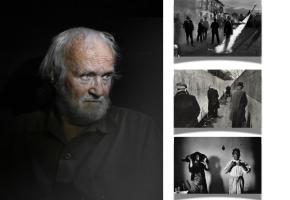




















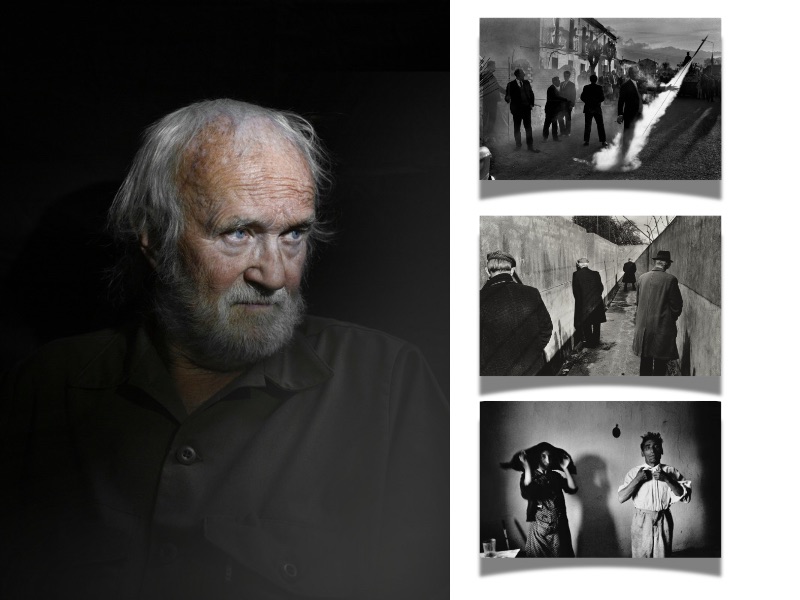
Josef Koudelka, who made his name around the world with the photographs he took on the streets of Prague in 1968, became a witness who spent his life wandering beyond borders. During his years in exile, he photographed nomadic communities, devastated landscapes, and human solitude. His lens revealed both the political upheavals of an era and the fragility of the human spirit.
Written by: Şahinder Önder Fişenk
Discovering Photography
Josef Koudelka was born on January 10, 1938, in Boskovice, a town in Moravia, within the borders of Czechoslovakia. Young Josef was introduced to photography at the age of fourteen, thanks to Dyčka, a friend of his father who was a baker and also an amateur photographer. Having saved money by selling wild strawberries he gathered from the bushes along the roadside outside Boskovice, young Josef bought a 6x6 bakelite camera and began photographing his family and the landscapes surrounding his hometown.
Between 1956 and 1961, he studied aeronautical engineering at the Technical University in Prague. While at university, he met the photographer and critic Jiří Jeníček, who ran a photography club for students. Jeníček encouraged Koudelka to hold his first exhibition in 1961 at the Semafor Theatre in Prague. At the opening of this first exhibition, which featured black-and-white photographs measuring 30 x 40 cm that he had printed himself, he met Anna Fárová, an important figure in Czechoslovak photography. Fascinated by the world of theatre, Koudelka began photographing stage productions at Prague's experimental theatres for theatre magazines.
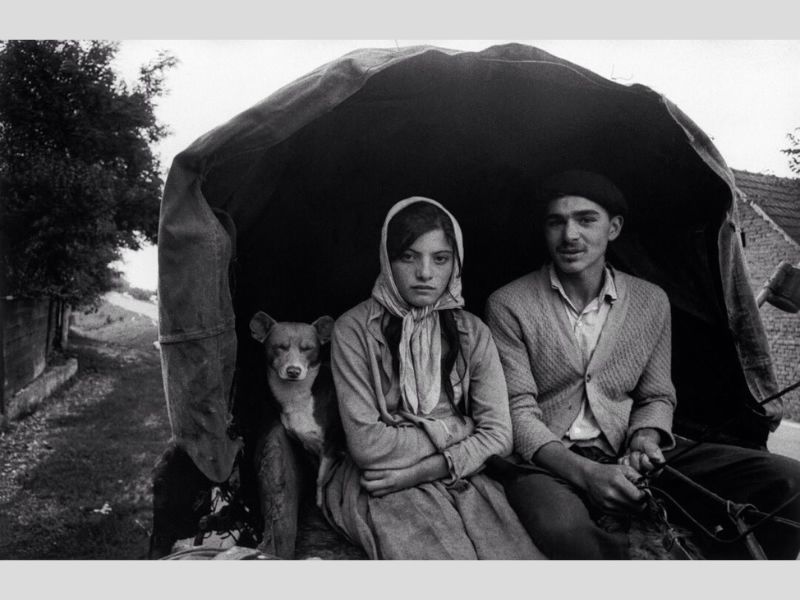
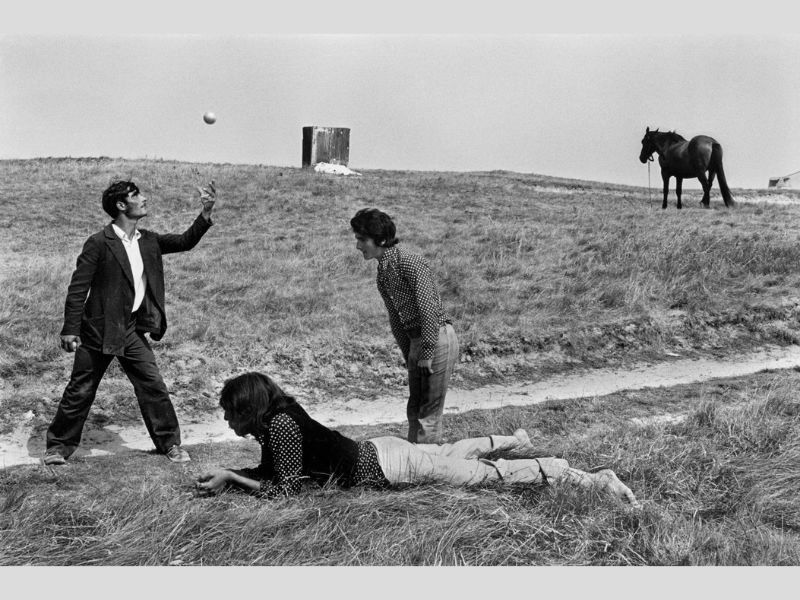
Between 1961 and 1962, he travelled to Eastern European countries, particularly Slovakia and Romania, to photograph the lives of Roma communities living there. Travelling with nothing but his equipment, a backpack, and a sleeping bag, Koudelka felt a strong affinity with the Roma people. He shared his work and ideas about the Roma with two Czech friends, Markéta Luskačová and Dagmar Hochová, both photographers who were able to offer constructive criticism and comments on his work.
Professional Career
Until 1967, Koudelka worked as an aeronautical engineer in Prague and Bratislava. After that, he left his engineering career behind and began working as a full-time photographer.
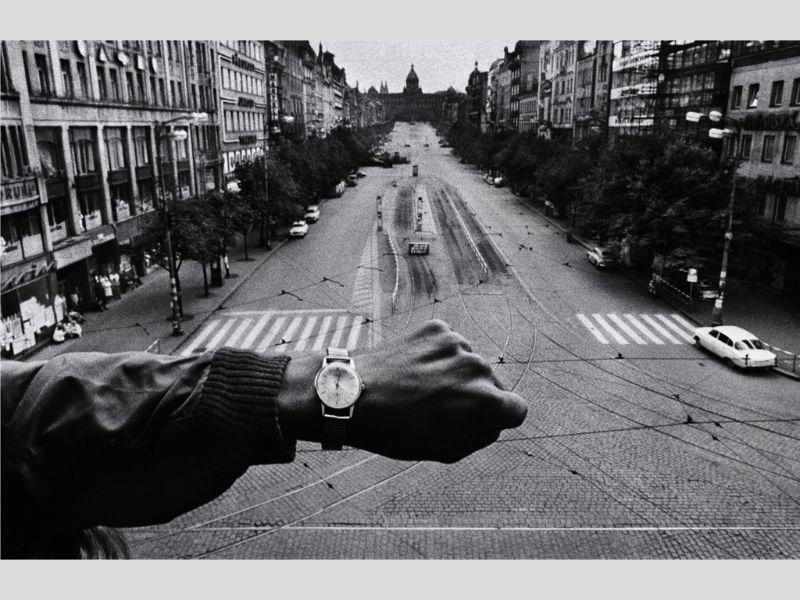
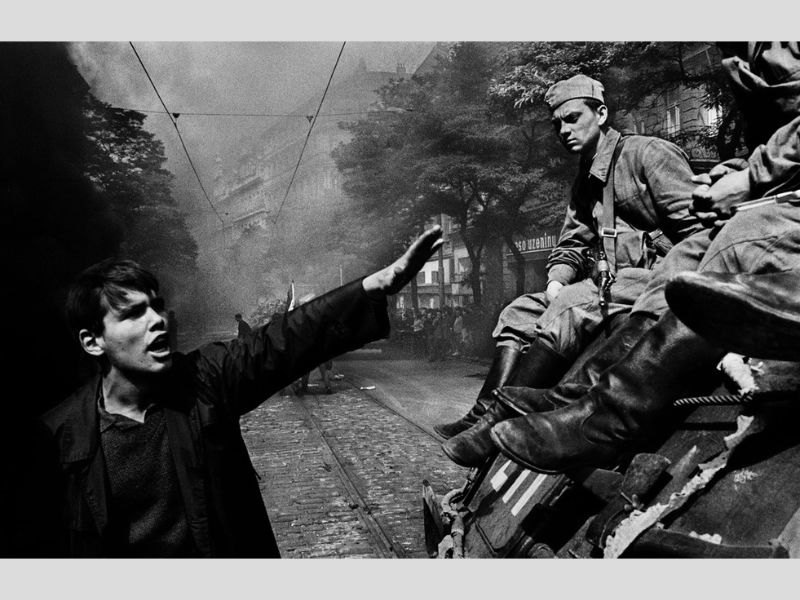
In 1968, one day before the Warsaw Pact armies invaded Prague, he returned to the city after completing his work on the Roma people in Romania. This gave him the opportunity to photograph, firsthand, the clashes between the Czechoslovak people and the Soviet forces, as well as the chaotic life unfolding in the streets.
These photographs were secretly taken out of the country for the safety of Koudelka and his family. The Magnum agency undertook their distribution without revealing Koudelka's identity and supplied them to the international press. The photographs appeared anonymously in several leading international news magazines, credited only with the initials PP (Prague Photographer), without identifying the photographer.
The photographs attracted widespread attention. The story of this unknown Czech photographer earned the Robert Capa Gold Medal from the Overseas Press Club. In fact, Elliott Erwitt, then President of Magnum's Board of Directors, used animation techniques to produce a short film for CBS News based on these photographs.
In 1970, uncertain about his safety in his home country, Koudelka asked his colleagues at Magnum to help him emigrate to England. They told the Czechoslovak Ministry of Culture that Magnum wanted to provide Koudelka with a grant to photograph the Roma people of Europe and that he had been granted a visa. After arriving in England, he applied for political asylum. Koudelka officially joined Magnum in 1971.
Years in Exile
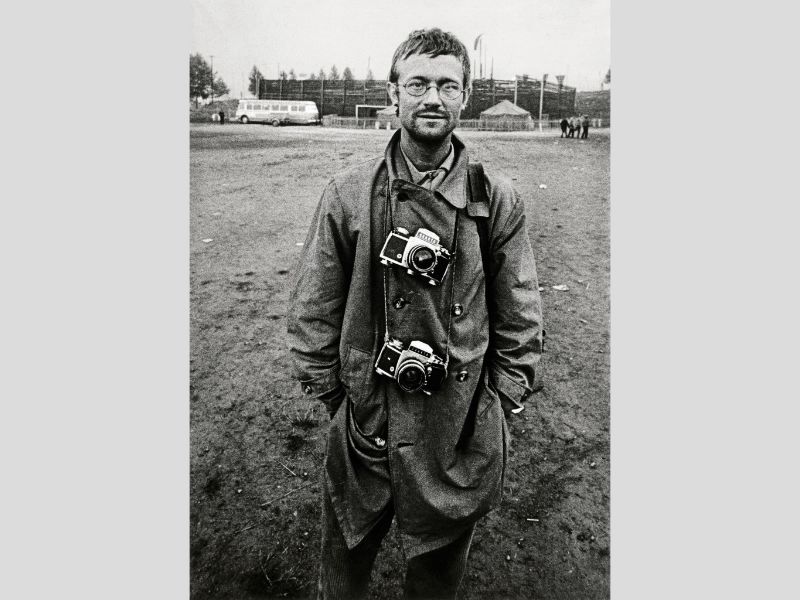
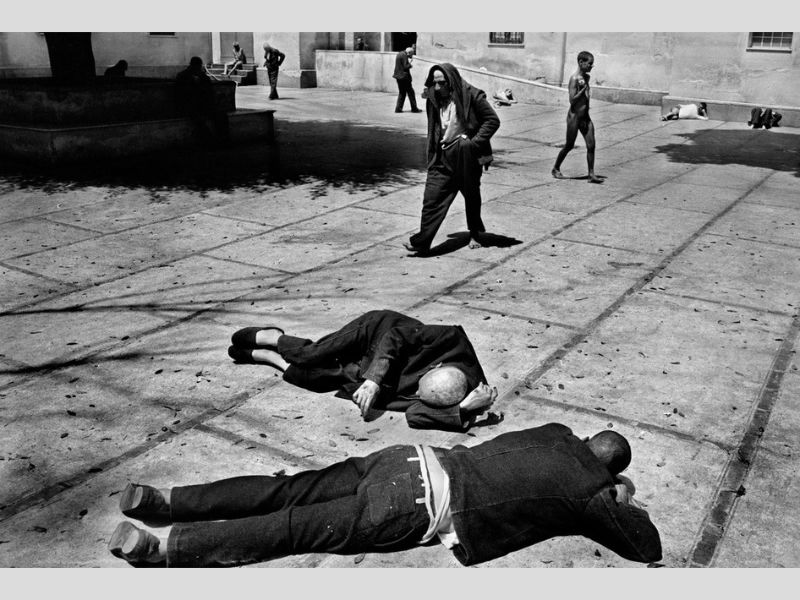
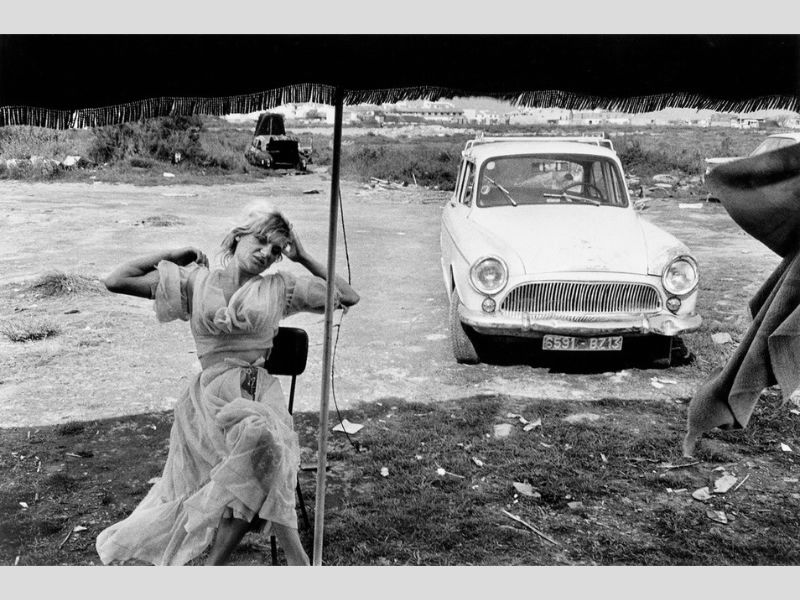
From 1970 to 1989, Koudelka spent his time travelling. During these journeys throughout the United Kingdom and other European countries, he photographed everyday life, focusing on major Roma festivals and religious events across Europe. For this reason, his journeys began in spring and ended in October. He spent the winters selecting and printing his photographs. Throughout his travels, Koudelka built a network of contacts that included Magnum photographers such as Allan Potter, as well as other photographers and editors. He used his home in the United Kingdom as his base. Koudelka was known as a disciplined, hardworking, and friendly colleague. Because of his reclusive lifestyle, long hair, and beard, his Magnum colleagues nicknamed him "Saint Joseph."
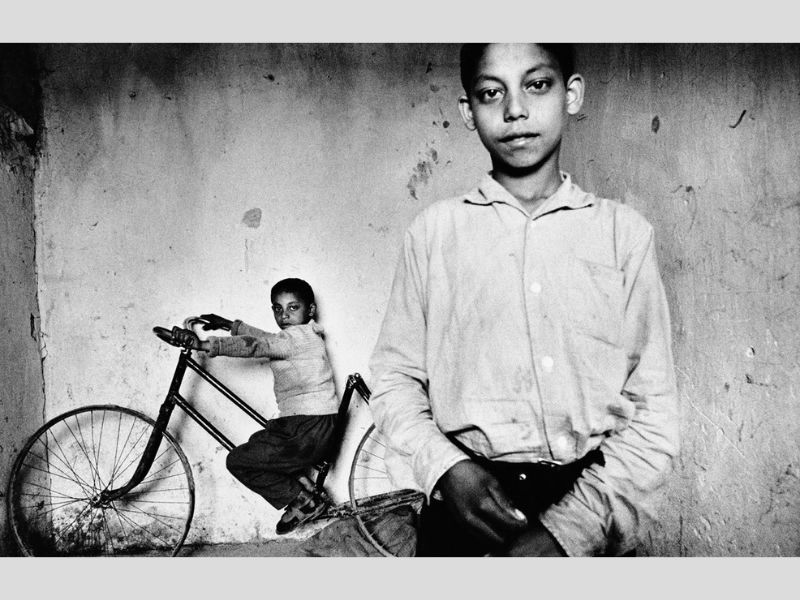
In 1975, he published his first book, Gypsies. In the late 1980s, Koudelka began working with panoramic photography, which had fascinated him since the beginning of his career. Commissioned by La Mission Photographique Transmanche, a government organisation, Koudelka used his panoramic camera to document the construction of the Channel Tunnel.
Unable to obtain British citizenship, the photographer moved to France in 1987 to acquire French citizenship. He published photographs taken during his travels over the previous two decades in a book titled Exiles. The project reflected the freedom offered by a nomadic existence, alongside the feelings of being lost and profoundly isolated.
Later Years
Following the fall of the Berlin Wall in 1989 and the dissolution of the Soviet Union, Koudelka travelled to Prague for the first time in twenty years, in 1990. Over the next two years, he travelled throughout Eastern Europe, particularly the Ore Mountains, documenting the destruction caused by industrialisation in territories that had been under communist rule. His photographs depicting environmental disasters and barren landscapes were published in 1994 in a book titled The Black Triangle.
In 1991, he received the Henri Cartier-Bresson Award, presented by the National Centre of Photography and American Express, followed by the Hasselblad Foundation Award in 1992. In 1998, he published his work documenting South Wales under the title Reconnaissance: Wales. In 2001, he also published a book titled Lime Stone, featuring photographs that captured the devastation caused by limestone mining.
In 2002, he was honoured by the French Ministry of Culture with the Order of Arts and Letters. In the same year, his work was presented in a major retrospective exhibition at the National Gallery in Prague, and he was awarded the Medal of Merit of the Czech Republic by the then Czech President, Václav Havel.
In June 2008, he became involved in Frederic Brenner's project Israel and the West. As part of this project, Koudelka travelled to Israel and the West Bank seven times over a period of five years. The photographs he took during this time were published in a book titled Wall. Following this project, Koudelka participated in the exhibition Un-creationalongside the Milan collective, Studio Azzurro, and American artist Lawrence Carroll. Art critic Charlotte Higgins described Koudelka's photographs in the Un-creation exhibition as "harsh images of human destructiveness."
With a long career that has resulted in an extensive and unique visual archive, Koudelka donated many important parts of his collection to the Czech state. He currently resides between France and Prague and continues his work documenting the European landscape. He has two daughters and one son from different marriages.
Photography
In the early years of his career, while working as a photographer for Czech theatre, Koudelka developed a visual and graphic language characterised by high-contrast lighting, grainy photographs, and powerful compositions. He visualised images in advance, used repetition and cropping, and even manipulated images to capture the details he was pursuing. In this way, Koudelka produced striking photographs that captured the viewer's attention. He succeeded in capturing the essence of every theatrical performance he photographed. These early works had a significant influence on the development of his later photographic style.
Beginning his career in photojournalism by documenting the Soviet invasion of 1968, Koudelka secured his place in photographic history with images that recorded the Czech people's massive and spontaneous protests against Soviet domination.
Because of his deep affection for the Mediterranean region, Koudelka frequently travelled to Italy, Spain, Greece, and France for his photographic projects. A close friend of Ara Güler, the photographer also visited Istanbul from time to time.
Until 1986, Koudelka worked with 35mm photography. After that, he preferred the panoramic format. Through the dramatic power of this format, he succeeded in visualising the spatial relationship between humans and nature, and between individuals and the world. Using this format, he produced iconic images of environmental destruction caused by human activity and the fragility of human civilisation.
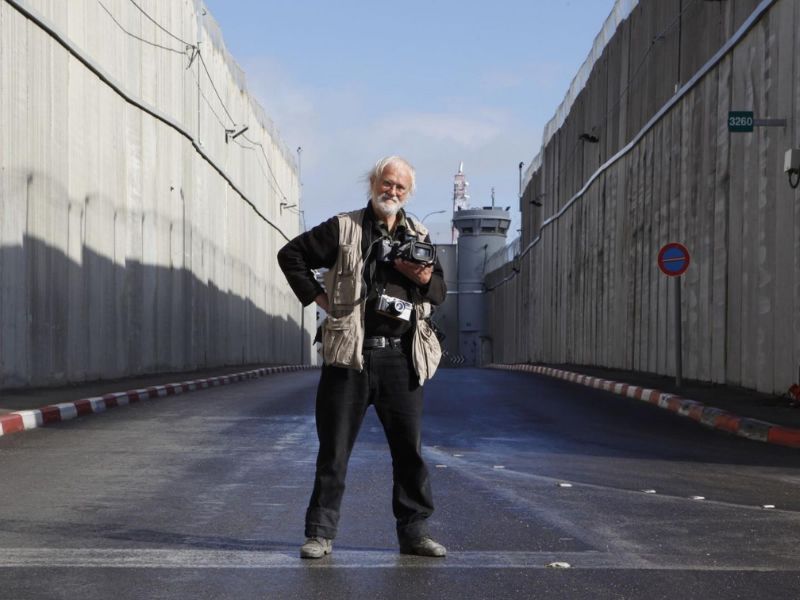
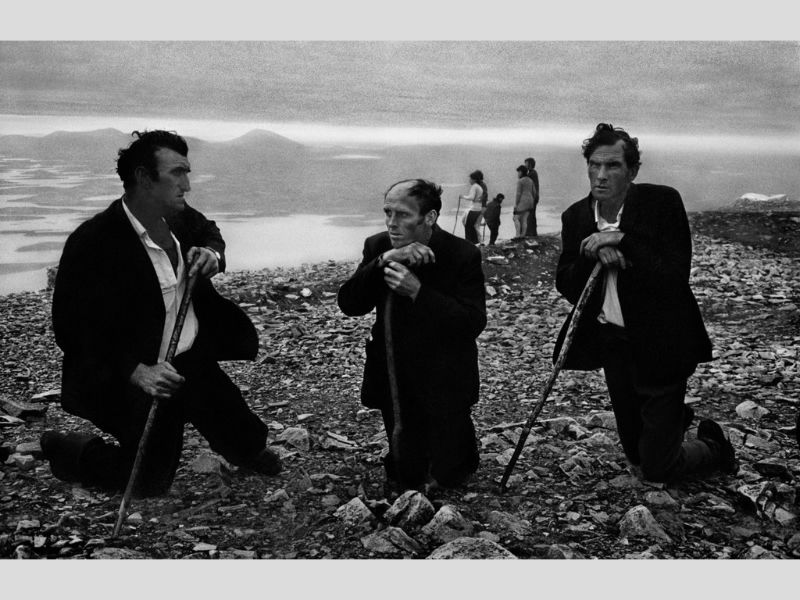
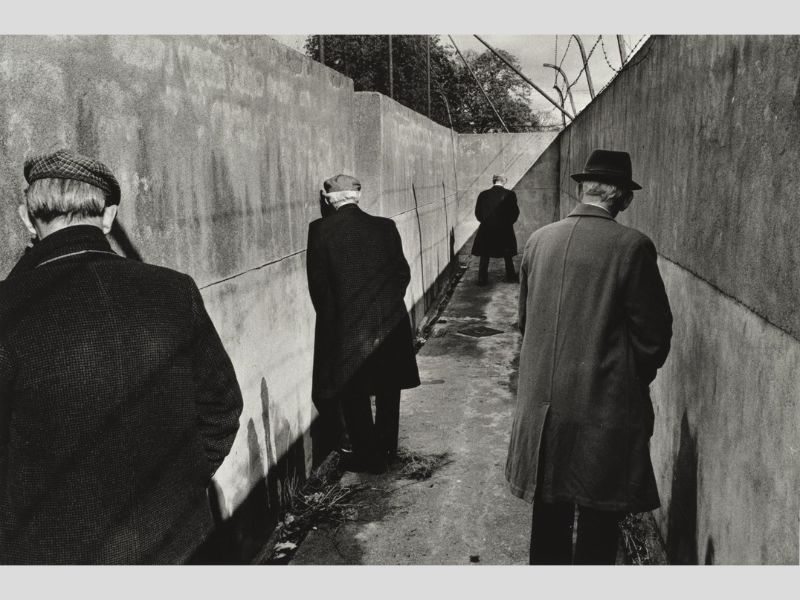
Throughout his career, Koudelka has been praised for his ability to capture the presence of the human spirit amid dark landscapes. Desolation, separation, despair, and alienation are recurring themes in his work. His subjects sometimes appear as though they have stepped out of fairy tales. Yet there is also hope in some of his photographs. With his uniquely powerful expressive ability, Josef Koudelka continues to influence new generations of photographers as one of the world's most important documentary photographers.