



















At First Glance, Chaos
The first thing that greeted me as the doors opened was a wave of heat: humid, heavy air filled with countless unfamiliar scents. Until that moment, I had never truly known what it felt like to be so far away from home. My first moments in Sri Lanka did not give me the feeling of being on a typical holiday, but rather a deeper sense of travel and unfamiliarity. As soon as we stepped out of the airport, something else began: the sound of horns, tuk-tuks, cars moving as if they were passing through one another, and life spilling out onto the streets...
Text: Buse Ünal
Photography: Buse Ünal – Furkan Yavuz
Whenever I visit a country for the first time, I first notice not what it is, but what it is not in the way I have come to understand the world. My first moments in Sri Lanka were exactly like that. The traffic had its own logic, but not one I was familiar with. The way people spoke to one another, the rhythm of the streets, religious practices, the smell of food, even the silence itself — none of it felt familiar. For a while, I simply tried to make sense of everything happening around me. Perhaps this was where the journey truly began. But if you take a moment to look and listen, you begin to realise that there is an order within the chaos.
Colombo: Where Everything Happens at Once
The city did not present itself in a single colour or with a single sound. Walking through its streets, it was possible to encounter different religions, languages and faces all at once. A mosque just a few metres away, a Buddhist temple on another street, people across the road immersed in an entirely different rhythm... The city was constantly in motion, yet there was a strange calmness within that movement. Food wrapped in banana leaves was being sold on the pavements; faded advertisements on weathered billboards had turned a sun-bleached yellow. Everything was unfamiliar — things I had never seen or tasted before.
The hot, humid air mingled with the scent of incense and roasting spices. Every now and then, the smell of the sea would briefly drift in before disappearing again. The city was constantly moving, yet there was a strange sense of calm within it. People seemed busy, but never panicked. Traffic was chaotic, yet everyone appeared to know exactly where they were going. And there I was, on my very first day, slowly becoming part of the flow of life without fully understanding any of it.
Towards evening, the sun sank behind the city's skyline, turning from orange to crimson as it disappeared over the Indian Ocean. Watching my first sunset, I thought to myself: this place was unlike anywhere I had ever seen before. No matter how prepared I thought I was, Sri Lanka welcomed me exactly as it was — crowded, noisy and wrapped in that peculiar warmth.
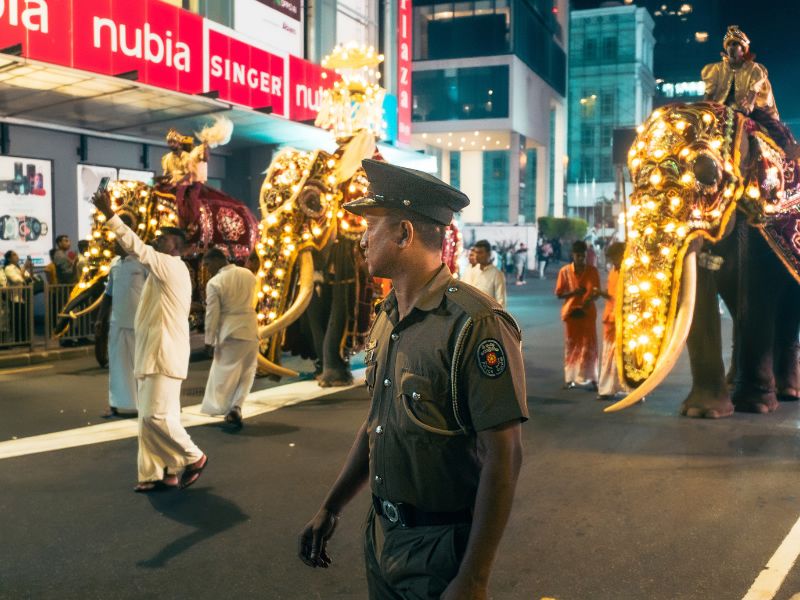
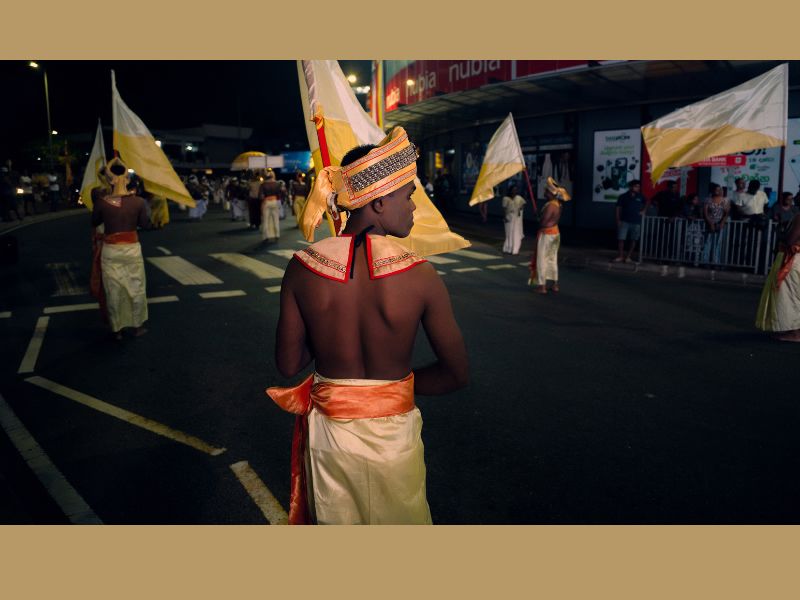
That same evening, we came across the Esala Perahera celebrations. Streets had been closed off, people were dressed in traditional clothing, and elephants — among the most significant symbols of religious rituals — were making their way through the city. The drums and elephants were remarkably close. With the lights, the smoky scent of incense and songs rising from the crowds, the streets seemed to transform into a moving fresco, where every figure carried its own meaning. With the beginning of this festival, I realised that the island, whose mystical atmosphere I had already begun to feel, was not merely a country but a centre of rituals and traditions. An international kite festival had also begun that day. When I looked up, the sky was filled with colourful pieces of paper, almost completely covered.
I think it was the first time I realised that being a stranger somewhere was not necessarily a bad thing. I did not fully understand what people were celebrating, but their joy and curiosity became contagious. Sometimes, you do not need to understand something to become part of it; simply being there is enough.
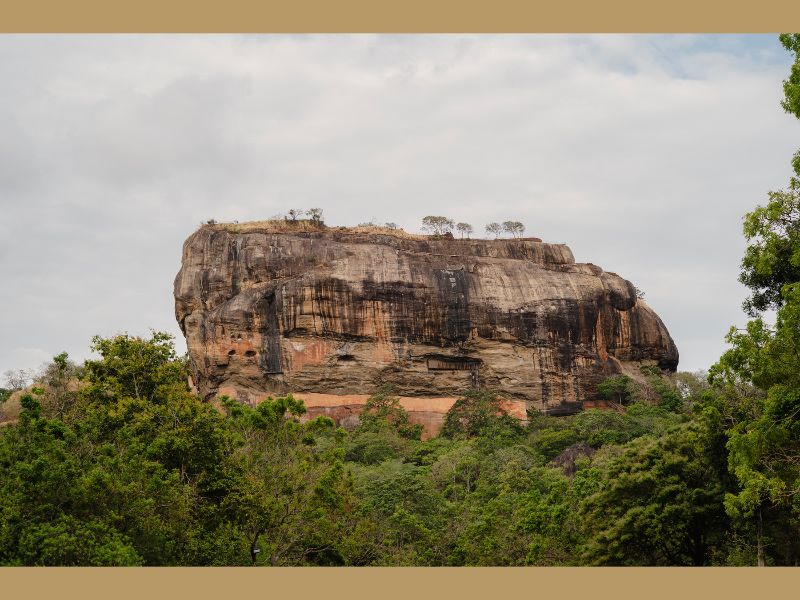
Sigiriya: Height and Fear
As we travelled further away from Colombo, the city gradually disappeared behind us. Concrete gave way to scattered settlements, small shops, fields and increasingly dense greenery. Looking out of the window, we could feel Sri Lanka shifting into a different rhythm. Even the air seemed to change. The smell of exhaust fumes from the city was replaced by something fresher.
When I first saw Sigiriya from a distance, I could hardly believe my eyes. In the middle of a flat landscape, with no hills or mountains surrounding it, stood an enormous rock: Lion Rock. Its reddish-brown surface almost glowed in the afternoon sunlight. It looked as though someone had placed an object into the landscape after everything else was already there.
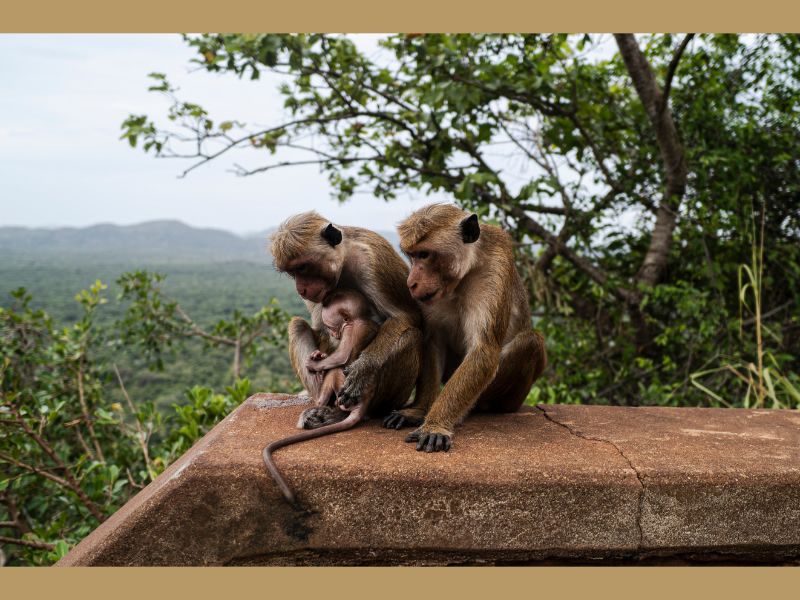
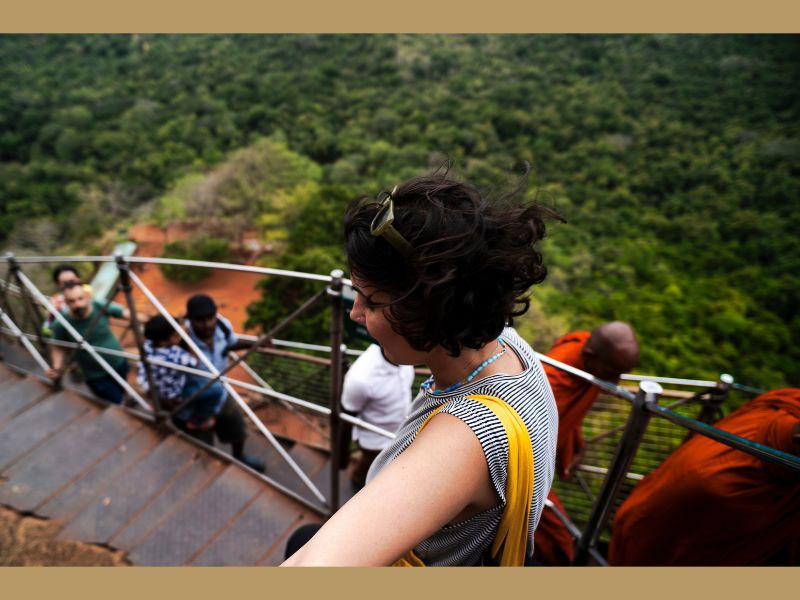
As I climbed, I experienced the story of this rock — transformed into a palace and fortress by King Kashyapa in the fifth century — less through historical knowledge and more through my own body. The first steps led through shaded gardens and cool pools. My breathing grew heavier, and my palm became damp against the iron railing. As I approached the summit, the wind grew stronger. The higher I climbed, the more my fear and curiosity intensified. Sometimes, you realise that fear is simply another form of curiosity. Standing among the ruins at the top, I looked down at the vast green landscape. The path we had just taken was now barely visible. Monkeys wandered around us. They were accustomed to people, yet still maintained a certain distance. Here, animals and humans, everyday life and the wild were not separated by such clearly defined boundaries.
In Dambulla, rather than climbing up a rock, we went inside one. Walking through the cool, echoing darkness of the Rangiri Dambulla Cave Temple, my eyes could initially make out nothing. Then, gradually, in the flickering candlelight, hundreds of golden Buddha statues emerged, along with reddish and orange patterns painted across the ceilings and walls. I could feel the cold stone beneath my feet; we seemed to become one with the ground. I began to think that a place is not simply somewhere you exist within. Sometimes, a place takes the lead before you do, deciding where you should stand and how quietly you should speak.
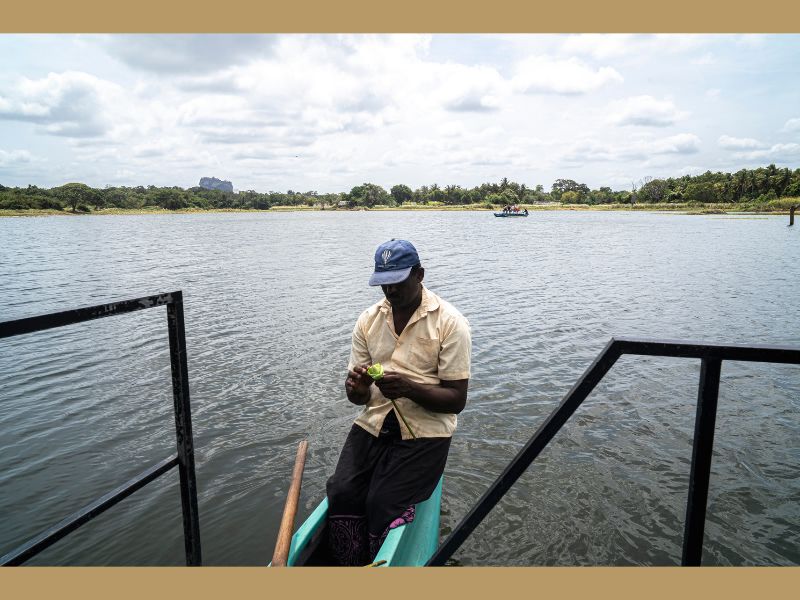
At Lake Egodawewa, we entered the kitchen of a local family and experienced something much simpler and more everyday: we cooked together. Smoke from the wood fire stung my eyes. The smell of frying onions and coriander, along with the sizzling sounds coming from the bottom of the pot, replaced conversation. At times, I did not fully understand what was being said. Some things did not need to be said at all. But preparing a meal together did not require a common language.
Still, we had been warned several times by local people that we should not stay outdoors at night in the Sigiriya region. A reality easily forgotten amid the daytime crowds of tourists returned with darkness: this was still the heart of the wilderness, and we were merely travellers passing through it.
Kandy: Faith as Part of Everyday Life
By the time we arrived in Kandy, the weather had changed and become cooler. The city seemed nestled tightly between the mountains. It had once been the capital of Sri Lanka's last kingdom and is now one of the country's most important religious centres. The Sri Dalada Maligawa, also known as the Temple of the Sacred Tooth Relic, is located here. For a while, I simply watched the people. Faith here was not something reserved for ceremonies; it was woven into everyday life.
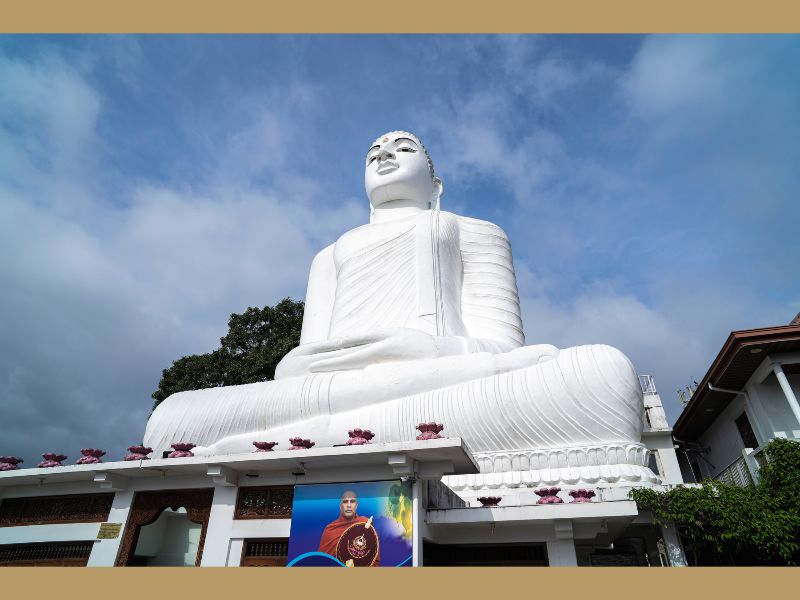
Families walking along Kandy Lake, people entering and leaving the temple, the scent of incense, the distant sound of drums... There were crowds, but nobody seemed to be in a hurry. Watching an entire community turn towards the same thing at once reminded me of a group of visitors gathered in front of an artwork in a gallery — people arriving for different reasons, sharing the same space for a brief moment. The Bahirawakanda Buddha Statue looked down over the city from above. From a distance, the white statue resembled a symbol, as though its gaze was always upon us.
It was a curious experience to see how many hands the tea — one of the first things that comes to mind when thinking of Sri Lanka — passes through before it reaches a cup. The tea plantations, which look so picturesque in photographs, are actually places of demanding labour. Seeing the work behind one of a country's most romanticised images, and witnessing the struggle of everyday life, changes the way you look at a landscape.
Nuwara Eliya: A Different Climate in the Same Country
As we descended from Kandy, things began to change. The weather grew colder. Not long ago, I had been struggling with the heat; now I was looking for something to wear over my clothes.
The tea plantations of Nuwara Eliya were almost entirely different from my idea of a tropical country. And yet, they felt strangely familiar. Green curves stretching across the hills, mist, rain and buildings left behind from the British colonial period...
It is no coincidence that this place is known as "Little England". Still, I found the name somewhat peculiar. Because this was not England. It was the architectural and landscape vision left behind by the British, transformed into something entirely different on Sri Lankan soil. Leaving the traces of one place in another, only for those traces to eventually become something else... Perhaps this was one of the simplest and clearest images of colonial history.
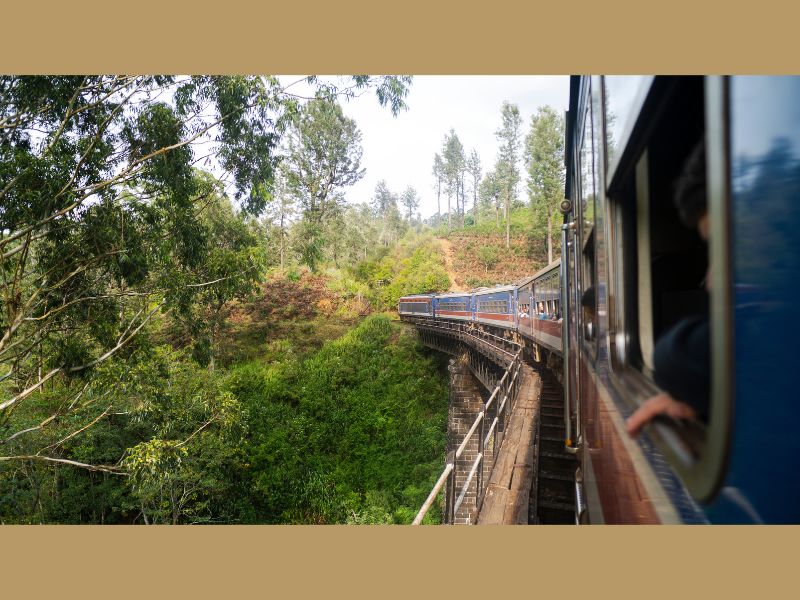
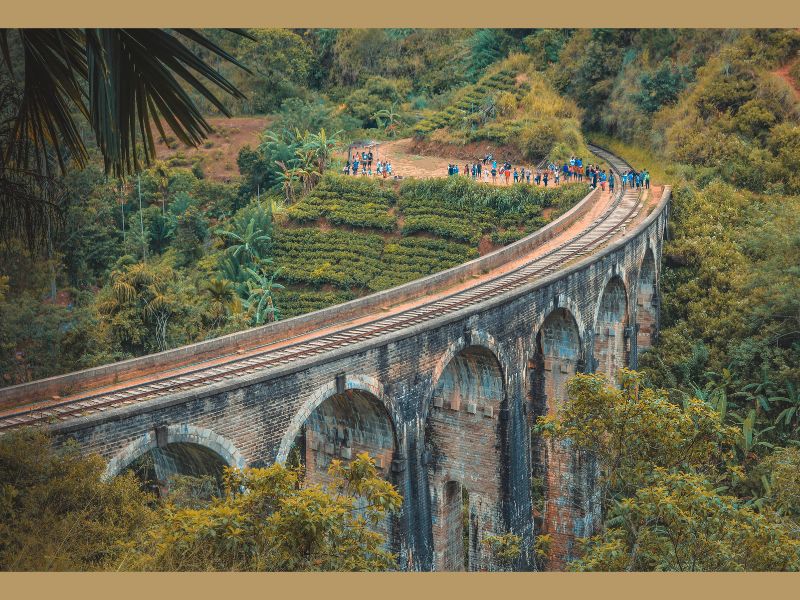
The train journey from Nanu Oya to Ella was an entirely different story in itself. The famous Sri Lankan train journey.
The train was so crowded that getting inside was almost impossible. At one point, we had no choice but to board through the window. People sat in the doorways, and as the train rounded each bend, the scenery outside kept changing. Eventually, you forgot about the crowds. Mountains, tea plantations, mist, little houses... The rhythm of the train blended with the landscape. Perhaps that is what makes this journey so famous. Not simply because it is beautiful, but because while taking you from one place to another, it places the journey itself at the centre of the experience.
Ella: Going Nowhere in Particular
The first thing I noticed in Ella was that time seemed to have loosened its grip. People walked more slowly. Coffee, meals and conversations lasted longer. Nobody seemed to be in a hurry to go for a walk. Sometimes, people would sit down before even deciding where to go. From where we were staying, we could see a waterfall. In the mornings, there was no need to make any effort to enjoy the view. We were already right in the heart of nature.
In Ella, I remembered something I had long forgotten: not having to be anywhere. In Istanbul, most days feel like preparations for whatever comes next — moving from one meeting to another, from one task to the next, from one plan to another. In Ella, however, you could simply sit for a while without thinking about what you needed to do next. Perhaps that was why time seemed to stand still there.
Ahangama: Shores Where the Days Melt Away
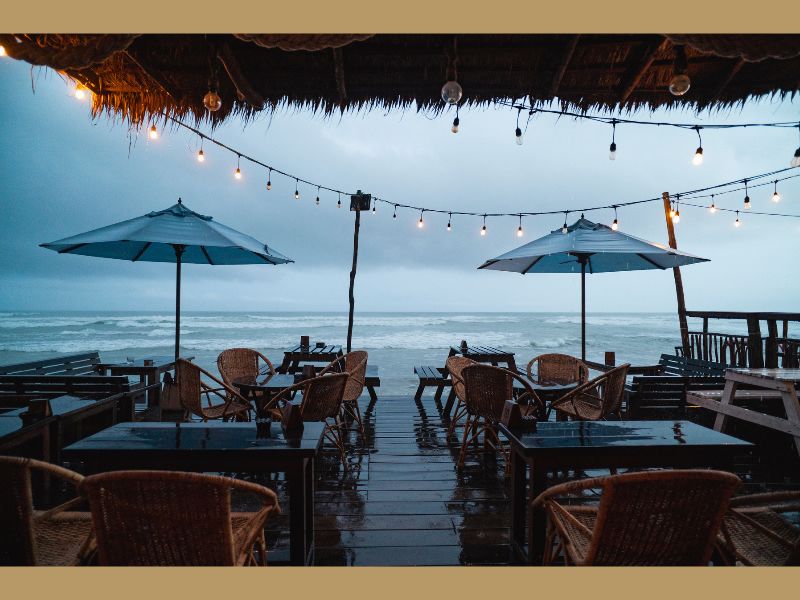
As we descended from the mountains, the weather began to warm up again. First, the humidity returned. Then we caught the scent of the sea. A different Sri Lanka began in Ahangama: surfers, little cafés lining the coast, hammocks, palm trees and the laid-back atmosphere of a seaside town where the time of day seemed almost irrelevant.
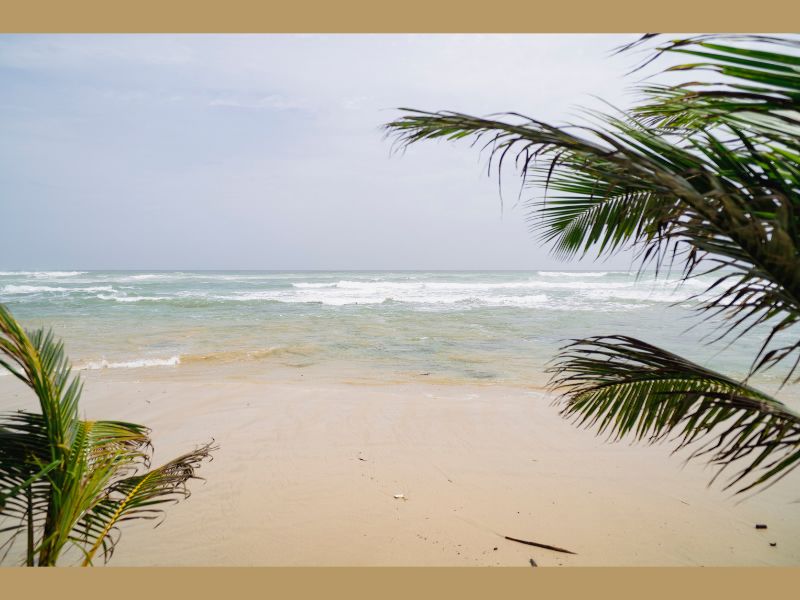
We stayed here for quite a while. Perhaps this became my favourite part of the journey: the moments when I did not have to go anywhere. In the mornings, we watched the ocean. During the day, we wandered around. When we got tired, we sat down. In the evenings, we followed the changing light of the setting sun.

In Weligama, we went swimming with sea turtles. Watching them, I thought for the first time that even remaining still in the ocean could be a form of movement. I had been to the sea many times in my life, but being in the ocean was something entirely different. The turtles were in no hurry. Neither was I. There were constant, faint sounds in my ears. They simply glided through the water. Sometimes, what a person needs is to experience the pace of another living creature.
Galle: Craftsmanship Within the Walls
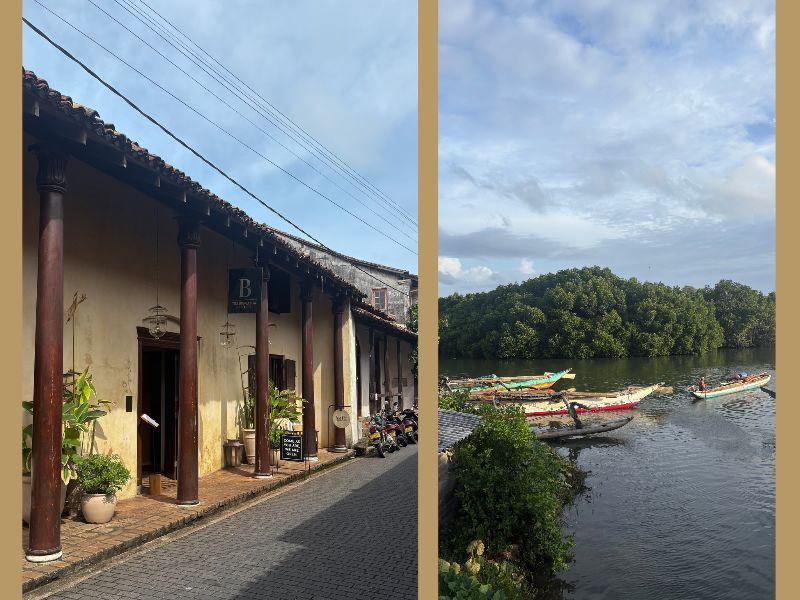
When I entered Galle Fort, what first caught my attention was not so much the walls themselves, but the fact that they were somehow still standing. There was a different rhythm inside. The city had been remarkably well preserved, yet life had not remained frozen in time. I liked that distinction. Founded by the Portuguese, expanded by the Dutch and later shaped by the British period, the fort now continued to exist within an entirely different way of life. Old churches, mosques, stone buildings, narrow streets, boutique hotels, galleries and cafés... Craftsmanship and art were completely intertwined.
History sometimes stops feeling alive when it is placed behind glass in a museum. In Galle, however, people still live, eat, work and shop inside these historic buildings. On one side of the ramparts was the ocean; on the other, the city. You could walk between the two views.
It was also impossible to ignore the rooftops in Galle. Monkeys wandering curiously across one roof, a peacock spreading its tail in the sunlight a few rooftops away... Perhaps this was an ordinary sight here, and nobody seemed particularly surprised. I, on the other hand, could not help looking up.
The city was also a well-established centre of craftsmanship. In small workshops along the narrow streets, artisans worked with precious stones, while hundreds of sparkling rings and necklaces filled the shop windows. The tradition of jewellery-making lived on here, in the shadow of the fort walls, as a patient form of handcraft passed down from one generation to the next. According to Sri Lankan tradition, moonstone is believed to protect against the evil eye and negative forces. When I learned this, I bought one for myself too — perhaps because I wanted to trust that belief a little, or perhaps simply because I wanted to carry a small piece of that place with me.
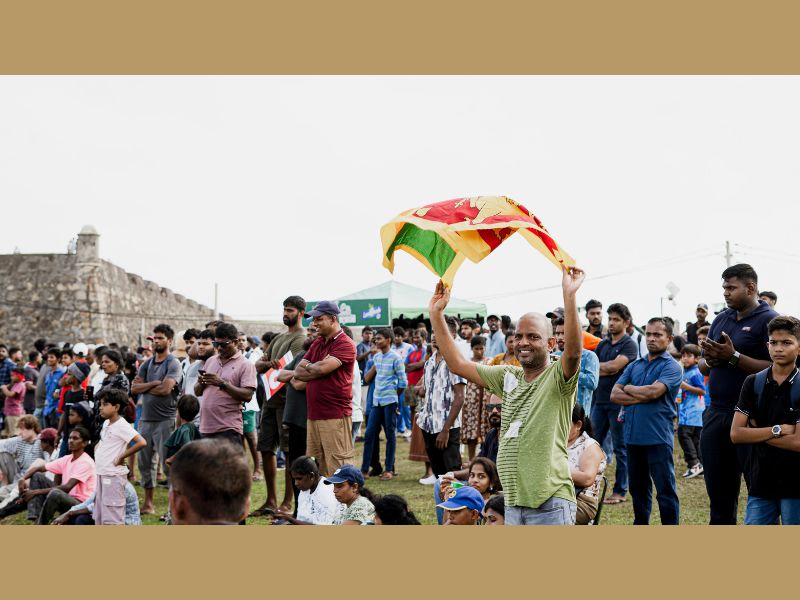
That same day, we watched a cricket match. I knew almost nothing about cricket. But understanding the excitement of the people in the stands did not require knowing the rules of the game. Suddenly, everyone was looking at the same thing, shouting at the same time and laughing together. And once again, I found myself returning to the same thought: a completely different kind of common language.
Negombo: Returning to Where You Began, Returning to Yourself
Our final stop was Negombo. Stopping once again near the sea at the end of the journey made me feel as though we had come full circle. Life here continued at its usual pace. We were back in the middle of the ordinary. Fishing boats approached the shore, nets were spread out along the beach, and people went about finishing their daily work.
I thought back to my first day in Sri Lanka. The same heat. The same humidity. Similar scents. But not the same feelings...
I think this was the most important thing the journey left me with. Becoming accustomed to a place does not mean learning everything about it. Sometimes, you simply stop fighting your own unfamiliarity.
Over two weeks in Sri Lanka, I passed through cities, was welcomed into people's homes, climbed mountains, boarded trains, walked barefoot through temples, cooked in a family's kitchen, watched people working in tea plantations, swam with turtles in the ocean and spent time alongside people in the stands of a sport I knew nothing about. It is not easy to capture all of these experiences in a single sentence.
At the other end of the world, I briefly became part of the lives of people who spoke different languages, believed in different gods and ate different food. But at some point, I realised something: the sound people make when they are happy, the expression on their faces when they grieve, the struggles they endure and the way they reach out their hands to share something — none of these need translation.
Perhaps what we call a common language is not a language at all. It is a glance, a shared table, a laugh. The rising sound of a crowd all at once. And sometimes, it is simply a smile from a stranger on the other side of the world.
Now, when I look at an unfamiliar place, I know that I do not have to try to feel as though I belong there straight away. I can simply stand there, even without understanding everything. As I took one last look around before boarding the plane, I said goodbye to the time I had spent so far away from home, in such a different world, with a feeling of gratitude mixed with sadness.