




















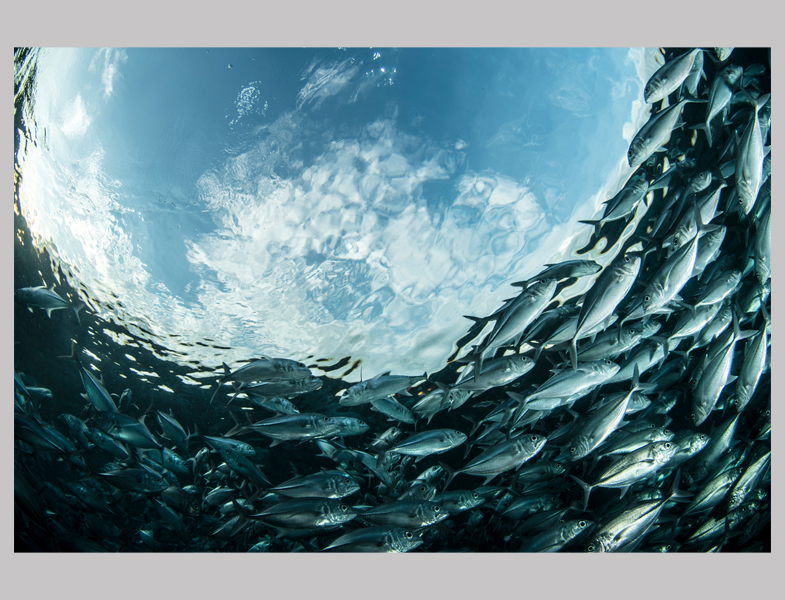
Every person who finds himself in water inevitably wants to take a look under the water. What is there, what creatures live there, is there a threat to itself or to an aquarium world? He wants to learn these.













Everyone who reaches the sea or lake with these instinctive behaviors is also interested in underwater. For this reason, even if scuba diving (SCUBA) is not done, there is almost no one who does not look underwater with a mask during a summer holiday. As a result, for many, the magic of underwater creates a desire to go as deep as one can while holding one's breath.
Text and Photos: Ateş EVİRGEN
Pain in the ears, the pressure the mask puts on the face as it goes deeper, and most importantly, the need for breathing determine the limit of going deep, depending on the person. As a result, someone who throws himself to the surface experiences the dissatisfaction of not being able to go deeper or staying under water any longer. The feeling created by this experience can turn into a passion for some of us. Then a process begins; To receive scuba diving training, to acquire diving equipment and to face the creatures of that environment under the same conditions at deeper depths, at least for a certain period of time! This is a stage of expertise for some, and a way of determining a lifestyle for others. This is also the only way for those who want to take photos underwater.
However, we can only navigate in a narrow part of the water world, which covers the planet and extends thousands of meters, close to the surface. The limit for recreational divers is the first forty metres. Diving training systems have set this depth limit for recreational divers. Even though diving equipment, underwater photography and film equipment are designed for deeper dives, the legal limit for air diving is accepted as 42 meters unless technical diving training has been received for special purposes. In many parts of the world where diving tourism is common, this limit has been drawn to the first thirty meters. This includes our country. Can not being able to go deeper into the sea be satisfying enough? Especially if we are going to take photographs, wouldn't working in such a narrow layer restrict what we can do? Wouldn't that prevent what we could do?
Imagine, there is a forest stretching for kilometers in front of you, but with a machine in your hand, you can move into the first 40 meters of this forest! How many of the creatures you encounter may be living in that forest, and how much of the flora and fauna structure can they give an idea about? For this reason, it is very difficult to prevent the desire to push this limit in that forest. Moreover, even though you know that there are dozens of dangers waiting for you in that forest... The feelings felt under water are no different. A diver who takes a camera and aims to take photographs underwater undoubtedly feels that he will not be able to take the photographs of his dreams until he reaches the limit granted to him. In fact, one of the first questions he asks is how many meters the "diving limits" are for the underwater photography equipment and lighting equipment he will purchase.
To read the rest of the article, GEZGİNFOTO ISSUE 49 | You can visit Shopier , GezginFoto May - June 2022 edergi (dmags.net) .