




















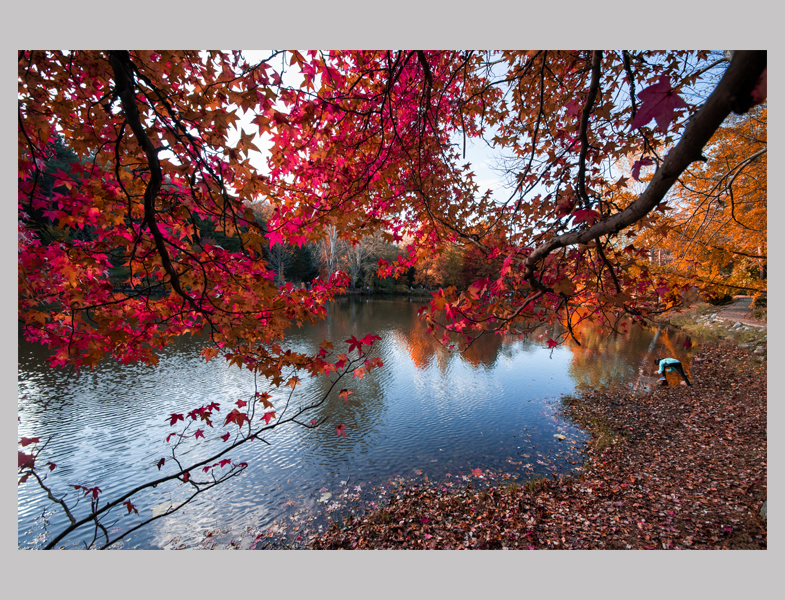
Capturing the colors of autumn is high on many photographers' lists. We begin our article by covering some basics to help you get the best photos possible during this popular season.













Text and Photos: Yüksel ALTUN
1 - Find a Suitable Topic
For the best natural fall shots, the first thing you need to think about is what subject you'll be shooting.There are many great subjects vying for your attention, including landscapes, a tree, leaves or water, that are suitable for your autumn shots because they offer the true spirit of autumn and the best of the season textures when the leaves change color and become busier.
Other ideas for the subject could be a structure, road landmarks, a path, or a bridge within a colorful landscape.Combining these elements with fall foliage beautifully showcases the season.
2 – Light
Don't limit yourself to shooting on bright, sunny days.Cloudy conditions are also great for recording subtle, even tones, as the light is soft with less contrast.It is very attractive to photograph rivers that look warmer, especially with their autumn colors, in cloudy weather.
3 – Position
To get the best fall photos, it's important to research locations. You can focus a photography holiday on the colors of autumn, or spend a day or two chasing the colors of the season.
Yedigöller and İğneada in the Marmara region, Belgrad Forest and Atatürk Arboretum in Istanbul are ideal places at the right time. Küre Mountains in the Western Black Sea and Şavşat - Artvin Karçal Mountains in the Eastern Black Sea are very suitable for autumn photographs.
4 – Take a Wide View
A great way to document fall colors is to capture a wider field of view.Photographing trees as part of a larger landscape, using colorful foliage in the background, or to frame your subject works really well.This approach gives a more visually interesting image than a painting of a building or landmark on its own.It also helps tell the viewer the time of year the photo was created.
5 – Separate Color Patterns
Another technique is to capture autumn colors in isolation.Beautiful shades of red, yellow, brown and orange can look great.By focusing your lens on a specific section of a forest canopy or an attractive collection of leaves, you can add order and impact to your images while creating visually pleasing results.
6 – Use Backlight
A great technique to use when shooting fall foliage is to shoot directly towards the sun.Shooting towards the light can result in stunning images where light provides contours and light transmission to the leaves.
7 – Pay Attention to Lateral Light
Another way to capture autumn is to use lateral light. Capture the shade of colors according to the angle of the sun.Complementary colors of orange and yellow combined with a blue sky can work very well together. The warmer tones from the leaves perfectly balance the coolness of a blue sky.
8 – See Below
As you explore the wonderful scenes of autumn color, be sure to look below.Don't be discouraged if the trees are bare and the leaves have fallen, you can still catch fall colors on the ground.This display is evident in late autumn, when the forest floor is as colorful as the treetops.
9 – Smoke, Fog
Atmospheric conditions add a different mystery to our photographs.Dramatic effects such as fog can enliven a picture by adding mood, atmosphere and mystery to a colorful scene.
Capture morning mist rising from a lake, a forest shrouded in mist, or fine mist over a city or landscape and beautify any autumn scene.
Autumn is a great time to shoot color, texture, macro, especially if you're looking for color.So grab your camera and head out to the nearest park or woodland.Enjoy autumn and see what you can save.
10 – Textures, Details
Photographing details falls between macro and landscape photography.Sometimes it's one or the other, sometimes it's a little of both.These images tell a small but important part of the story. Sometimes our subject is a leaf, sometimes mushrooms and small creatures.
Small pieces of the scene are captured from a large landscape photograph and are a crucial part of our experience in the field.Details should also be an important part of the story we tell our audience.
11 – Golden Watches
Shooting fall colors at the end of the day, just before sunset, when the light is golden, highlights the colors more than usual. The color of the light combined with the soft light highlights the autumn colors.
12 – Adjust White Balance
In autumn photos, WB – Auto White Balance does not produce the most vivid results.Warm up your colors by turning up the color temperature a touch.You can do this by setting the Kelvin rating to 6000-7000 or setting the white balance to “Cloudy” mode.
13 – Underexpose Shots
A little underexposure brings out saturation and texture in your photos. I recommend shooting in RAW. When RAW footage is processed, exposure manipulation, color and contrast adjustments will yield more accurate results.
CREATING EFFECTIVE AND CREATIVE FRAMEWORKS IN AUTUMN PHOTOGRAPHY CREATING FRAMEWORKS
Use Foreground and Bottom Angle
In autumn, foreground is perhaps more important than at any other time of the year.When shooting wide, I get lower to use a bright, flashy and interesting object nearby as the subject, not the background as the subject, and I use the background as a supporting – complementary element. Descent can make your subject appear taller or more imposing.
Rise
Shooting from above has the opposite effect of shooting low.Instead of making the viewer feel small and the subject big, it makes the viewer feel big and the subject feel small with a high perspective. Going up is also a great way to highlight the geometry – the lines, circles, squares and dots that make up the scene.So if your subject is multiple graphics with very distinct lines and curves, try a high perspective;It will probably work fine.
Nowadays, in addition to climbing to high places (stairs, roof, window), the use of drone allows us to photograph the autumn texture and graphic from a bird's eye view.
Shoot Upward
Shooting upward will emphasize the height of your subject and often evoke curiosity and depth. In the forest texture, shooting upwards from the trunk of the tree, shooting trees creating graphics towards the diagonal, and the blue sky and clouds will create a beautiful texture.
Reflections
When autumn colors combine with water, reflections occur, especially in the morning and evening hours. Permanent bodies of water, such as ponds or lakes, can be great for reflection photos.
There are a few things you can do to improve your in-camera reflection photo.These are mainly equipment-oriented.To create perfect reflection photos, you can do the following:
1 - Circular Polarizing Filter : It is one of the best items you can use in reflection photography. Using this filter will greatly increase the strength of the reflection.
2 - Wide Angle Lens – Use wide angle to increase the extent of reflection in your photo.Even a small puddle can fill the entire frame if you get close enough to the puddle.
3 - Shallow Angle - The shallower the angle, the greater the reflection.So, for best results, lie on your side against a window or on the ground near a puddle of water.
Lens and Filter Usage
You can use all your lens sets in autumn photography. Wide angle for landscape shots, macro or tele and normal focus lenses for texture detail shots... Lenses with open aperture provide advantages in terms of light. We increase the size effect of our photographs with the effective use of depth of field.
Polarizing filter for control of color saturation and reflections; ND filter can be used for long exposures in water and clouds. Especially the polarizing filter provides color saturation, it should be used in autumn photographs for reflections.
Long Exposure with Autumn Leaves
Long exposure can be taken at any time and anywhere. Whether you shoot a waterfall in nature or the sea and clouds in the city, they look great in autumn photography with the movement of colorful leaves. You can capture effective and creative shots, especially in autumn areas combined with waterfalls and rivers.
Experimental Techniques
Techniques such as camera shaking at 1/5-20 seconds in shutter priority mode, zoom in-out, camera rotation, and panning will also create effective results in autumn photography.
Highlight Autumn – Winter Transitions
Towards the end of autumn, with snow or frost, the yellowed, rotten and contoured leaf texture creates a beautiful story of the transition of seasons.
Use Colors
Focusing on a leaf of a particular color will enhance the depth when there are more autumn leaves of the same color in the background.
PORTRAIT IN AUTUMN PHOTO
Discarded Autumn Leaves
People throwing leaves into the air is a classic shot for fall photography.If you want to take creative shots, try a different focal point.Set your aperture to a small number like f/1.8.Then, shift your focus away from the person as you throw the leaves into the air.Instead, focus on a few leaves and blur your subject into a blurry outline. Or create a motion effect with a slow shutter speed.
Colors
For portrait photography, ask your model to wear an outfit in shades of red, orange or yellow before the photo shoot.Then match them with the appropriate colored background.You can explore some monochrome autumn scenes in advance.
Light
Key light for shooting classic portraits;Use backlight to create silhouettes and contours and sidelight for atmospheric portraits.
Bokeh
Create bokeh from the sun and light beams behind your model, playing with depth of field and sharpness.
Create Natural Frame
Create a natural frame from autumn leaves, trees and branches. Highlight the depth effect with an open aperture.
AUTUMN STREET PHOTOGRAPHY
Towns and cities may not be the first place you look for when taking autumn photos, but the streets will also give you the opportunity to create different shots.
Go to the Parks
Most cities have a park area where you can spend some time shooting, and trees planted on the sidewalk change color just like in their natural habitat.Take advantage of this in your street photography and use changing leaves as uniquely colorful backdrops or highlight the contrast between permanent city buildings and nature's ever-changing role.
Search Color Contrast
We said most of the autumn charm is in the colors. So, what better way to capture your audience's attention than to contrast autumn colors with life's less colorful scene? The architectural structure of the city – the concrete jungle further reveals the true splendor of autumn colour. Using this contrast when creating your photos can create beautiful stories.
Wait for Weather Changes
Try to capture the moment when people walk with colorful umbrellas, people without umbrellas run for cover, and the rain dances on the sidewalks and roads.
Use Reflections
Reflections arising from puddles formed by autumn rains will add a different aesthetic to your photographs. When shooting, pay attention to the techniques mentioned above.