



















Seeing is actually a form of action created by all the knowledge we have acquired throughout our lives, together with our emotional accumulation. In this article, I would like to question photography a little and ourselves under the title of photography by adding sample photographs based on what is seen, what is shown, what we cannot see and what we see.













Text and Photos: Gilcan Mete DELİBAY
Seeing is a form of action created by all the knowledge we have acquired throughout our lives, together with our emotional accumulation. It is an emotional accumulation created in us by everything that is included in our lives in some way, from our family to our friends, from school to the street, from where we live, from cultural geography, religion, society, morality, prohibition, pain, happiness and nature. As a result of this knowledge, we choose a few frames in the visuality of the world as far as the eye can see and shoot on that subject, including our physiological and biological needs.
Everything that we see through the reflection of light and our ability to see and that is in our field of vision is visible. Everyone who does not have any vision defect sees these visible images with a genetic ability and selects images within this visible field for the reasons I have just mentioned. In this selection, creates what we see in . These choices are sometimes contrasts, sometimes perspectives, sometimes the aesthetics of the object, human faces, animals, trees, flowers, and may become a priority from person to person for many reasons. We very quickly distinguish the subjects in our perception among what we see. Issues that are not included in our perception or about which we have no knowledge are further from our priorities. In this section, no one can be criticized for the image they choose. Since our emotional intelligence, the events we encounter in life, our cultural and aesthetic knowledge, and our reaction levels to events will not be the same, we may have different vision abilities. For example; As we looked down at a beach where we went to work with our workshop students for the first time five years ago, I asked the following question: "What would you photograph here?"
The boats and fishermen attracted the attention of some of the friends in the group. Another friend of ours looked at the sun and said, "The sun will set right over the sea, we can shoot wonderful silhouettes." Another said, we can attract fishermen by seeing the fishermen's shelter. From a very high point, all of our friends chose their own image, and they all made their choice for different reasons. Since the subject of the day's training was light, as soon as I looked at it, I pointed to the area I marked in red in the photo and said, "pay attention there, we will be shooting there soon" and we headed towards the beach. The shots we took at that poetic meeting point of light and shadow were as follows:
There are many photographers who go to Cambodia for such photographs and travel there with a guide. I did not include this photo as an example because it is a very special photo. I chose it just to explain how different perceptions we have in the unlimited field that comes to our eyes. What we saw from , was an enormously large area, and was different from what we saw from to . Of course, there were things we couldn't see as much as what we saw here.
Attractive Looks
Some objects or objects within the visible areas are striking. It inevitably attracts the attention of all people. There are very few people who look at the Maiden's Tower and are not impressed. The Leaning Tower of Pisa in Italy, the Eiffel Tower in Paris, the Statue of Liberty in America... There is almost no photographer who does not photograph the magnificent harmony of nature in the Seven Lakes in autumn and the State Guest House in Gölcük. Tours are organized regularly to such photographic places and photographers take photographs there according to the season and light. It is like a ritual performed regularly every year. It is also a good opportunity for those who are new to photography. In such organizations, these existing beauties are shown with the guidance of experts.
In some way, we are shown many issues that we cannot see or are aware of in our lives, and we photograph what is shown. Such places sometimes exist with their aesthetics, sometimes their history, sometimes their story, and sometimes their popularity. The appeal of such photographic locations attracts the attention of many photographers, but perhaps not of some. This is again a selectivity and preference that occurs in line with the visual culture of the photographer. What makes art beautiful is this diversity, the way of expression, different interpretations, and ways of expressing one's interpretation.
The phenomenon we call art is the person's presentation of this form of influence through a means of expression. Readability, watchability or listenability is determined by the artist's knowledge, talents and originality. Likewise, the created work is perceived with the knowledge of the viewer or listener.
To give another example from one of our training studies, I chose one of our friends in the group as the subject of the study we conducted in an old building. I asked my friends to take his portrait.
The portrait they took of our friend where he was was never right in terms of light, location and character. I asked them to show his eyes, which matched the colors on the adjacent wall, put a beret on his head, take the light from the northern facade lights, place it in a more accurate location, shoot it, and see the difference.
After this shot, I continued to work by letting them see the difference and mentioned that if we took off the reflective coat he was wearing, it would look better with a dark colored sweater underneath.
However, we continued by saying that it would be more impressive if we shot our friend from a more accurate angle and in black and white.
Finally, we took this photo to show that using a hint of light in the background can add depth to the photo and make it more impressive:
Every frame can be a photographer's choice. A much better shot can be taken with a very different eye. The important thing here is to show how different results can be achieved with the perspective, the way of using light, decor and tone, even in this seemingly simple work. Thousands, maybe millions, of new images are produced every day in portrait shooting. Beautiful women, men, children, authentic people...
What We Can't See
What I really want to focus on is what we cannot see. What we cannot see is actually the majority not only visually, but also in meaning, content and emotionally. This is where the real difficulty and deficiency of the photographer or artist begins. While the majority of people are content with what they see and are shown, for some it is of great importance to see and understand what they cannot see. In fact, he begins his journey by first discovering this deficiency in himself.
I would like to continue with examples of my portrait works of two people.
İbrahim Bey
The first one is Mr. İbrahim. I noticed Mr. İbrahim while passing through the village on a day when we said let's take the cameras and shoot the old school with a few of our friends. I was driving and suddenly stopped. I had already gotten out of the car when my friends asked what happened. Mr. İbrahim, who was walking on the road, was wearing old jeans, a black T-shirt, and his extravagant necklace despite his age, which caught my attention. I directly told him that I will take your photo, I want to get to know you. “Okay, but only if you buy a bottle,” he said with a sarcastic smile. We went to the old school together and sat and chatted. I listened to his life story.
He was an immigrant, he had a life that could be considered a vagabond when he was young, he kidnapped the girl he loved, he was imprisoned, he had an appearance that reflected his life with his tattoos on his body, his necklace, his artificial right eye and his untidiness. As I listened to his story, I could imagine his life like a movie. We started taking photos. After taking a few shots of its current state, I continued working while chatting with him about those days. The tattoos on his body, his thoughts, and his view of the past all gained meaning then!
The first photo was the visible version, then there was what we saw, as we talked, it integrated with what we couldn't see.
Ahmet Aga
Another portrait of us was Ahmet Aga. My relatives showed me Ahmet Aga during the Aegean trip we took with my dear friend Mehmet Tapkan. At first glance, he appeared to be a homeless, exhausted person, with hundreds of patches on the trousers he had not taken off for years, the lumberjack shirt he was wearing in tatters, and his turban, cap and jacket collecting garbage. He was lying on newspapers behind a gas station. My relative told him that I was a photographer and that I wanted to take photographs. He got very angry and said he didn't want it. In such situations, it is never right to take a photo if the person does not want to or to secretly press the shutter button. I did not even take my camera with me. Despite all my relatives' insistence, he rejected us harshly. As I walked away, I looked around the room, where he lived. My relative told his story, and my heart broke. I shared the story with Mehmet, he was on my mind all night. The next day he was drinking tea at the cafe. We asked again, he said no again. Even though it is my own country, in such situations the best course of action is to give up and not force. While we were drinking our tea, Mehmet approached Ahmet Aga and started the conversation by saying that he was a doctor. After a while, the conversations progressed. When he realized that our intentions were not bad and that we were truly interested in his life, he gave permission for the photo. There were many things visible in the town. The shown to us as was Ahmet Aga. What we saw at first glance, , , was a ruined, unfortunate life, but , what we could not see, , impressed us and made our hearts swell.
Ahmet Aga was one of the most important wrestlers of that region in the past. He participated in oil wrestling in the region and in many parts of Turkey and won many first places. According to what they say, he was an incredibly strong wrestler who could carry 6 cement bags on his back and lift them to great heights. When his mother got sick, this mountain-strong man left everything and started to take care of his mother and take her to treatments. He also struggled for his sister. When her brother got married and went away, she took care of her mother for years. When his mother died, he became embittered.
Losing his mother, for whom he gave up everything, made him very sad. From that day on, he started to live on his own. They offered him a salary but he didn't accept it, they offered him a place but didn't take it, he brought him food but he didn't touch it. With what he earned by working hard, he continued to live in that one-eyed place and remain resentful. Now pay attention here. With that conversation, we set out for the shoot and Ahmet Aga told us the poems that the entertainers sang for him in wrestling years ago! He didn't forget any detail. His eyes shone, his fists clenched, his arms and biceps swelled. His eyes lit up as he explained, instead of the sad man, we saw before us a man strong enough to wrestle in the meadow if he came out today. We listened to what he said sincerely. Ahmet Aga was playing peşrev and singing the words of the jazzman to us.
“Pehlivan wrestler,” he said, “Pehlivan Ahmad from Selendi appeared on the square, wrestler Ahmad from Selendi has a peşrev sweeter than honey…” He repeated it to us without forgetting every word. Then he felt sad, thinking about those days, and tears came to his eyes. “Ahhhh,” he said and stopped. At that moment, everything stopped for us. Our hands, feet, photographs, everything stopped.
Now look at Ahmad Aga's photos. If you saw it on the road, would you think of such a story of sacrificed life and loyalty?
As we were leaving there, we were humming the words of that peshrev. He said to us, "Will people know these?" We said, “Yes, Ahmad Aga, they will know.” He looked at us in disbelief. On the way, we stopped and transferred a few photos to our phone and sent them to my relative. When my relative showed it to him and said, "Look, they're going to print your photo big, we'll put it in the store," he cried again. He said the sentence that destroyed us: " So they didn't lie to me! "
This is where everything seen, unseen and shown ends. Sometimes words are not enough to describe. We will make his documentary together with Mehmet.
Two lives, two different people. Someone is messy, irresponsible, a bit chaotic with a vagabond spirit, but while looking at the window, he is longing for his youth and his experiences. The other one sacrificed his life and his invincible strength to his loved ones with love, who was not grateful for anything, who did not even allow us to order tea, who stood upright with his back on the ground... Isn't it strange? Both of them are things that we cannot see in our visual field.
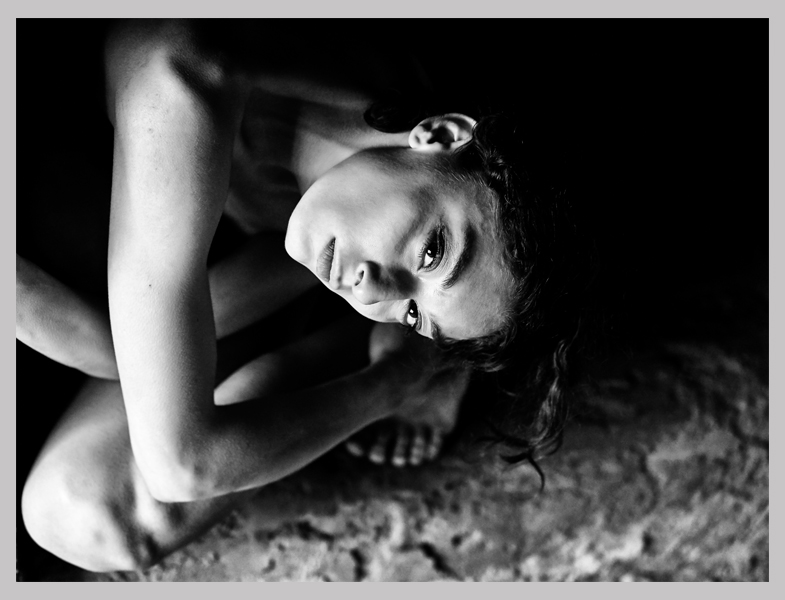
Olga Spessivtseva
We are gathered for another project today. This time we have a foreign model. She is a ballerina. We are considering a nude study. Personally, I don't approve of purely nude photographs of women unless there is a subject or narrative within them. We have designed a subject for the friends in the working group: Red Giselle - The Story of a Ballerina the life of the ballerina Olga Spessivtseva who is the subject of the work... Born in St. Petersburg in 1895, the artist, who spent the first 10 years of her life in an orphanage, joined the St. Petersburg Imperial Ballet Theatre at the age of 10. Her extraordinary talents and perfect appearance enabled Spessivtseva to become one of the soloists of the Imperial Ballet company.
In 1918, she was a leading dancer, and in 1920, she became the prima ballerina of the Mariinsky Theatre. Critics consider Spessivtseva one of the best Gisellies of the 20th century. In 1943, her mental health deteriorated, and she spent the next 20 years in a psychiatric clinic, from which she was discharged in 1963.
The great ballerina spent the last years of her life in a nursing home under the Leo Tolstoy Foundation in New York, passing away at the age of 91. Another incredible life story. The model we chose also resembled Spessivtseva in facial features. After taking some ballet photographs, we tried to photograph the period of her magnificent but tragically painful life when she lost her mental health. That's when our work gained meaning.
This time, we tried to understand a life we had never seen before, imagining and comprehending the parts we couldn't see.
Capital
I would like to give another example related to seeing and choosing. About five years ago, in the window of a shop in Taksim, there was a photograph of Nani, a famous football player of the time who played in Turkey for a period. It was quite a large and impressive photograph. On Istiklal Street, where people were flocking past, I crossed to the opposite street and started taking photographs of the people passing through that crowd. I took the photograph shown to me as a basis and associated it with the people. A work I called Capital emerged. The photographs I took in front of that window actually revealed all the hopes and the unseen parts of lives scattered within the capitalist system.
Fate and Victory
In this continuation of the series, I have also included some of my work with refugees in this study. In one of them, I saw that a Syrian child, looking at us from the corner, had a boil on his forehead that matched the graffiti drawn on the wall in the corner. A flower drawn on the walls for beauty was like fate on the child's forehead.
Another photograph was of a refugee child's shoe, whose face everyone wanted to capture. The shoe was old, torn, and in a miserable state. But the child had written Nike, a sports brand, on the shoe with his own hand. Who knows which football player he admired and what he dreamed of? Nike actually means "victory" in English. Whether consciously or unconsciously, this child wanted victory from what he saw and would strive for it. The cycle of our modern cities always begins this way. People first settle in the worst parts of the city, then take risks, work hard, and achieve more. We were all looking at what we saw, those children were also looking at what they saw, at the streets of the destiny their unseen fate had prepared for them in the future…
Mannequin
We are inside a very old, closed factory. We found an old, dirty mannequin without arms inside the factory, lifted it from the ground, and photographed it amidst the factory's abandoned, dilapidated machines and walls. It presented us with a sad story, filled with memories of everything that happened in the factory over the years – people who worked, earned their living, retired, and lived there. The mannequin here was an image of a worker. Images can sometimes be more effective than what we see and can make us imagine what we don't see.
Wall
While walking through the streets with old houses, take a close look at the walls that hundreds of people pass by every day. On the walls, worn and aged by years, you will see valuable, aged pieces such as birds, cats, horses, and paintings. Who knows if there wasn't a bird or a cat inside these houses? Years seem to have meticulously prepared and presented the experiences of those years as if they were the walls' destiny. To see this, one must understand it and feel it while looking…
What is visible is everywhere. We can easily capture what is shown. What we see is actually us, our accumulation of experiences. Understanding and feeling what we cannot see is the reason for the existence of photography, of art. Our way of describing what we see, our style of expression, is either sufficient or not. Sometimes, understanding is not desired. Our age is now more concerned with purely beautiful photographs, and the appreciation counters are higher. People want to see beautiful things amidst the exhausting pace of life… That’s why lives spent in a closed factory, traces on crumbling walls, a ballerina losing her sanity in a dramatic life, the destruction and migrations caused by the world order, Ahmad Aga’s sacrificed life, Ibrahim Bey’s hopeless life—these might not interest everyone. But they all have a soul. And there are many people who see and perceive with that soul…
May your photographs have many souls. May your visible images be abundant, your shown images in moderation, your seen images accumulated, and your unseen images minimal!