



















Mountain gorillas in Uganda are the biggest reason that attracts tourists to this country. The majority of mountain gorillas, whose total population is estimated to be around 800, live in the thick fog-covered and inaccessible forests of Bwindi National Park. In Uganda, we visited not only the mountain gorillas but also the chimpanzees hosted by Kibale National Park.













Text and Photos: Sevgin AKIŞ RONEY
We entered Uganda via Rwanda at night. By following a very bad and dusty road in the dark of the night, we arrived at our accommodation next to Bwindi National Park. In the morning, after breakfast, we went to the park, which has the phrase "impenetrable" in English. It is really not easy to enter this tropical forest. Guides need to cut branches and leaves with lines in order to move forward. We were told to be prepared to hike all day and that there was a possibility we might not see the gorillas. Traveling mountain gorillas build a new nest made of soft branches and leaves every night. I guess we were lucky (or was it part of a touristic game?), without climbing too far, we found a gorilla family sleeping after dinner. According to the information we were given, pioneer guides were tracking mountain gorillas, which only eat grass, based on their diet. They could track which plants and fruits they ate and catch them asleep because they knew which ones put them to sleep for digestion. Then, they inform the local guide at the head of the tourist group about their whereabouts. Since life had turned me into a skeptical person, I pressed our local guide, "How do we know you don't give drugs?" That's right, mountain gorillas are a very important source of income for the country. Our guide said that the penalty for drugging gorillas is 7 years in prison.
Mountain Gorillas
Gorillas, whose DNA is 95 percent similar to human DNA, are generally very calm animals. A typical gorilla herd; The head of the family, called the "silverback", consisted of an old male, his "harem" consisting of three or four females who remained loyal to him for life, and a few young "blackback" males and babies. When the "silverback" gorilla, who was the leader, expelled the young male gorillas from the group after a while, if the "blackback" gorillas could not find a female and start a new family for themselves, they were doomed to live alone and die in a short time. Mother gorillas used to carry their babies around their necks and breastfeed them until they were three years old. After carrying them on their backs until they were five years old, they did not let them leave them until they were seven years old. Therefore, they could only give birth once every four years. The gorilla family we saw consisted of four mothers, two babies and young gorillas, but there were two “silverback” gorillas. I am confused! The time given to us to watch and photograph these beautiful sleeping creatures was one hour. Indeed, exactly an hour later, all family members woke up. The sounds they made while stretching were similar to ours, but since our bodies were different, no one objected to our guide saying "let's turn"!
Lake Bunyonyi
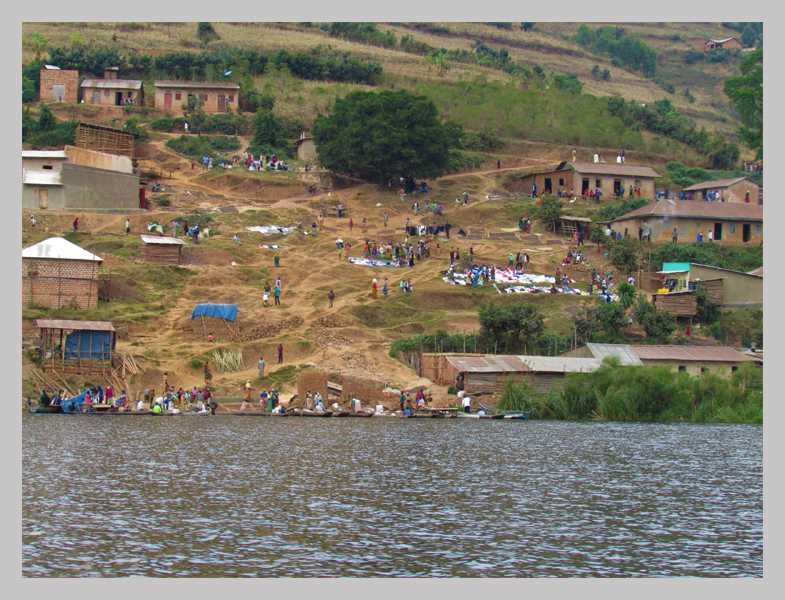
Our program the next day included Lake Bunyonyi, which means "place of little birds" and is called the Switzerland of Uganda. We arrived at our accommodation, which has a magnificent view, on a hill overlooking the lake, had a late lunch, and then went for a stroll around Lake Bunyonyi. Bunyonyi, which is approximately two thousand meters above sea level, is the second deepest lake in Africa and the third deepest lake in the world. Very few of the 29 islands, large and small, in the lake, which is 25 km long and 7 km at its widest point, are inhabited. Our guide said that a "state dignitary" had a house on the largest island, which was later converted into a hotel. On another island, there was a hospital where leprosy patients were treated. Again, according to the information given by our guide, the first plane seen by the local people was the plane that brought the Scottish doctors to this hospital! The island with the most interesting story was "Akampene", which means "punishment island". Since nothing grew on the island, where women who got pregnant out of wedlock were sent to be punished, these "sinful" women were left to die. The only people who survived were those who managed to escape from the island by swimming and the women married by poor villagers who were not in a position to pay bride price. While what I heard was already making me breathless, we climbed quite a few hills on the next island to reach the village where the pygmies called Batwa live... Actually, Batwas are not really dwarfs, but they are very short. The reason for this was foreign marriages. How nice! They welcomed us with a lovely local dance show. Then they started trying to sell their handcrafted works.
Queen Elizabeth National Park
The next morning, we set out early to go to Queen Elizabeth National Park, named after Queen Elizabeth II. The rain that started at night continued along the road. After getting stuck in the mud, we entered the "Ishasha" area, located in the southwestern part of the park, around noon. Queen Elizabeth National Park spans an area of approximately 2000 square kilometers, housing more than 95 species of mammals and more than 600 species of birds. To the east of the park is Lake George (250 km 2 ), to the west is Lake Edward (2325 km 2 ) and to the north is the Rwenzori Mountains. As we moved through the plains that stretched as far as the eye could see, we saw different species of antelopes, baboons, water buffalos, elephants and different types of birds. However, unfortunately, we could not see the famous "tree climbing lions" of the "Ishasha" region. “What's so interesting about seeing a lion perched on a tree?” Don't say. While big cats such as leopards and cheetahs can easily climb trees, tigers and lions cannot climb trees because of their high claw structure and the risk of falling due to their weight. The two exceptions to this situation are the lions around Lake Manyana in Tanzania and those climbing giant fig trees in the Ishasha region.
The place where we stayed the night was at a point overlooking the Kazinga Canal, which connects Lake Edward and Lake George, also named after two members of the British royal family, and the view was magnificent. This 32 km long canal, which gave the park its original name, is a paradise where animals such as birds, elephants, water buffalos, antelopes, huge lizards, African crocodiles known as crocodiles live, and it hosts the world's largest hippo population. After a sound sleep, we got into our jeeps early in the morning to continue our safari. During our trip, we also saw lions that we could not see the day before. They did not climb trees, but it was a very enjoyable experience to watch and photograph these beautiful cats of nature as a family. Before returning for breakfast, we passed through a volcanic area called Bunyaruguru, south of Lake George. Lakes containing fresh or salt water have formed in 27 of the 130 craters. The view was so beautiful that after the afternoon boat tour on the Kazinga Channel, we took another short trip around the crater lakes.
Kibale National Park
We set off again early in the morning. Our destination was Kibale National Park, located in the southwest of the country, just east of the Rwenzori Mountains. When we arrived at the Equator Line, which was on our route passing through the west of the Rift Valley, we of course took a short break and took lots of photos! The place we would stay was 7 kilometers away from the park, at a point overlooking Nyinabulitwa Crater Lake, and the view was very beautiful. After settling into our rooms and having lunch, we set out for Kibale. The majority of Kibale National Park, whose altitude varies between 1100 and 1600 meters above sea level and spreads over an area of approximately 800 square kilometers, consists of rainforests. 13 different primate species live in the park, which hosts various animals. The primates that attract the most attention from visitors are our closest relatives, chimpanzees, with whom our DNA is 98 percent similar. Chimpanzees live in large communities and eat both grass and meat.Chimpanzee females, which change their nests every night like mountain gorillas, give birth to babies only every 3-4 years, as they are also fond of their young. However, the most important difference that separates chimpanzees from mountain gorillas is their tendency to violence. When they got angry, they did not hesitate to hit each other with all their strength and bite each other. A male chimpanzee would pick up a branch from the ground and challenge everyone at the slightest provocation. When our guide gave this last piece of information, I couldn't help but think: "I wonder if it's the last 3 percent between 95 percent and 98 percent that spoils us?" saying! During the approximately one and a half hour we spent with the chimpanzees in the park, I was exhausted from the screams they made and the communication they established through shouting. My sympathy for bonobos has increased. (Those who are curious can learn about bonobos, another primate species.)
Kampala
On our last day in Uganda, we set out again early in the morning towards the capital Kampala, the largest city in the country. The name of the city comes from the word "Ka'mpala", which means "hill of impalas" in the Buganda language (Luganda), because of the impalas, a type of antelope that is widely seen in the region and known for its ability to jump very well. When Uganda became a colony of England at the end of the 19th century, Kampala, the center of the former Buganda Kingdom, became the center of colonial administration until 1905. Later, the administrative center was moved to Entebbe, but when the country gained independence in 1962, it was declared the capital. It is said that it was originally built on seven hills (for some reason, all cities always have seven hills!) In Kampala, we went to the area located on Kasubi hill, five kilometers from the city center, with a sign at the entrance saying "Welcome to Kasubi tombs". The kings of Buganda, which is currently an autonomous kingdom within Uganda, are called "kabaka". Here are the graves of the four Kabakas, their wives and some members of the royal family. However, it cannot be said that the region, which was included in the World Heritage List by UNESCO in 2001, is actually just a cemetery. Most of the region consists of lands cultivated using traditional methods. On one side there is a very primitive structure called a palace. The peculiarity of the building is that it was built using only plants native to the south of the Sahara Desert. The families living in the surrounding huts were the widows and relatives of their deceased kings. They were the ones who watched over the graves. If you ask me what I think about the Kasubi tombs, where we spent about an hour, I would say it would be better if I didn't see them! After the lunch we had in a beautiful area where the embassies are located, people were smiling when we took a shopping break in a fixed market. Then we set off towards Entebbe.
Entebbe and Return
Our flight, which would return to Istanbul very early the next morning, would take off from Entebbe's international airport, located 37 km southwest of Kampala, on the shores of Lake Victoria. Therefore, we set out towards Lake Victoria. A large part of Victoria, which is the largest freshwater lake in Africa and the second largest in the world with a surface area of approximately 69 thousand square kilometers, is within the borders of Uganda and Tanzania, and a small part is in Kenya. I guess because it was Sunday, the shore of the lake was full of picnickers. We took a short break so that we could put our feet in the water and took lots of photos with the young girls in brightly colored clothes and the children who always surrounded us. While we were having dinner at our hotel on the shores of the lake, I took "matooke", which has an important place in Ugandan cuisine, on my plate. Bananas picked while still green are cooked and usually served as puree. It wasn't to my taste, but it wasn't bad as a farewell meal with the "tilapia" fish, also called freshwater sea bream! After midnight, we went to the airport, which was on the agenda with the "Entebbe Operation" in 1976. I remember, when the then-famous Palestine Liberation Organization militants forced the Air France plane, which was flying from Tel Aviv to Paris, to land at Entebbe International Airport, the Israeli military killed all the militants in a bloody operation. While waiting for the plane, I silently prayed that I would return home safely.
Two Movie Suggestions
- The name of the first movie is “Gorillas in the Mist”. It tells the life story of American primate expert Dian Fossey, who devoted her life to mountain gorillas. He has research conducted in Rwanda National Park between 1966 and 1985. He also fought against gangs committing massacres in the forests in order to market the hand and foot claws of gorillas to tourists (would you like to buy an ashtray made of gorilla claws?). Until he lost his life in an armed attack at the age of 53 for this cause. A movie made in 1988, three years after his death...
- The second one is "Jane's Journey". A 2010 documentary film about British primate expert Jane Goodall. I had the opportunity to listen to a speech given by Goodall, who is known all over the world for her studies on chimpanzees, at a university where I worked years ago in the USA. Born in 1934, Goodall, who heads an institute she founded under her own name, continues to travel to provide information about chimpanzees and give speeches about the importance of nature conservation.