
















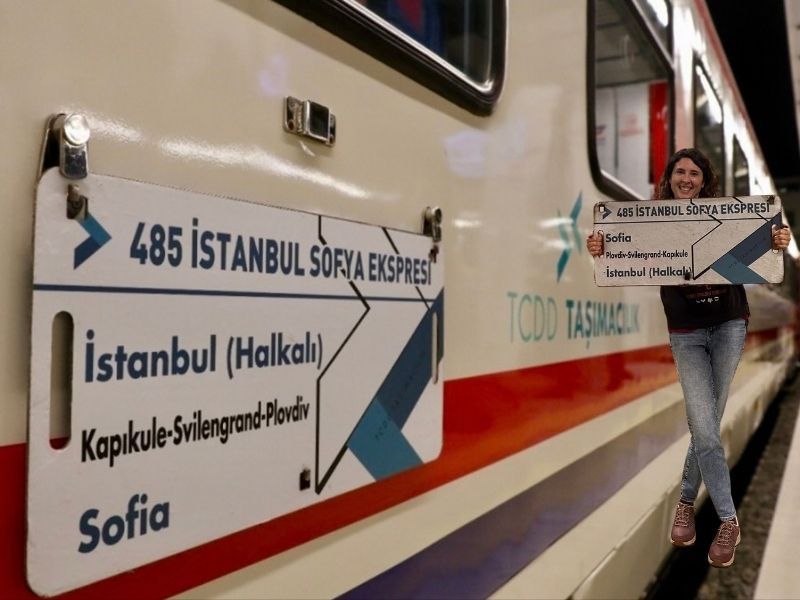
Hello everyone! This article is for those who love long train journeys. If you’ve been seeing the Sofia Express all over social media for a while, would love to take this route, but have no idea where or how to start, this article is for you.
Text and Photos: Başak AYGÜN
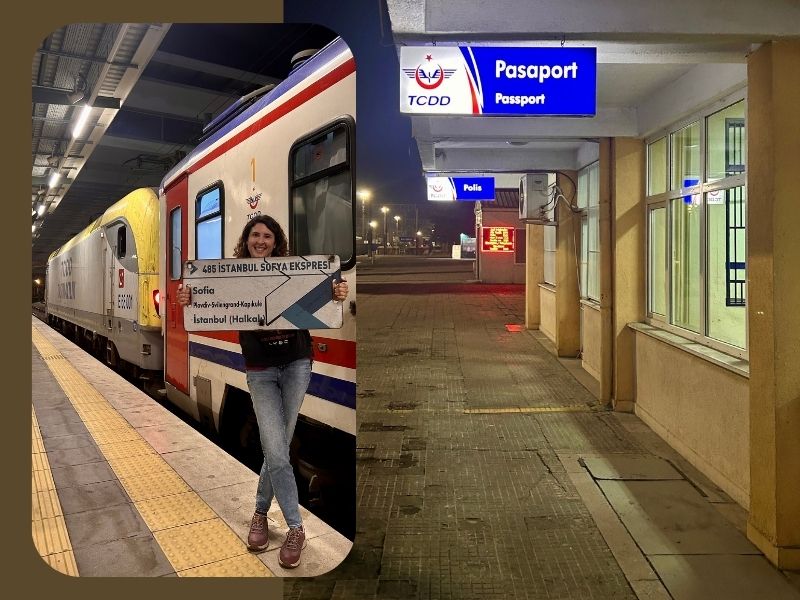
What is the Sofia Express?
The Sofia Express is an international train service operating between Istanbul / Halkalı and Sofia, Bulgaria. The service started in 2017 and connects Turkey with Europe, running daily in both directions between Istanbul and Sofia.
Why do I recommend this route?
This route can save you the cost of a flight and a hotel. It gives you the opportunity to experience a new country on a relatively small budget. The train leaves Istanbul at night and arrives in Sofia in the morning.
Sofia is a city that you can explore in a single full day. That same evening, you can board the train from Sofia and arrive back in Istanbul the following morning.
Many travelers also use Sofia as a gateway to other European countries by planning their trip accordingly, since you can find affordable flights from Sofia to many destinations across Europe.
Are there any disadvantages to this route?
Yes, there are a few.
First of all, Bulgaria requires a visa for Turkish passport holders traveling with an ordinary passport. If you do not have a Turkish green passport, you need either a Bulgarian visa or a Schengen visa to take this train. There is no visa-on-arrival option for Bulgaria.
Tickets for this route cannot be purchased online. You need to buy them from the ticket office at an international railway station such as Söğütlüçeşme, Sirkeci, or Halkalı.
Bank cards are not accepted when purchasing tickets. You can pay either by credit card or in cash. You are not asked for your passport or any other documents when buying the ticket.
Does this train only go to Sofia?
Although travelers like us mainly use it for tourism, this is actually a regular passenger train.
Starting from Halkalı, the train stops at Çerkezköy, Alpullu, Edirne, Kapıkule, Svilengrad, Dimitrovgrad, Plovdiv, Pazardzhik, and finally Sofia.
The train departs from Halkalı every day at 20:00 and from Sofia at 18:40. Depending on how long passport control takes at the borders, the journey takes approximately 14 hours.
When should I buy my ticket?
You should buy your ticket at least one month before your planned trip.
Since many tourists also use this route to travel from Istanbul to Europe, the train is usually quite busy. Looking for tickets about a month before your holiday will make things easier.
Which type of carriage should I book?
The train has couchette cars, where the seats are converted into beds at night, and two-person sleeper compartments. You can choose according to your budget and comfort preferences.
There is no regular seated carriage, known as a Pullman, on this train.
The couchette compartments accommodate four people. You can think of them as two sets of bunk beds facing each other. There are two upper beds, while the lower sections can also be converted into beds when you want to sleep. This means four people can sleep in the compartment, with two beds facing two beds.
Each compartment has its own heating and lighting controls, so you can adjust the temperature to your preference. There are also power outlets, so you don't have to worry about charging your devices.
If you want to travel in a couchette but there are fewer than four of you and you don't want strangers sharing your compartment, you need to purchase all four tickets. Otherwise, other passengers of the same gender may be assigned to your compartment.
The sleeper car consists of a bunk bed for two people. There is a space opposite the bunk for your luggage, which can also be used as a table.
Unlike the couchette cars, the sleeper compartments have a mini refrigerator and a washbasin.
Both the couchette and sleeper cars provide each passenger with a personal set of fresh bed linen in a sealed bag. You open and use it yourself.
There are two toilets in each carriage, one at each end. Their cleanliness varies depending on how heavily they have been used.
The train staff are Turkish and very attentive. They are happy to help with anything you may need.
How much do the tickets cost?
The one-way prices as of January 2024 were:
- Couchette: €36.12 per person
- Two-person sleeper: €41.12 per person
- Private sleeper for one person: €71.68
Children aged 0–4 travel free on the Sofia Express. Children aged 4–12 receive a €10 discount on the ticket price.
Is there a restaurant or café on the train?
No.
In the sleeper cars, a small bottle of water and some crackers are provided in the mini refrigerator. Other than that, there is no restaurant or café on the train, so you need to bring whatever you might need with you.
I brought hot water in a thermos, along with coffee and tea. Since we traveled as a large group, everyone had prepared and brought something to eat. So you could say we spent almost the entire night eating, drinking, and chatting.
How long did the border crossing and passport checks take?
When we first boarded the train, our tickets were collected. We were also given a form by the train staff on which we had to write our passport numbers.
The train reached Kapıkule Border Gate at 01:50. We got off the train for passport control. The process took approximately 40 minutes.
About half an hour after the train departed, we reached the Bulgarian border control point. This time, we did not get off the train. Our passports were checked while we remained on board.
We arrived in Sofia at 10:00 in the morning.
The same procedure was repeated on the way back. At the Bulgarian border, passport control was carried out on the train, while on the Turkish side we were asked to get off the train.
This was the procedure on both our outward and return journeys.
How many days did our trip take?
As a group, we planned this trip entirely around the train journey itself.
Since Sofia is a relatively small city, it is possible to explore it in a single full day. So we did not stay overnight.
We left Istanbul on Friday and arrived in Sofia on Saturday morning. We explored this beautiful city until the evening. On Saturday night, we boarded the train back to Istanbul and arrived there on Sunday morning.
It was a wonderful trip where we got to enjoy the train journey to the fullest, had a lot of fun traveling with both adults and children, and visited a new country at a relatively low cost.
What should we see in Sofia?
- Lions' Bridge
- Alexander Nevsky Cathedral
- Saint Sofia Church and the Monument to the Unknown Soldier
- Russian Church of St. Nicholas the Wonderworker
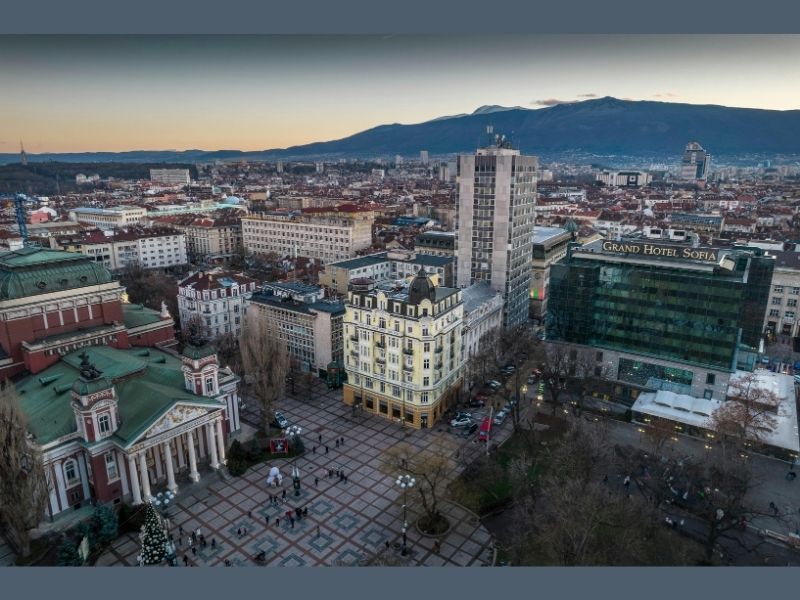
- Ivan Vazov National Theatre
- Serdika Ruins
- Rotunda Church
- Church of St. Nedelya
- Banya Bashi Mosque
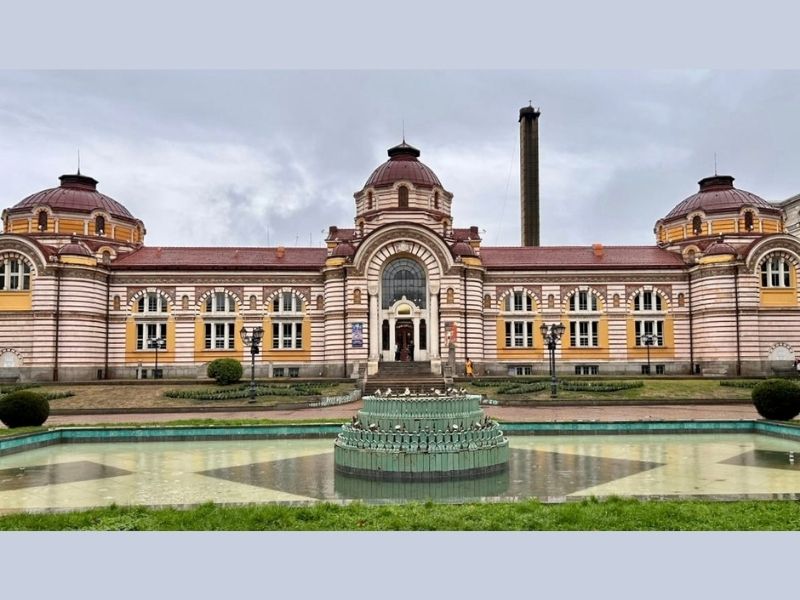
- Central Mineral Baths
- Vitosha Boulevard
- Bulgarian Parliament Building
- Statue of Saint Sofia
- Parks — Sofia has many beautiful parks where you can take a thermos of tea or coffee and relax.
How is transportation in Sofia, and what route did we take?
It is possible to reach the heart of the city with a 20-minute walk from the railway station. You can also take the metro for three stops, but as you know, the best way to explore a city is on foot.
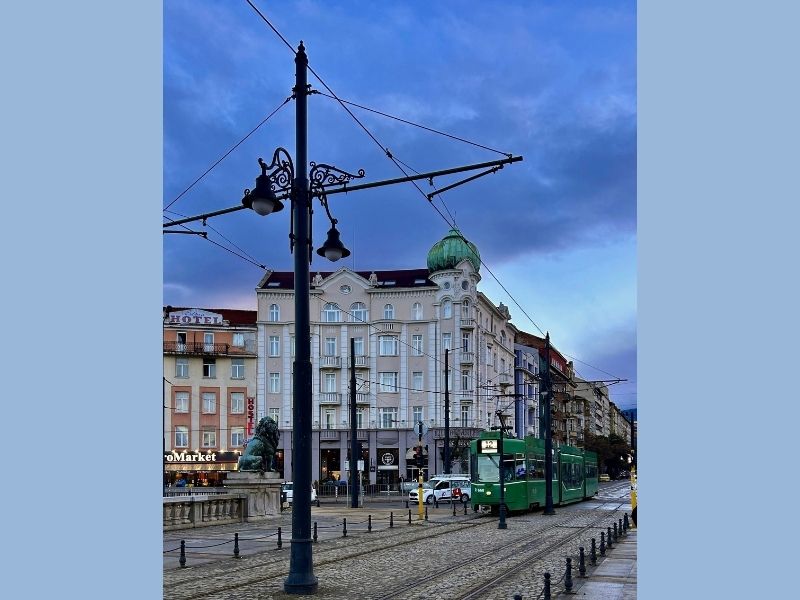
As we walked from the station toward the city center, we crossed Lions' Bridge. There are four lion statues on the bridge, and it is almost a symbol of Sofia.
The bridge was built in 1891 by Czech architect Prosek to mark the eastern boundary of the city.
Our first stop was Banya Bashi Mosque. Built in 1576, it is one of Mimar Sinan's oldest works in the Balkans. This single-domed mosque is definitely worth seeing.
As you continue from the mosque, you will come across thermal water fountains. The mosque itself was built over the thermal springs.
“Banya Bashi” is a Bulgarian phrase meaning “many baths.” The mosque takes its name from these thermal springs and fountains.
We saw people filling five-liter plastic bottles with water from the fountains. The water is believed to have healing properties for a number of illnesses.
Our next stop was another symbol of Sofia, Alexander Nevsky Cathedral. This Neo-Byzantine building is said to be one of the largest religious buildings in the Balkans.
If you want to take photographs inside, there is a fee. Admission to the church itself is free.
I mentioned that Sofia has many parks. One of them, Crystal Park, has an interesting story.
There is a bust in the middle of the park dedicated to Stefan Stambolov, who played a leading role in the uprising that led to Bulgaria's separation from the Ottoman Empire.
According to the story, Stambolov initially supported the uprising under Russian influence. However, when he realized that Bulgaria might come under Russian control rather than simply gain independence, he wanted to return to Ottoman rule.
He traveled to Istanbul and met with the Sultan, asking for Bulgaria to return under Ottoman rule. The Sultan refused his request.
After returning home, Stambolov was killed during an attack in which he was struck on the head with a hatchet.
From the park, we continued toward Vitosha Boulevard. This could be considered the heart of Sofia, with stylish restaurants and shops lining the street.
Our final stop was the Serdika Ruins. This is the site of the remains of the ancient city of Serdika, including churches and other urban structures.
The ruins were discovered during the construction of the metro. Excavations are still continuing, and you can see archaeological remains along the route.
Quick Facts
- Bulgaria requires a Bulgarian or Schengen visa for travelers who need a visa.
- There is a one-hour time difference between Turkey and Bulgaria.
- The currency is the Bulgarian lev. We had some problems using credit cards in certain places, so it is a good idea to carry at least some Bulgarian leva with you.
- Other than Parliament Square, there are no city Wi-Fi hotspots.
- One full day is enough for Sofia. Most attractions are within walking distance of one another.
Where can you travel by train from Sofia?
From Sofia, there are train connections to Bucharest, Athens, Budapest, Vienna, Moscow, Munich, Paris, Brussels, Amsterdam, Spain, and Portugal.
Tickets can be purchased at Sofia railway station.
In addition, you can also find affordable flights to many other countries from Sofia.
I love train journeys and the scenery along the way. Yes, the journey is long and it may not be for everyone, but I think it is ultimately a matter of personal preference. What do you think about traveling by train?