




















While designing our route, we tried to fit three of the 4 historical capitals, an autonomous region and different states into an 11-day route, in order to see as many colors of the country as possible.The revolutionary colors and celebrations we encountered in every part of the trip showed us that the Chinese people are still loyal to Mao Zedong today.













Text and Photos: Tulga OZAN
The process that caused the decline of China, one of the most important civilizations in the world with its uninterrupted history reaching today, where the four great inventions of human history (paper, printing press, gunpowder and compass) emerged, and which has been perceived as a land of cheap, low-quality products since the 19th century, was one of the periods in the history of civilization from which lessons should be learned.
In my eyes, despite the fascinating sparkle of Chinese civilization, its weakest point is that it gives a feeling of "arrogance". These lands, which are the beginning of the Silk Road, which had the most impact on the history of world culture and technology, provided goods movement in only one direction for centuries. This commercial activity, which made the European continent, which was technologically behind at that time, feel great because they did not have any products worth selling in China, resulted in China missing the development of the world over time and finally coming under the control of the Western world. The control lost with the opium wars would have resulted in a fragmented and collapsed geography if not for the leader Mao Zedong, who changed the fate of the region at a time when the West was preparing for the collapse of the country with the corruption it injected into culture and traditions.
On October 1, 1949, thousands of red flags were flying in Tiananmen Square. Here, tens of thousands of people were applauding Mao Zedong, who declared the establishment of the People's Republic of China. Mao had won the revolution and freed China from the yoke of colonialism. However, even if it freed it from political oppression, it was not an easy process to clean up corruption and rebuild the infrastructure in a country like China, which has the cultural and human diversity that exists in a huge continent. The harsh regulations that lasted until the 70s and the subsequent process of integration with the world were overcome with the pain and endurance of the society that had been left behind for centuries in the country, and today this giant, which the whole world watches carefully, has re-emerged. China has now almost completed its social structuring. The crises of the 90s, which could have resulted in food shortages, have been overcome and it is trying to move forward by rediscovering the foundations of its own civilization. Their current leader, Shin Jinping, has as much charisma as Mao in the country. The projects he carried out to increase the vision of the people, as well as technological progress, show us what kind of light there is in the future of the country.
Beijing and the Great Wall of China
In recent years, China's support for touristic activity within and outside the country has created an incredible travel potential. While visiting Tianenmen Square and its surroundings, where eighty thousand people visit every day, almost all of the tourists you encounter are Chinese, and this makes you feel what a crowded country you live in. The long and endless queue we see in front of Mao Zedong's grave is a symbol of how much the people support the regime, contrary to what appears from the West.
If you want to escape the crowds for a trip to the Great Wall of China, the most logical thing is to go to Mutianyu, which is the farthest gate. Even though you have to take a two-hour bus ride, this gate, which is in nature and away from the masses, is my preferred spot in every program.
Luoyang, Longmen Grottoes and Shaolin Monastery
I think this region, which is generally not included in touristic programs, is a must. This area, which is on the UNESCO World Heritage List and contains 100 thousand Buddha statues of all sizes, also provides great visuals for photographers.
Another attraction of the city is the Shaolin Monastery, which has existed for 1500 years and is considered the birthplace of Kung-fu sport. This monastery, which has become popular again since the 90s, also hosts many sports schools.
Xian and the Terracotta Soldiers
This clay army, built to protect the tomb of Qin Shi Huang, the first emperor of Chinese history, is one of the most exciting spots in the country. This ruin site, where there are approximately 8 thousand soldiers, all with different facial expressions, is one of the must-see places during a China trip. The emperor's tomb has still not been excavated. The fact that excavations will not be allowed without allowing the technology to be excavated without any degradation is among the indicators of how disciplined and principled the administration of the country is.
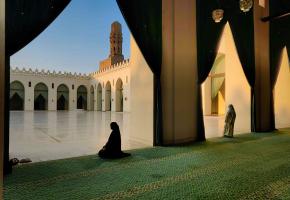
The city of Xian becomes more beautiful every year. Its buildings, which have been restored since the first time I visited, its sparkling colors, the fact that it houses one of the most beautiful mosques in the country, and its very lively streets, make it necessary to spend time in the city.
Guilin and Guangxi Zhuang Autonomous Region
Although China is a geography that will never end if you travel many times, if you return without seeing rural life, something is missing in your trip. The things to see in this region, where the Zhuang people, one of the most populous minorities in the country, live, are the rice terraces and the natural beauties of the Li River.
Even though it is a arduous journey, we prefer to visit the rice terraces in Longji by staying in Ping'an Village for the night. This accommodation and hiking in the middle of a magnificent nature makes you forget all the pain to go up.
Another important attraction of this region is the city of Guilin, where you can take an unforgettable boat tour on the Li River. However, the dreamed fisherman image can now be taken as a fictional photograph in exchange for money, just like in Sri Lanka.
Shanghai
Shanghai, the capitalist face of China, is the city closest to western life. This city, which is the happiest with China's opening up to the world, is getting closer to its former shining days every day. I recommend you photograph the Zhujiaiao region, which is built on canals in Shanghai.