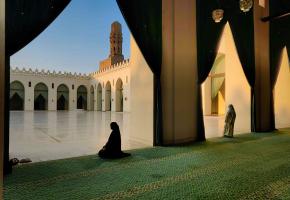





















No matter how sophisticated the technology, a good photograph depends on the eye of the master photographer who concentrates on interesting subject, good composition, light awareness and exposure. The photographer should make the best use of the available light. There are no unfavorable lighting conditions, there are difficulties faced by the photographer.As long as we contribute to the understanding, dissemination and love of photography by the masses, good photographs will always exist.













Text and Photos: Tanin Helvacı
E-mail: taninhelvaci@gmail.com
How the First Photograph Was Taken
The first photograph in history was taken by Joseph Niepce in 1826, after an exposure lasting 8 hours. However, Louis Daguerre became the first photographer to make history on August 19, 1839, when he was announced by Arago at the French Academy of Sciences, to which he applied with a photograph he took. The name of this technique, which was used to create images on the plate, was Daguerretype, and its biggest flaw was that it was a single copy and could not be reproduced in printing houses.
Daguerre was a painter, and the existence of this method he used in the preliminary work of paintings frightened the painters at first. Because photography was a technique that could be produced faster, cheaper, and more realistically than a painting made by a painter. Although it was initially thought that photography would take precedence over painting, the fact that painting acts as an artistic event and photography acts as a mirror and records the events gave different meanings to the two branches. While painting was a form of art, photography was discussed. Louis Daguerre contributed to the advancement of this technique in France and William Henry Fox Talbot in England. Talbot was also the person who founded the first commercial photography workshop in 1842. In 1842, the exposure time was reduced to 1/25 second.
Important Dates of Photography
New techniques were developed and in 1881 KODAK produced the first film camera. The first Leica camera was produced in 1914. The Nippon camera, whose name changed to NIKON after 1917, was produced in Japan. Fuji Film was founded in 1934 and joined the machinery manufacturers in 1938. In 1925, Hungarian photographer Andre Kertesz started a photography marathon in Paris that would last 11 years. In 1936, LIFE magazine transformed into a school of photo-journalism. The number of camera brands has increased rapidly. Magnum photography agency was founded in 1947 by Henri Cartier-Bresson and his friends.
First Digital Camera From Sony
In 1981, Sony started producing digital cameras. Until this time, technique dominated photography. All the books, magazines were about the technique of photography (chemical drugs, Enlarger, dark room). After the 1980s, with the advancement of the digital camera, a technical and aesthetic balance was established. There were many people who called themselves photographers. And this period was the years of struggle for photography. Although the photographer is the one who takes photographs, within this definition there were those who took up photography as a profession (fashion, documentation, architecture, editorial, reportage, etc.) as well as amateurs who saw photography as a form of artistic expression. And thus, the feature of photography as a means of expression emerged.
Thus, photography began to be used to end wars and to investigate and correct social problems.
Photography Now Has a Soul
As time passed, photographers emerged who were devoted to life, read books, listened to music, went to the cinema, that is, were involved in cultural life, and guided photography from this perspective. Thus, it became clear that photography is not just a visual show. Today, most digital cameras seem to have handled the technical aspects of photography to a certain extent. In other words, the determining criterion in photography is now the sense of aesthetics and theme. We can filter out bad photos better now. I am one of those who believe that really good photography is a combination. Appropriate and good use of light, composition, subject, layers, clarity and combination of details... But most importantly, it evokes emotion in the viewer. Now, instead of hundreds of photographs obtained with high technique, there are photographs with high emotion. Photography is the interaction of the spiritual structure of the person taking it and the reality in front of the lens. What makes a photograph a photograph is the emotion inside it.
What is a Good Photograph?
Photographs that comply with aesthetic and composition rules are beautiful photographs.
Aesthetics is about beauty. And in art the beautiful is often preferred to the good and true.
Good photographs are photographs that have a high artistic aspect, are creative, thought-provoking, and have a well-grounded knowledge and perspective on life. If the photograph does not contain a story, a photograph with strong technique is referred to as just a beautiful photograph. In photography, the technique should not get in the way of the content, but should support the content correctly.
Capturing photography with a story is an expression of a culture and worldview. Let's not forget that the camera is just a tool that successfully records all this. For this reason, the brand and model of our camera does not matter much. Anyone can use whatever machine they like. Some photographers know how to expertly tell the story with a single image.
If a photograph involves thought and creativity beyond what it tells, then it has a strong structure. The important thing is to tell the right story expertly through moments...
Emotion and Content Overtake Technique
While telling his story, the street photographer must comply with the rule of thirds, symmetry, frame, that is, composition to a minimum extent. These are the criteria of a good street photo. But nowadays, instead of a photograph with correct technique, photographs without technique and with emotion and content seem to be more acceptable. Street photography is challenging but productive, instructive, and requires patience, hard work and courage. Being a moving part of the landscape in life, walking, walking...
Instead of taking too many photos, photo interpretation develops the enthusiast. Every time you touch the city, you add emotion to your subject. Recently, photography groups are the new color of street photography, but of course not with hundreds of people at the same time. Photographs taken with more compact groups, solidarity and exchange of ideas, and including editing, are popular and remarkable.
Not Taking Photos While Traveling, Traveling While Taking Photos
While wandering the streets, you should not run like a tourist, but like a careful hunter in search of the most special shots waiting for the photographer. In other words, instead of taking photos while walking, walk around taking photos... Since you can be trapped in any photo on the street at any time, it is a good idea to walk around with simple equipment and a single wide-angle lens. This simple method allows you to focus on the photo, not the equipment. Previously, we used tele lenses to get closer to the subject. But now I believe that it is better to get closer with 24mm and take photos from a meter away, that is, to get into the photo. While doing this, I care about treating people with respect, first I get lost among them. I create stories of the people I communicate with when they see me as close and harmless. If someone on the street notices their photo being taken, smile and nod in thanks. If he doesn't want it, don't take it, don't be insistent, show him the photo if he's very careful. Art is a way to make yourself loved. If taking photos on the streets gives you pleasure, let's take photos with pleasure.
The photographer should not rush, but should be very fast. We should not allow the camera to think faster than us. A good photographer does not shoot what he sees, he sees what he will shoot. The photographer is the one who confronts what he sees. If you control your camera, you also control the streets. This is the essence of capturing the moment.
Street is Freedom; Editing Breaks the Spell
Street photography is not a technical priority. There is no order or regularity when photographing people, creatures and objects; random moments stand out more. The street is freedom and natural, and the photographer, in a way, portrays this freedom. The poses taken must also be natural; editing, posing, asking for poses are not the object of street photography. Then the magic of the photo taken on the street is lost. The whole point of street photography is that it shows what is.
Considering the identity of the streets with the crowd; It is inevitable that the shots taken by the photographer contain a message. Looking in black and white when photographing the riot of colors on the street is also an element that increases creativity. Simplicity is my state, benignity, color, choice. Street photographers should focus on alternative routes rather than places that everyone visits. He should be curious, be able to discover new places, new attractive people and establish warm relationships with them.
Street Photography Should Be Like Documentary Photography
Street photography is documenting people in their everyday environment. Watching cinema opens the door to creative thinking in street photography. In a way, the person who takes photographs also reveals his or her view of the world.
Street photography is a social activity; It allows you to discover new places and new people. You know how we said at first to go out with a wide angle lens? This choice connects you with what's happening on the street. There is no street photography with tele lenses; It takes you, and therefore the shot you take, away from emotion. He is a documentarian and also a street photographer; The profit he suffered will be noted in history.
When Reflex Meets Aesthetics…
When taking photos on the street, choose shutter priority mode and automatic ISO instead of manual mode, as you will be photographing movement most of the time. As the pioneer of street photography, Henri Cartier Bresson, said, "It is necessary to wait for the moment without affecting it, be ready when it comes, and press the shutter without thinking." Magnum Photos members continue this principle today, in the footsteps of its founder, Bresson. If we make taking photographs a reflex and add aesthetic concern to it, wonderful photographs will emerge. Master Bresson fit photography, painting, literature and cinema direction into his 95-year life and went down in history as one of the masters of every art mentioned.
Spend on Travel, Not on Equipment
A street photographer doesn't worry about equipment, he spends his money traveling. A street photographer who does not use flash should also have a light camera. Modest attire allows you to move more comfortably and not stand out among crowds. A street photographer dresses as if he were going out for sports and works as if he were training. Timing is the most important element in photography, "Catch the moment" is the slogan that best describes it. A good observer smells the air well, senses the instant photo seconds before it occurs, and clings to his camera. The two most important elements of street photography are composition and content. The streets are full of surprises. Recently, the produced shadow plays, silhouettes, geometric arrangements, minimalist approaches that we have seen frequently in street photography are far from reflecting the spirit of the street. Street photography is a way of life and a language of communication that will never die.
The Power of Light
The most important element in photography is light. In fact, photography is painting with light. Good light also makes the content look good. Street photography has no hours, we can work all day, but using the power of light makes our photography powerful. When we bring all these elements together, we get good photographs.