



















Bilkom, one of Turkey's important technology distribution companies, implemented a comprehensive project on the 100th anniversary of the republic.













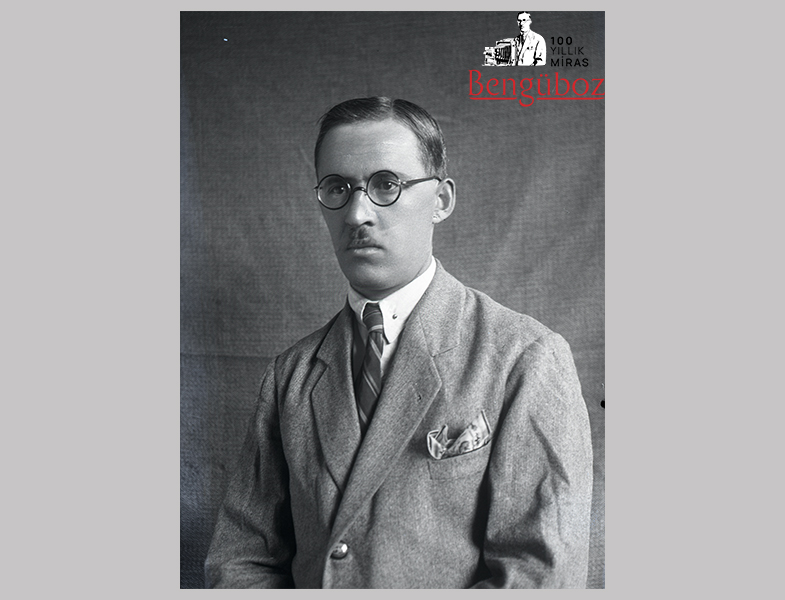
With this project, Bilkom aims to preserve the visual legacy of Ahmet İzzet Bengüboz, who spent a significant part of his life in wars during the World War I and the War of Independence, learned photography from the British in captivity, and brought the social transformation of the early republican years to the present in the post-war period, and to bring it into cultural life.
Under the leadership of Bilkom; Within the scope of the project implemented in partnership with Koç University Vehbi Koç Ankara Studies Application and Research Center, Mudurnu District Governorate, Mudurnu Municipality and with the contributions of academics and professional photographers; Bengüboz's archive, consisting of 1003 glass negatives that have survived to the present day, was protected in the light of scientific methods, and 450 photographs with a selection from the archive were brought to cultural life through physical and digital exhibition applications. This rich photographic archive, which sheds light on the social and cultural transformation between 1923 and 1939, was compiled by Dr. It is exhibited in the physical and virtual museum curated by Ayşe Ege Yıldırım.
The works were first exhibited at Fuatbeyler Mansion, one of the historical mansions of Mudurnu, between 29 September and 29 October. It will meet art lovers at Izmir Ahmed Adnan Art Center between 9 November and 30 November. Through the prepared mobile exhibition platform, 'pop-up museums' will be established in different cities, especially in Istanbul and Ankara, just like in October and throughout November. In addition to a selection of approximately 450 photographs, all of Bengüboz's surviving photographs will be made available to historians and photography enthusiasts at www.yuzyillikmiras.com.
Projection of the Early Republic Period in Photographs
In this special collection; There are special photos of special days such as the enthusiastic celebrations of almost every year from the 1st anniversary of the Republic to the 12th anniversary, the Victory Day celebrations, which was then known as Airplane Festival, and the Liberation Fair where the liberation of Mudurnu was celebrated. In addition to the holidays celebrated enthusiastically by the people living in Mudurnu and the villages, the social and cultural transformation in young Turkey also forms an important part of the collection.
Bengüboz's photographs include many important figures, including Seher Erden, known locally as "Kara Fatma" and one of the leading figures of Kuva-yı Milliye, and other representatives of Kuva-yı Milliye. While the modern Turkish woman, the transformation in education, and important elements of social life are documented with these photographs, they reach the present day with the "One Hundred Years of Heritage: Bengüboz" project.
Ahmet İzzet Bengüboz with his Inspiring Life Story
Bengüboz, who was drafted into the army due to the outbreak of World War I when he was still in high school and started to work as a reserve officer after his short training, fought in the Caucasus Front and then the Sinai Front. The life of Bengüboz, who was captured by the British in Palestine, changes in the Seydibeşir Prison Camp in Egypt. Bengüboz, who learned photography and English from the British while in captivity, joined the Kuva-yı Milliye movement and then the regular army when he returned to Anatolia after captivity. Bengüboz, who served on the İnönü and Sakarya fronts, became a photographer when he returned to his hometown Mudurnu after the war. After a short-term teaching job, he was given the job of civil registry director, and this job also gave him an important opportunity to document the transformation in Anatolia. During this duty, he documents both the local people and the transformation in the region. This collection, which is one of the largest archives of transformation and development in Anatolia, also emerged in this process. After Bengüboz's death in 1969, his archive of glass negatives was found by his grandson Mehmet Kadri Bengüboz in 1981, and the journey of these photographs to the present day began. First, the first prints are made from the glass negatives donated to the Directorate of Public Education, and the first exhibition is opened in memory of Mustafa Kemal Atatürk's 100th birthday. Following this exhibition, which pioneered the first archive studies of Bengüboz's works, the journey of these valuable photographs continues to the present day.