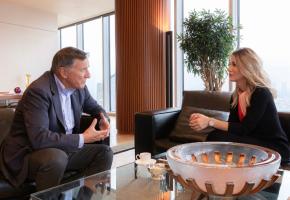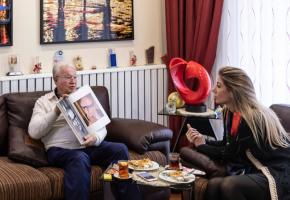





















We would like to thank Yüksel Hoca for his knowledge of photography, photography environment and guidance, and the effort he has put into our magazine in the 8 years since GezginFoto was published. Now it's time to get to know him better!













Interview: Nihan ÖZGEN
You have been writing in our magazine for years. You have dozens of students in the field of photography. What would you say to those who want to get to know you better?
I can say that I started photography at METU Photography Club in the 80s. My start in photography started with my participation in photography training at the Istanbul METU Alumni Association, and continued with my membership of IFSAK in 2001 and nature photography training at IFSAK. During the years of IFSAK administration between 2002 and 2006, my photography environment and perspective began to change. I turned towards life and documentary photography. In 2006, we held our country's first and only International Photography Biennial. I took part in the establishment and management of the Turkish Photography Federation. In 2010, I completed the master's program with thesis at Marmara University, Institute of Fine Arts, Department of Photography. I received the AFIAP title in 2012. In 2007, with 4 of my friends, we founded Photography Workshop, one of the first photography institutions on the Anatolian side of Istanbul. The spirit of photography and our work that started in those years continues with Fotografine in its 15th year.
My personal exhibition 'Dersaadet and Three Istanbuls' was opened in 2006 and was exhibited in many halls and cities. I took part in various group exhibitions and projects. We believe that we have brought a beautiful work to the world of photography with our 'Moments, Places, Stories' photo book project, which we made with GezginFoto in our 15th year. Our projects continue and will continue in 2022.
Photography, which I started in 2001 during my banking years, turned from a hobby to a professional in its 20th year. Even though we are going through difficult times, it is a great feeling to be involved in photography and to be a part of the GezginFoto family since its establishment.
How did interest in photography turn into passion during the faculty period?
During my years at METU, I was participating in the Photography Club's events and talks. I experimented with my father's film camera. But he continued at a completely amateur level and without training. After graduating from university, I took a break from photography due to our living arrangements and busy work life. Until he attended the photography training initiated by Istanbul METU Alumni Association with Özcan Yurdalan in 2000... The passion started in these years and continues with increasing momentum until today.
What kind of training did you receive in the field of photography?
I started with Özcan Yurdalan's basic photography training in 2000. We had a long-term program in the IFSAK nature group with our teachers Nusret Nurdan Eren, Tansu Gürpınar, Cüneyt Oğuztüzün, Ali İhsah Gökçen, Yalçın Savuran. I received darkroom training from our teacher Hüsnü Atasoy and we opened an exhibition at İFSAK Photography Days. I received documentary and street photography training from Stanley Green, Altan Bal and Landon Nordeman, creative portrait training from Çerkes Karadağ, and 'Secrets of Good Photography' from Merih Akoğul. Prof. from Marmara University Department of Photography. Sabit Kalfagil, Prof. Barbaros Gürsel, Prof. I attended the trainings of our teachers Güler Ertan. I attended Sandy King and Loris Medici workshops on alternative printing techniques at the İFSAK Photography Biennial.
You have come across the transition period from analog to digital. Has the photographer's job become easier? What do you think about this transition?
When I first started photography, I was shooting DIA. I have a good archive, most of which I have converted to digital. It is very interesting that my black and white darkroom work happened right before I went digital. The project "21-06 Istanbul" planned from black and white contacts with Stanley Green at IFSAK and our "Beliefs" project exhibited at Photography Days with Hüsnü Atasoy were shot on film and processed in a dark room. I also set up a small darkroom in my home. I still have my film camera, Nikon F80. I had DIAs taken on this camera. I took about 10-15 of the 36 exposures.
With the technology at the time, I bought a low resolution DSLR. I started taking photos. It was a very nice feeling. I wasn't buying film, taking photos was free. We could shoot as much as we wanted. I could never capture the colors and details in the film, but I also could not use the film in F80. I had the film, which I kept in case I could use it again, processed after a year.
Those who went from professional to digital were undoubtedly very impressed. But since I was an amateur, it was a great convenience for me. I was saved from paying separately for the movie and the bathroom. But sometimes I look at my nature photos from DIA, unfortunately they do not have the same color and detail...
What do you think is the level of photography in Turkey? Where are we in the world's studies?
Although I am not very involved in world photography, I follow current trends and styles. Most of the photographers in Turkey who are at a high level in terms of technique and knowledge have not been able to find their own style. I think our teachers and education processes also have an impact on this. There are also artistic perspective problems. For this reason, our photography does not make much noise in the international arena, except for some photographers. For this, we need more foreign photographers to come to our country, and we need to go there and participate in fairs. But it seems difficult in the current economic conditions.
Do you find the photography activities carried out in our country useful?
We must now leave aside classical photography shows, exhibitions and events. Different presentations and designs should be planned. More photography will be discussed, photography fairs, camps and festivals should be held with the participation of foreign guests. İFSAK was doing Photography Days, it hasn't been held recently, I hope it's due to the pandemic. Applied photography workshops should be held. Photography and photo publications must have a market and financial value. Of course, these organizations need to be financially supported by sponsors and the Ministry of Culture. I think photography is given very little support compared to the contribution made by cinema and other arts.
Can you tell us a little about the photography lessons you give? At what levels are there courses?
I started photography as an instructor. I also do commercial shoots, but my instructor side still dominates. Seminars starting from basic - beginner level continue on advanced photography topics. I mainly specialized in landscape and architectural photography, long exposure, macro (close-up). I have also been giving Photoshop lessons for a long time.
Following the developments in mobile, I prepared Mobile Photography and Mobile Video Programs. Seminars that have been going on for two years; It consists of shooting techniques, editing, editing and sharing sections.
What professions are your students from? Does photography education affect their professional lives?
I had students from all walks of life. I have been providing corporate and individual training for 15 years. My training continues on the Anatolian Side, the European Side, and in well-established structures such as the Büyük Club. Photography is always an expensive hobby. Even if the camera model and lens do not seem important at the beginning, it is necessary to invest in photography as you progress. This is both training and equipment investment. Now, with the increase in the dollar, photography has become more expensive, of course. I started when I was a banker. My students were mostly white-collar bankers and senior managers, professionals such as lawyers, doctors, architects, and business people. Photography is a very good socialization tool, especially for people working in busy and stressful areas. It includes activities such as traveling, having fun and doing activities. For this reason, I know that psychological counselors recommend it today.
What do you think are the indispensable qualities of a photographer?
Essentials of photography; Respect for people and the environment, attention, meticulousness and patience... Without these, there is no photography, nor can you be a photographer. I think technical issues, training and equipment come next. Apart from moral and ethical rules, the photographer must have serious observation skills and patience, and approach the subjects he works on meticulously.
What features do we need to see in a photograph to say that it is good?
Roland Barthes actually made the point in his book Camera Lucida "Thoughts on Photography". There are objective subjects called 'Studium' in photography. Like who shot it, where and when it was shot. Which techniques are used in photography is also included in this subject. There are also 'Punctum', non-objective issues. The story of the photograph is what affects us and pierces us in the photograph.
In today's world photography, a good photograph must first have a good story and these must be supported by technical issues, light and framing. These are all parts of a whole. Artistic photographs should be evaluated completely separately; artistic perspective and aesthetics come to the fore here, of course...
Which countries have you visited to take photographs? Where do you think is the most photographic?
I took photographs in many cities in Europe. I had long-term shoots in India. The one that impressed me the most was India. It is a country I would always want to go to... But I always prefer Anatolia to abroad. Our culture and geography do not exist anywhere else... East, Southeast, Central Anatolia and the Black Sea are the places that have always impressed me the most.
What is in your road map for those who want to become photographers?
I divide the things that should be in photography into three: technical accuracy, aesthetic intensity and story, narrative power.
Technical intensity is your equipment, your training. We can buy these from stores and educational institutions at cost. Getting training from a good institution or teacher and attending masters' workshops will take you to a certain level.
Aesthetic intensity; your artistic perspective, your use of light, your framing. These issues will develop with experience and will take time. You can move forward by focusing on shoots, trips, project work and having your photographs evaluated by a master you trust.
The power of expression is your culture, the books you read, the movies you watch, your intellectual knowledge. If you have these, your narrative and therefore your story will be strong. This photograph is formed by your cultural background before and after and lasts for years.
For this reason, most of us see photography as technical and aesthetic and do not attach much importance to its expressive power. I think this is the most important feature that distinguishes us negatively from world photography.
Where is photography heading?
In photography that started 150 years ago; We are in the period of transition from classical SLR cameras to mirrorless systems, following the analog period and the transition to digital, respectively. Especially at the amateur level, mirrorless cameras are starting to be advantageous. While we are still discussing digital photography interventions (even in the darkroom) and mirrorless cameras, the world is rapidly moving towards mobile photography and video. The shooting features of the latest model mobile devices are quite good and are improving rapidly. They solved the problem on mobile devices without lens replacement by inserting more than one lens. Now the problem is that the sensor is small, they will solve it in the future. The world is now talking about exhibitions and presentations made with photographs taken with mobile phones. We use it a lot because it is always with us. Additionally, editing and sharing apps have improved considerably.
Even though we photographers do not like it, the amateur level and the new generation are shifting towards mobile. I think that in the future, cameras will be preferred only for professional and advanced work, and the content and story of photography will come to the fore rather than its technique.