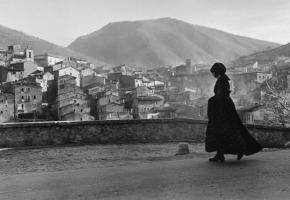
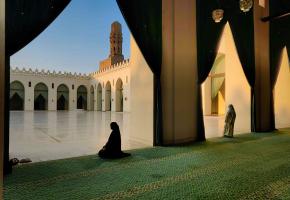
In this issue, I wanted to write about a subject that has been on my mind for a long time: Wide angle lenses. Some of our readers may wonder why especially wide angle lenses? Let me explain:
Text and Photos: Sinan GÜRLEN
In this issue, I wanted to write about a subject that has been on my mind for a long time: Wide angle lenses. Some of our readers may wonder why especially wide angle lenses? Let me explain: When we take photographs, we think that our camera records exactly the "things" we see with our eyes, right? Actually no. It is not possible for any human eye to simultaneously see the foreground and background sharpness that an 18mm lens sees at f18 aperture, or to mimic the distortion created by a 14mm fisheye lens, or to overlay the foreground and background of the image as with a 200mm lens. The camera does not "see" like the human eye, its dynamics are different. By manipulating both the composition he creates and the camera's different ways of seeing, the photographer highlights what he wants to emphasize in the image he encounters, and pushes to the background or even eliminates the factors that he does not want to emphasize or that distort the subject he wants to emphasize. This is exactly what makes photography a form of art rather than a point-and-shoot activity. Wide angle lenses are quite interesting in this respect; On the one hand, it provides the opportunity to reflect what is wanted to be conveyed in a narrow area into the frame with the relevant periphery, on the other hand, it forces the photographer to get involved in the photographed event, that is, to get closer. They are difficult because you cannot highlight what you want to highlight without getting closer with wide angle lenses. When the photographer gets involved in the subject, the viewer looking at the photo also becomes involved in the subject. A significant part of the shots that surprise us, envy us, make us dream, maybe even shock us, and ultimately make us look at a photo twice are shot exactly this way, by getting into the subject. Many things can be done with a wide-angle lens, but I think this is the most important thing, you pull the person looking at the photo into the frame rather than being a spectator. The subject is very broad and there is a lot to say, but unfortunately we have limited space, so we will only touch on some important points here, from lens selection to its use.
First, let's briefly clarify some terminology.
When we say wide-angle lens in the photography world, we mean lenses with a focal length below 50 mm on full-frame cameras. In fact, from a technical point of view, lenses under 43 mm should be called lenses, but due to some of the conveniences it brings, this limit has been accepted as 50 mm by both lens manufacturers and the photography world. On the other hand, on a full-frame camera, a 50 mm focal length corresponds to a 46-degree viewing angle, which is roughly the same as the "effective" viewing angle of the human eye. Examples of such full-frame cameras are Canon 5D, 6D, 1Dx and their derivatives, Nikon D750, D810, D3, D4, D5 and their derivatives, and Sony Alpha 7 and their derivatives. In other words, we can say that wide-angle lenses are lenses that fit a larger area into the same frame than the area covered by the human eye when looking at a single point.
When the sensor size of the camera drops below full frame (on multiplier cameras), the initial focal length of the wide angle lens also changes. On APS-C (1.5 or 1.6 multiplier) cameras, lenses below 35 mm should be considered wide angle, while on micro 3/4 cameras (2 multiplier) focal lengths below 25 mm should be considered wide angle. Examples of APS-C machines are 600D, 700D, 70D, 80D, 7D from Canon; On the Nikon side, D3400, D5600, D7100, D500; In Fuji, we can give X-T20, X-E2, X-T2 and X-Pro2 as examples. Micro 3/4 cameras include Olympus' E-M1 and E-M10 and Panasonic's GH5.
In which field of photography?
When it comes to wide-angle lenses, the first type of photography that comes to mind is landscape photographs, but it is also used very effectively in many situations. The most important of these is shooting in closed areas. Wide angle lenses are the definitive solution in cases where the entire space cannot be photographed by retreating far enough due to the building walls. Apart from this, it is also used extensively in architectural shots, street, travel, night and wedding photography. In fact, as long as it is applied correctly, it is a type of lens that should be in the photographer's bag in many fields of photography, from star photography to underwater photography. On the other hand, its usage area is much less in sports, wildlife, portrait and product photography.
When purchasing a wide angle lens...
My first and foremost suggestion - and this actually applies when buying any new lens - is to avoid falling into the "focal length trap". So what is this trap? The situation I often encounter in my environment is this: When you start photography, you usually buy a kit lens, and after a while you continue with a telephoto zoom lens. And then? Well, of course, you need a wide angle lens to cover the entire focal length, right? It is also bought, but after being used 3-5 times, it continues its life as an ornament at home. This is the focal length trap. The way to be a good photographer is not to have a lens set that covers all focal lengths, but to do justice to the lens at hand. If, for example, you are interested in portrait photography, a wide angle lens will not be a wise investment for you. But if you are producing in the photography fields I mentioned above where wide angle is used extensively, or at least if you are interested in it, you will need a wide angle lens.
I tried to write down other issues that I think you should pay attention to when buying a wide angle lens:
1) First of all, you must choose between zoom or prime lens. Wide-angle zoom lenses allow you to easily change the frame within a certain range, but they are generally larger and heavier. (such as 14-24 mm, 16-35 mm, 10-20 mm). On the other hand, since wide-angle prime lenses (such as 16 mm, 20 mm, 28 mm, 35 mm) have a single focal length, you will have to use your legs to zoom! However, although they are smaller, lighter and generally lower in price, their optical quality is better.
2) What about the diaphragm? Of course, the wider the aperture of the lens you will buy, the better, but your specific situation is the main determinant here. If you are going to use your wide angle lens to produce landscape photographs where a small aperture is used, it would not make much sense to invest in a wide angle lens with a very open aperture such as f / 1.4 - f / 2, which may be needed more on the street or indoors.
On the other hand, there is a belief among photographers that "lenses with open apertures are of better quality." If the argument were "lenses with open apertures are good quality" I could accept that, but I would leave a margin for that and answer "usually". Rest assured, I can name you many lenses with very high quality optics, even though the aperture starts from 3.5 or 4. At the end of this section you can find examples of some quality wide angle lenses available on the market, whether discontinued or still in production.
3) If you are buying your first wide-angle lens, I recommend you to buy a lens with a focal length of 20 mm or more in full frame (if you are going to buy a zoom lens, this is generally not a problem, because you will be able to go over 20 mm in any case on the long-focus side). Wide angle lenses are more difficult to use and get used to than other lenses, especially a super wide angle lens under 20 mm can be very difficult for you in the beginning. In order not to join the "I can't use this lens" bandwagon, it will be much more useful in the beginning to turn to a lens with a more reasonable focal length such as 24 or 35 mm. If you are interested in street photography, I think the first wide angle lens you should buy is 35 mm. There are lenses on the market with very high quality optics at reasonable prices, and it is easier to "pick up" the frame edges compared to 20 or 24 mm.
4) Wide angle lenses lose their sharpness more towards the edges of the photo than normal and telephoto lenses. This loss of sharpness is greatest in super wide angle lenses. This is an important performance criterion to look for in wide-angle lenses; some lenses perform better in this regard than other alternatives at the same focal length due to the higher quality optics used.
5) Wide angle lenses are lenses that are more susceptible to defects called vignetting and barrel distortion than normal or telephoto lenses. When buying lenses, it would be appropriate to check their performance in these matters. However, both vignetting and barrel distortion can be easily corrected during bright room operations after shooting.
6) Wide angle lenses are more sensitive to light reflection (flaring) than other lenses. Having nano-coated or flourine-coated optics in the lens you purchase will also minimize light reflections. When buying a lens, you can easily understand whether it has such a coating by looking at the technical specifications list. (It is very difficult to correct unwanted light reflections in the photo after shooting.)
7) If weight and size are important to you, you should also take this into consideration; Especially a large and heavy lens that you attach to a small and light mirrorless camera may eliminate one of the most important factors you look at when buying your camera, which is lightness and smallness. In this regard, prime lenses are always more advantageous than zoom lenses.
You will soon see a short list of some wide angle lenses (both types, prime and zoom) that I have selected from different brands, all of which produce very high quality images. You can find many old and new lenses in the list, both relatively high in price and cheap. Since prices can vary greatly, especially for old lenses, you can find price information by searching on different sites on the internet. Another thing is that this is my personal list, so not seeing some models in the list below may come as a surprise to some photographer friends. For example, you will not see the Nikon 14-24 or Canon 11-24 lens in the list below; Although the image quality it produces is excellent, it is off the list because it is too large, heavy, cumbersome and very expensive. (The list does not include zoom lenses that can be both wide-angle and tele, such as the 24-70 or 28-300.)
Note:
1) All lenses in the above list are lenses that can focus both automatically and manually.
2) Although there are newer versions of some lenses, their previous versions are included in the list above for different reasons.
3) Canon and Nikon's lenses produced for full-frame cameras can be used directly on DX machines without any adapters.
WHILE USING…
1) The most important effect of wide angle lenses is that they exaggerate perspective. Since you will approach the subject to fill the frame in shots taken with these lenses, the ratio of objects close to you in the frame to those far away will change, which will strengthen the perspective effect. Exaggerating the current perspective can in many cases greatly strengthen the effect intended to be emphasized in the photograph. Especially when photographing buildings, lines and edges moving away from the photographer not only strengthen the 3rd dimension effect, but also contribute to emphasizing the magnificence and size of the building.
2) The exaggeration of perspective in the example naturally causes objects at the edges of the photographed frame to appear larger than those closer to the center. Therefore, by using wide-angle lenses, it is much easier to highlight any object or person in the photograph. Again, by using this feature, it is possible to create an entry point to the photograph for the viewer's eye and allow the viewer to start looking at the photograph from that point.
3) Wide angle lenses are especially suitable for landscape photographers as they provide much greater depth of field than other lens types. For example, you have to take landscape photographs without using a tripod, but due to the lighting conditions, you do not want to use an aperture smaller than f/8 (as the shutter speed is too long). Under these conditions, when you focus 20 meters ahead, the clear field of a 50 mm lens will start from 7 meters away from you and go to infinity, while the net field of a 24 mm wide angle lens, for example, will start only 2 meters away from you. In other words, it will be possible to transfer more parts of the shots in your frame to your photo sharply.
4) Wide angle lenses are also perfect for adding a striking foreground to the photo in landscape photography. However, it should not be ignored that a wide angle photograph with added foreground may "steal" it to a certain extent from the main subject in the background. If the foreground and background are balanced and the foreground is prevented from completely dominating the photograph, it is possible to obtain very impressive frames that will keep the viewer's gaze on the photograph for a long time.
5) It is more likely to encounter dynamic range problems when shooting with wide angle lenses. (In my previous article, I talked about the dynamic range in detail.) Due to the wide angle of the frame, light conditions may vary more than shooting with tele lenses. It will be very useful to check that there is no problem with the dynamic range from the histogram during and after shooting.
6) Creating an accurate and understandable composition requires some effort with wide angle lenses, as there will be many things in the frame. Photos can easily become a pile of mess. There may be several ways to deal with this:
a) Finding lines and edges that are converging or diverging from each other and creating the composition around them.
b) Taking advantage of the distortion created by the wide angle lens at the edges and playing with the proportions of the nail polishes in the frame. To achieve this, the desired effect can be created by approaching and moving away from the photographed subject from different angles.
c) Another important issue is that the camera should be kept as parallel to the ground plane as possible in order to minimize the distortions that the wide angle may create. Angling the camera up or down will increase the distortion of objects above or below the frame. If the camera is pointed downwards, there will be an above-normal extension in the perspective at the top of the frame; if it is pointed up, there will be an extension above normal in the perspective at the bottom of the frame.
d) On the other hand, the disruption I mentioned above can also be turned into an advantage. When photographing a magnificent natural formation or mountainous structure, turning the camera angle slightly upwards will contribute to transferring this feeling of magnificence and size to the frame. So even if you stay at the same focal length, it is up to the photographer to increase or decrease the perspective effect to some extent.
e) Getting as close as possible to an ongoing event or subject and photographing it from a wide angle is the most satisfactory method of creating a composition with a wide angle lens. On the one hand, you prevent it from turning into a mess by removing unwanted elements from the frame, that is, you "zoom" the subject with your feet by using the wide angle, and on the other hand, you include the viewer in the frame.
f) In street photography, if we simplify the above composition-related items through a filter, it is possible to say this in short: Find a dominant subject, get as close as possible and use the lines and edges coming towards or away from you to emphasize your subject in the photo.
So, what if we do not be able to fully use the magic of the wide angle lens? Let me talk a little about the things that I think should not be done.
1) Don't use a wide angle lens to fit more things into the frame. As we always say, wide angle is not for fitting a lot into the frame. It may seem strange to our friends who are not familiar with the subject, but wide angle is used to get closer and get into the photo, especially in close-up shots. You draw the person looking at the photo in with you.
2) Photographing people close to the edges of the frame in portrait photographs. Especially do not do this! You can take the face and body out of proportion and turn your subject into an alien!
3) Do not use a polarizing filter, especially at wide angles below 30 mm. Polarizing filters show their full effect when sunlight is received from the side. When shooting with wide-angle lenses, the effect of the polarizing filter may be greater on one side of the sky and less or not at all on the other, depending on how wide the lens used is. As a result, you may encounter a sky that is bright on one side and dark on the other.
4) Pay more attention to the background. When taking a photo with a wide angle lens, if you want to ruin the photo, the surest way to do this is to concentrate on the main subject and not pay enough attention to the background. Since these types of lenses photograph at a very wide angle, it is much more likely to miss what is happening in the background when taking the photo.
When you first start using wide angle lenses, it is normal that you cannot take the shots you want. However, once you get used to it over time, you will see that you will not leave it alone.
Stay well…