




















“If you can only see the light revealed… If you can only hear the spoken voice… You can neither see nor hear” Halil CIBRAN













Text and Photos: Gilcan Mete DELİBAY
“Everything lives until the last person who remembers it.” This Native American proverb can perhaps be taken as a starting point for understanding the evolutionary travails of photography. If it weren't for the death anxiety that God has given to humans, we would never have this much anxiety about living or the fears and happiness in life. When we examine prehistoric cave arts, we can see that the basic idea behind people drawing their lives on the walls, even when life was quite difficult, was the result of a basic human weakness or anxiety, such as being remembered after death.
We can examine the universal pains of photography under three headings. The first of these can be considered as the technological developments that continued with the emergence of the camera, the second is the pain of existence of photography in this historical process, and the third is the pain of man's own development and the pain of the photography process. When we examine each of these three processes in themselves, the process from the idea stage of the camera to the realization stage may seem to be the longest and most painful period. The next process, after the invention of the camera, is the long and painful process that photography has achieved and followed along the historical path it has followed. Finally, the process of starting to take photographs within one's own lifetime and experiencing the seemingly short but most painful period in one's perspective on photography...
Books full of sentences could be written about each topic on its own. The subject I want to focus on in this article is the pains of man in his personal photography evolution. But before moving on to this subject, I would like to remind you that photography was an invention that was greeted with the greatest enthusiasm in history, with a long standing ovation when it was announced by Arago, the President of the French Academy of Sciences, in 1839. Even in the 1800s, when colonialism began, that is, in this period led by countries such as England, France and Germany, the possibility of people obtaining their own portraits as a real copy and passing them on to the next generations, and the fact that those transfers that started in the caves could now be stored with real records, were the reasons for this great enthusiasm.
The camera, which emerged as a result of long and versatile developments until 1826, when the first photograph was taken, was very heavy and caused difficulty in carrying, but in the following years, it would reach the daily use of people. Cameras, which have undergone rapid and major revolutions with various developments in the subsequent period, have a place in our lives and continue to develop with constant and very striking innovations. While studies are continuing in the coming years for technological developments that are prepared to take photographs at dynamic ranges close to the human eye by making ISO evaluations per pixel, it seems that cameras produced with studies on femto light will even make it possible to take photographs of objects in areas we cannot see. Who knows, maybe we will be able to send the images we take with tiny cameras or glasses to hard disks that are miles away and store the photos. But one thing is true: no matter how much the cameras develop, the selection, aesthetic view and interpretation of the image from life will remain the only element that will protect creativity as a human characteristic. Cameras and imaging systems, after these long historical pains, continue to develop very rapidly today and offer brand new opportunities to those who want to take photographs in the ruthless race of capitalism.
One of his other universal pains is the path that photography has taken with its purpose in the process that started with its entry into our lives. While photography started its adventure as a portrait tool despite the long exposure times in its early years, it began to be used for documents, intelligence and situation determination in the following period. The first artistic works of photography started with religious themes, as in the historical process of painting.
As a result of the studies that have survived until today, photography is still divided into various types, as well as being a document in many areas. While these types of photography, excluding commercial photography, are diversifying in line with people's visual perception tendencies, new shooting types are emerging in parallel with technological developments and the works are being consumed rapidly, directing photographers towards new searches. Apart from its commercial, documentary and news nature, photography continues to be used in artistic works as it is a universal language.
There is a pain that is greater than the pain of technological and conceptual processes, which is the pain of personal photography experienced by human beings in a limited time. Within the framework of similar situations that every individual who starts photography experiences more or less within himself, there are situations where there are departures, separations, reluctances, successes and dissatisfaction with photography, which is started with great curiosity and desire.
Photography... Writing with light... This is the painful adventure that many people, who are introduced to an effective photograph accompanied by these magic words, are fascinated by and pursue with excitement...
The human visual system consists of reflected lights. Cameras, which are essentially copies of our visual system, are merely an imitation of the human eye, which has perfect vision. For a correct start, it is necessary to understand the light within the word very accurately, as well as starting with the meaning of the word "light".
We see the light reflected after the colors in natural or artificial light sources hit an object or surface. So, what do we think when we see the color trapped in the light, outside the adopted colors, and rejected by matter and reflected outside? For example, when we see a red rose, most of us think, "What a beautiful red rose!" By saying this, we attribute meaning to the color red and look at it as the representation of our emotions. Let's look at it from this perspective: While all colors except red remain in the essence of the red rose, wouldn't accepting the "red" that the flower expels from itself as beautiful mean rejecting the colors that matter accepts? Here I would like to remind you of Khalil Gibran's words: "If you can only see the light revealed... If you can only hear the spoken voice... You can neither see nor hear!"
This is the beginning and biggest pain of photography. This should be the basic question one should ask themselves at the beginning of every photography adventure. If you only see what everyone else sees and hear what everyone else hears with the camera, you won't actually be able to do much.
The biggest pain in the beginning of the love of photography is related to camera and equipment choices. The tension at this stage of people who are unfamiliar with the subject and technical details is very tiring. The camera that will be purchased with limited or sufficient means is expected to be the best for the budget. Research is done, but advice from an acquaintance is always sought. This is where the knowledge and experience of the person from whom help is sought is very important. In general, people give recommendations based on the cameras they use and are used to, betting that they are the best. During this period, cameras that were thought to have worked wonders a year ago are destroyed. In fact, this is the fate that the cameras currently used will suffer in a few years. It cannot be the right approach to reject the possibilities of cameras and, most importantly, lens options, but it is a big mistake to attribute the entire success story of photography to these systems.
After this difficult initial phase is overcome with opportunities, research and advice, the second painful phase, "learning", begins. This stage is the period of being informed about the basic features of cameras and basic concepts such as composition and light that make up photography. This is the period when those who say "I can't do this" give up, but those who are successful feel like photography geniuses. The first photographs taken give the person temporary happiness, and over time, they realize that they are not enough. Those who pass this stage can increase their knowledge by working hard and researching and complete the process faster.
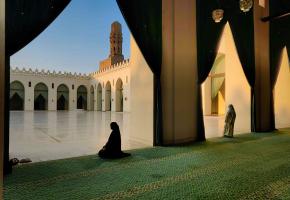
As the pain increases, the patient begins to progress on the path shown in the photo.
After experiments, studies, and finding everything worth taking, the magic of light is realized and photographs created more thoughtfully in more accurate light conditions begin to be achieved. Now the technique has advanced, the details of the equipment are in place, and exponentially growing information for photography has begun to be accessed. Information has also been developed for editing the photographs taken, and the photographs have begun to achieve more effective visuality. Nowadays, the photographer can make the right light, the right timing and the right choices according to his perspective in life and can create similar or even better works of which the locations and examples are known.
Work that continues in this way for a long time may after a while be replaced by boredom, lack of creativity and low morale. This time period is the period in which a person determines the time he can overcome with his own self. A threshold is reached and the choices between passing or staying at this threshold begin to be questioned. This is the abandonment phase of those who do not take photography into their lives commercially, or who do not work as news or documentation. In fact, I think this is exactly the starting point of photography.
Technical problems have been solved, the use of correct composition and light has been completed, aesthetically beautiful photographs have been produced, and the satisfaction of taste and interest has been reached. Known photographs were imitated, photographs were taken in the same places and the images created in the magical atmosphere of light were crowned with admiration. So, what will be the next step?
Creativity and artistic spirit will come into play in these situations and will advance the person, or repetitions that turn into a vicious circle will create reluctance. Now the photographer's labor pain has begun. A very intense, cruel and great pain! Here the photographer should stop seeing the lights directed towards him, abandon chasing the photographs shown and continue on his way. This is a path that a person can reach by seeing inside himself when the lights go out. At this stage, the person should start questioning himself, see his fears, hopes, pros and cons in his subconscious, and feel the pain of writing through the camera what he will tell from within, not what will come to the camera from outside. This is the moment when photography was truly born and its most beautiful time.
Now take a stone in your hand and see what the stone means to you. Or a tree, a bench, furniture, symbols... Now look at everything from within. For example, imagine that the stone is not a stone but a castle, a road, a house, a bridge, grinding flour and creating fire.Even imagine standing at the grave in death and waiting in those few square meters of eternity. Stone is no longer stone. The word "hard-hearted" may suddenly seem inappropriate to you. You may begin to question, you may want to argue, you may begin to hear everything other than just the reflected light or the spoken word.
Let me give you another example: You can shoot very beautiful, old, interesting, colorful and flashy doors in many places. These are the things that immediately attract every photographer's attention... Do this: Open a door at a 45 degree angle and step inside. Imagine that there is a dark room and wonderful light comes in from the 45-degree angle of the door... Let's imagine now. What can enter there for you through that crack of that door, through that wonderful light? What can come out of the doorway where the light falls? A living friend of the house can enter through that gap, a child who got dirty while playing on the street, a newborn baby, a bride, a patient... Question what the door means to you. Trust? Peace? Boring? Is it a place you want to get away from? When you question yourself, you can imagine dozens of photographs coming in and out of that door and take that photograph. If you can convey what you feel, you can read the emotional response of the image you wrote with light in the viewers.
The first of the birth stages of the photographer is the beginning. His second birth was his discovery of light, his success in creating photographs, arrangements and choices, and taking beautiful photographs in terms of aesthetics and subject matter. The last stage is the photographer discovering his own soul and reaching the language of expression, and opening his own soul to be read by writing it with light through the camera. This is the true birth of the photographer. Because the world sees your beautiful photos and throws them into the billions of photo dumps created from visual data. Consider that billions of photo data are created every day in the world. It is not possible to monitor or display this much data. But there are photographers who are known all over the world and photographs that are remembered all over the world. As you read about these accomplishments, note that these people have resolved themselves as personalities beyond the time, effort, and perseverance they put in. When you start speaking and your words can be listened to, the number of people who hear you will increase. Remember, the world passes by looking at the beautiful photographs you take. Beautiful photo will be produced continuously. But a museum, a gallery, asks you, “What do you have, what is your message and your promise?” When he says, your portfolio should have something to say.
The main goals of the alchemists were to transform worthless metals into precious metals such as gold or silver and to discover eternal youth and immortality by bringing the human body and soul to the highest, purest and healthiest level possible. Alchemists, who failed to find the philosopher's stone, which was believed to bring immortality to the person who owned it and turned metals into gold, formed the basis of "chemistry". ZQx00000
In addition to the photographer's biological birthday, the personal development birthday is also a birthday. Happy birthday to those who reached this birth.
“A person lives as long as the last person who remembers him.” We said when we started. I hope you have photos that will remind you of yourself…