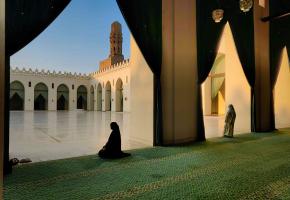




















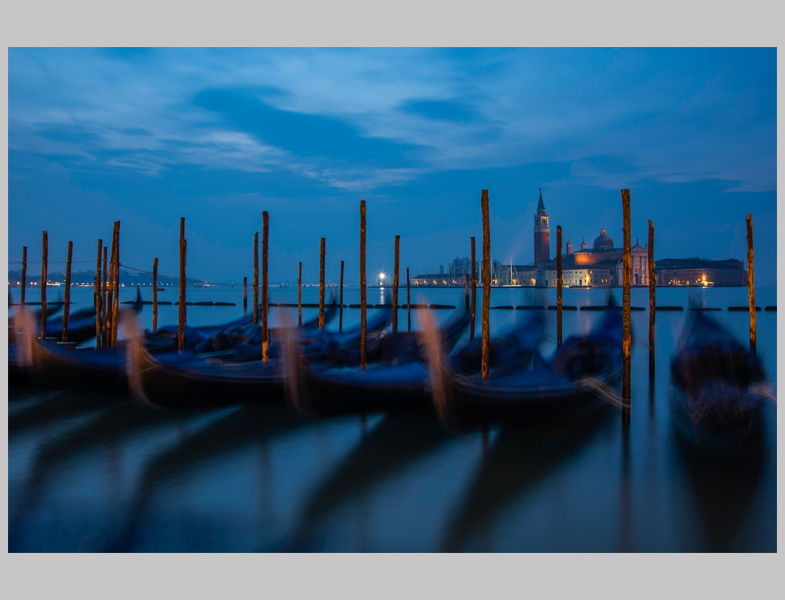
A photographer has the ability to determine what people will look at in a photograph. You can give the sense of depth and dimension in a photo in two ways: Depth of field and shutter speed. In this issue, we will talk about depth of field.













Text and Photos: Yüksel ALTUN
You may have heard of the term depth of field (DoF - Depth of Field), but if you are new to photography, what depth of field does and how to apply it may not be fully understood. Depth of field is one of the two basic elements that provide the feeling of depth and dimension in photography. The other one, as we just mentioned, is snapshot.
Depth of field is basically the area of acceptable sharpness at the point in focus in a photo.In every photo there is a specific area in front of and behind the subject that appears in focus. This area will vary from photo to photo.In some images, small areas of focus may be sharp, called shallow depth of field. Some may have a wide area of focus, called deep depth of field.
We decide what depth of field we should take based on our purpose, type and style of taking the photo. Sometimes we use shallow depth of field in a macro or portrait shot, while we prefer wide depth of field in landscape or architectural shots. In composition, we encounter issues such as simplicity, clarity and center of attention.
4 Main Factors That Will Affect How You Control Depth of Field
- Aperture (f-number) on the camera lens
- Distance from object to camera
- Focal length of the lens on your camera
- Sensor size
DIAPHRAGM
The mechanism on the lens of the camera determines the amount of light entering the lens. To control depth of field, you first need to control aperture.
Wide aperture = Small f-number = Shallow (narrow) depth of field
Small aperture = Large f-number = Deeper (wider) depth of field
It might be easier to remember this simple concept like this: The lower your F-number, the smaller your depth of field.Likewise, the higher your F number, the greater your depth of field.For example, using the f/2.8 setting will produce a very shallow depth of field, while f/11 will produce a deeper DoF.
DISTANCE
The closer your subject is to the camera, the shallower your depth of field will be.Conversely, moving away from your subject will deepen your depth of field.
If you want shallow depth of field on your subject, get closer and plan close frames. You will see how it affects depth along with the other two parameters.
FOCAL LENGTH
Focal length refers to the lens' ability to enlarge or reduce the image of an object.For example, in a wide-angle lens with a focal length of 12 mm, the angle of view is wide and the object is small in the frame, whereas in a lens with a focal length of 200 mm, the angle is narrow and as it gets closer to the object, a larger image is formed in the frame. While the depth of field is greater in wide angle lenses, the depth of field will be shallower in narrow angle lenses.
SENSOR SIZE
The physical size of the sensor in your camera affects DoF.Unlike other variables, you cannot change this unless you use a different camera.
Small sensors like those in phones and compact cameras give you the most DOF.This is one of the main reasons why people are switching from phones to cameras.Even though new mobile devices are coming out, this is still a significant problem.
Essentially, cameras with smaller sensors create photos with more (wider) DoF at the same aperture and distance settings.For example, at the same exposure values, the depth of field in the image taken on a small sensor camera with cropped (APC) is wider than on a camera with a fullframe film size sensor.
Ultimately, combinations of these four factors and focus point will affect our depth of field. The sensor size is always a fixed value depending on the machine we use.
Quick Tips and Frequently Asked Questions
- If we use a lens with an open aperture value such as f1.4 / f1.8 / f2.8, shallower depth is provided at focal lengths of 50 mm and above.
- If we are using more standard lenses with aperture values such as f3.5 - 5.6, let's pay special attention to getting closer to the subject. Otherwise the net area will be large.
- If wide angle is used, we are generally shooting subjects that require a wider depth of field, such as landscapes and architecture. Therefore, a wide depth of field is desired. But for shallow depth of field, an open aperture and getting closer to the subject is required.
Note for Amateur Users and Machines: If you are shooting with an automatic camera and mobile devices or have no photography knowledge, select PORTRAIT mode for shallow depth of field. It will automatically adjust the depth of field for you.
Should Depth of Field Be Distributed Evenly in Front and Behind My Focus Point?
No, usually about one-third is in front of your focal point and two-thirds is behind the subject. The clear area at the focal point is shallow or wide, that is, unequal, depending on the aperture, distance from the subject and focal length.
How Will Understanding Depth of Field Improve Our Photos?
Managing depth of field is one of the most important tools you have because it is one of the most important factors in having sharp images. Knowing how to sharpen the parts of your image you want and downplay the parts you want out of focus is a great tool for creating great images.
When Should I Use Shallow Depth of Field?
Using a shallow depth of field is the best way to isolate your subject from its background. Especially in portrait shooting, it is important to separate and edit the background with shallow depth of field. It provides simplicity, clarity and orientation to the center of attention in photography.
Shallow depth of field depends on how much space we give to the background; It is regulated by aperture, focal length and distance to the subject.
Shallow depth of field is also useful in wildlife, bird and sports photography. At the same time, it provides clarity and sharpness with a high shutter speed, especially in low light conditions with an open aperture (f2.8). With an open aperture, better quality photos can be taken by letting more light into the lens, by using a high (fast) shutter speed, without increasing the ISO value, or by increasing it less depending on the light.
In sports photographs, effective frames can be taken by drawing attention to the athlete, separating the background and freezing the object with a high (fast) shutter speed.
When Should I Use Large Depth of Field?
In landscape and architectural photographs, wide depth of field and clarity and sharpness of the area in the frame are important. By using a wide-angle lens and small aperture, you can maximize your depth of field. Especially in landscape shots involving larger areas, the hyperfocal distance rule should be observed.
What is Hyperfocal Distance?
If you want the depth of field in your photo to be high, that is, if you want every object to be clear, it would be correct to shoot by calculating the hyperfocal distance.
If we give an example based on this table; For a 35 mm lens, at F11 aperture, the object is infinitely clear at 4 meters and at 1.88 meters.
Hyperfocal distance is the closest distance at which we can shoot objects at infinity acceptably sharply when we focus on the point we have determined. It is the point where we can focus on the widest area and where we need to focus in order to achieve maximum depth of field. For a lens focused at infinity, this is the distance at which all objects are acceptably sharp. If you focus at the hyperfocal distance, you can achieve the widest depth of field. In this way, there will be almost no unclear area in the photo you take.
How Can I Determine Depth of Field?
We talked about determining hyperfocal distance and depth of field in focus. You can determine the clear area by using depth of field charts based on your focal length, aperture and distance from the subject. These charts, copies of which we used to carry with us, can now be determined from mobile applications such as DoF.
Apart from this, depth of field can be previewed through the viewfinder with the DOF button on DSLR cameras. If the image is dark when you look through the viewfinder and press the button, the clear area is wide. This preview made through the viewfinder on DSLR cameras will not work on mirrorless cameras.
What is Depth of Field in Macro Photography?
In macro, in low light and with longer focal lengths, photos with very shallow depth of field are often produced.Because getting closer to the subject and long focal length makes the depth of field very shallow. To check the clear area, set your lens to the smallest aperture the light will allow (f11-16).In this case, depending on the movement of the subject, it may be necessary to increase the ISO and use a tripod to increase the shutter speed.
After adjusting the exposure values, fine-tuning the depth of field improves clarity. This adjustment can be made in the M focus option as follows.
1- By holding down the DOF button on DSLR cameras and manually focusing through the viewfinder
2- By approaching the focus area with the magnification button on the LCD screen and manually focusing
What is Bokeh?
Bokeh (Boh-ke) means blur in Japanese.This effect is produced by out-of-focus areas in your image that are beyond the depth of field.Bokeh generally refers to the pleasing circle shapes caused by the shape of the lens aperture.Bokeh, which is usually created when shooting with the aperture wide open at f 1.4 - 2.8, can also be created with smaller apertures (f 3.5-5.6) if the background is far enough away.
To Increase Depth of Field:
- Narrow your aperture. (larger f number)
- Get off topic.
- Shorten the focal length.
To Reduce Depth of Field:
- Expand your aperture. (smaller f number)
- Get closer to the subject.
- Extend your focal length.
How to Use a Neutral Density Filter to Control Depth of Field?
A neutral density filter is a material you place between your lens and the subject to reduce the amount of light entering your camera.This choice will result in a slower shutter speed, a larger aperture, or a higher ISO to achieve the correct exposure.Filters generally range from 1-10 stops of light.
If you're photographing outdoors on a bright sunny day, you may find yourself limited to smaller apertures like f11 and f16.This is great for capturing a lot of detail if you want a shallow depth of field. This is where a neutral density filter comes into play. A 2-stop ND filter turns an aperture of f/8 into f/4.A 3-stop ND filter makes it f/2.8, making it much easier to hide a cluttered background with a shallow depth of field.