




















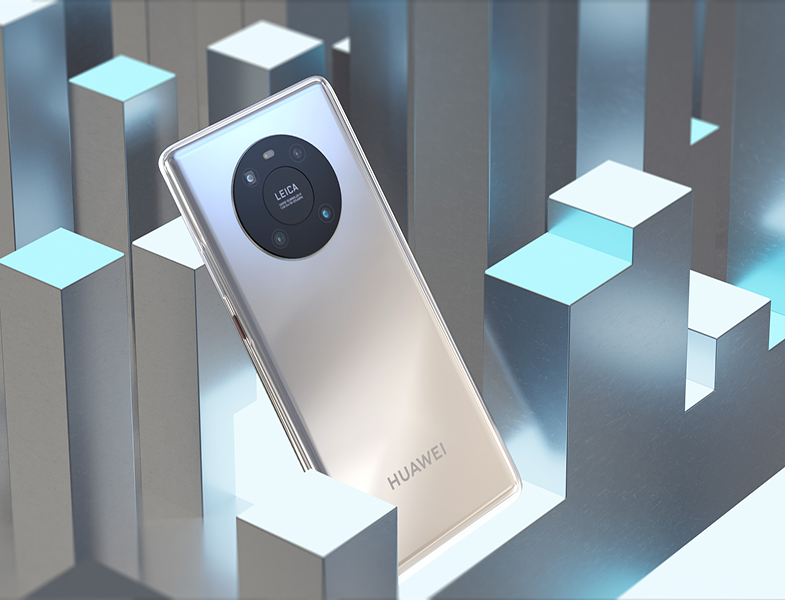
Smartphone cameras have become much more capable today, with HUAWEI pioneering the development of mobile imaging technologies.













Technological advances have allowed smartphone cameras to enter areas where professional cameras are used. These developments were innovations that allowed smartphone manufacturers to overcome the challenges of integrating cameras into a small device. Considering that photography, and therefore videography, is the art of light, the ability to capture light is critical to producing high-quality images. In cameras, this responsibility falls on the sensors.
The Challenges of Smartphone Camera Design
When it comes to sensors, size matters. Today's camera sensors consist of millions of pixels that collect light. The larger and more pixels, the better the sensor's ability to detect light and therefore deliver better image quality.
Since professional cameras are not limited by size, manufacturers have the freedom to integrate much larger sensors into the body, allowing for much better light capture capability. The same freedom does not apply to smartphone manufacturers; In smartphones, space is a huge luxury. While sensor size is important, so is the size of all other components.
This poses a serious engineering challenge for smartphone manufacturers, and many have decided to use small sensors while compensating for the performance difference along with other workarounds. HUAWEI, however, chose another path.
Industry Leading Sensors
HUAWEI overcame the challenge by integrating some of the smartphone industry's largest sensors into its devices. HUAWEI's insistence on using large sensors is what has earned it a reputation for producing camera smartphones that offer excellent image quality and low-light performance.
On the HUAWEI Mate40 Pro, the 50MP Super Sensing Wide Camera, which is the main camera of the Ultra Vision Cine Camera system, has a huge smartphone camera sensor measuring 1/1.28 inches per corner. Providing a large surface area for HUAWEI to fill with lots of large pixels, this giant sensor results in high-resolution images as well as objectively better clarity and detail than most of its competitors' products.
The main camera sensor, in addition to having a large size, has a RYYB color filter array (CFA) pioneered by HUAWEI. Unlike RGGB CFA used in most other smartphones on the market, RYYB CFA uses yellow pixels instead of green pixels to provide up to 40 percent more light reception. And to push the boundaries even further, it also supports 4-in-1 pixel binning and Full Pixel Octa PD Autofocus, combining four pixels into a single pixel for better light detection and autofocus performance. All these features contribute to the impressive camera performance offered by the HUAWEI Mate40 Pro.
A Leapfrog in Imaging Technology
The Kirin 9000 SoC on the HUAWEI Mate40 Pro gives the smartphone the power to support better computing and imaging capabilities that surpass its predecessors. For photography, it supports XD Fusion Engine, which processes RAW frames with artificial intelligence and algorithms, producing a higher quality output by optimizing all variables such as color, dynamic range and detail.
Thanks to the powerful NPU and ISP inside the Kirin 9000 SoC, HUAWEI Mate40 Pro quickly analyzes frames to support XD Fusion HDR Video in video shooting, helping everyday users create videos full of stunning colors.
Lifelike Vitality
Apart from detail and clarity, color is also an important factor in image quality. HUAWEI has been designing camera systems together with Leica for years. The powerful duo collaborated on a range of camera-related developments, from color to optical design, creating mobile phone-readable photos with Leica's diverse and vibrant color palette.
HUAWEI Mate40 Pro features an eight-channel Multi-Spectrum Color Temperature Sensor and AI AWB Algorithm to improve color accuracy by up to 45 percent compared to a smartphone camera with a three-channel sensor. A new color adaptation solution is also used to transfer the information captured by the cameras to the screen more faithfully. Leveraging the DCI-P3 color gamut, the HUAWEI Mate40 Pro effectively expands the range of colors it can capture and display on the screen.
Say Goodbye to Fish Eye
HUAWEI Mate40 Pro has two ultra-wide Cine cameras, one on the front and one on the back. The 20MP rear ultra-wide-angle camera, which is part of the Ultra Vision Cine Camera, is as versatile and powerful as many main cameras on other devices.
While other camera smartphones may face difficulties when shooting with the ultra-wide camera at night, the Ultra Wide Cine Camera on the HUAWEI Mate40 Pro has no problem capturing clear night shots thanks to its massive 1/1.53-inch sensor.
The Ultra Vision Selfie camera has some tricks up its sleeve, too. It supports a wide field of view of up to 100 degrees, making vlogging much easier and allowing users to capture more people in the frame in a group selfie, even without a selfie stick. Distortion is kept to a minimum thanks to the distortion correction algorithm in both Cine cameras, minimizing the "fish-eye" distortion effect to ensure images remain true to life.
Versatile Zoom Range
HUAWEI Mate40 Pro offers amazing zoomed shots with its Periscope Telephoto Camera. Leveraging a folded optical system, HUAWEI Mate40 Pro supports 10x hybrid zoom and 50x digital zoom to bring distant objects closer. It is worth noting that HUAWEI was the first manufacturer to realize this optical design on a commercial product, which is a testament to its R&D capabilities.
World Leadership in Photography with Mate 40 Series
According to DxOMark measurements, Huawei Mate40 Pro is at the top of photography with 136 points. It turns out that the Photography parameters that scored 140 points are Exposure, Color and Texture with 109, 104 and 101 points respectively. The new Huawei flagship sets a new standard in mobile videography by impressing with its video capabilities. With the sub-ratings in the video category, Autofocus (105 points), Noise (105), Stabilization (102), Exposure (102) and Zoom (Tele and Wide) (88), the total video score of the HUAWEI Mate40 Pro reaches 116 points.
Benefit from HUAWEI Ecosystem
HUAWEI Mate40 Pro can also create synergy with other HUAWEI products. For example, users can pair HUAWEI FreeBuds Pro with a HUAWEI Mate40 Pro and use the earbuds as an audio input device while shooting video. For post-production, HUAWEI Share allows users to quickly transfer files from HUAWEI Mate40 Pro to a HUAWEI MateBook X Pro and enjoy better productivity on a larger screen.
Beyond the native camera app, there's a world of third-party camera apps in AppGallery. As one of the top three app stores worldwide, AppGallery offers users a wide range of globally popular apps, games and services. There is also Petal Search, HUAWEI's official search engine, which complements AppGallery with comprehensive search functionality. HUAWEI users can easily download the most popular applications on Petal Search, including Instagram, Facebook, WhatsApp and Zoom.
While the tools alone won't create great photos or videos, the powerful hardware and many user-friendly features on the HUAWEI Mate40 Pro definitely get most of the work done. Whether you're just into content creation or a professional looking for a reliable second camera to have with you at all times, the HUAWEI Mate40 Pro will be a great companion.