
















“What you breathe in during childhood stays with you for the rest of your life.”
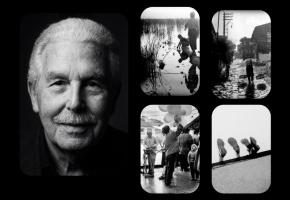
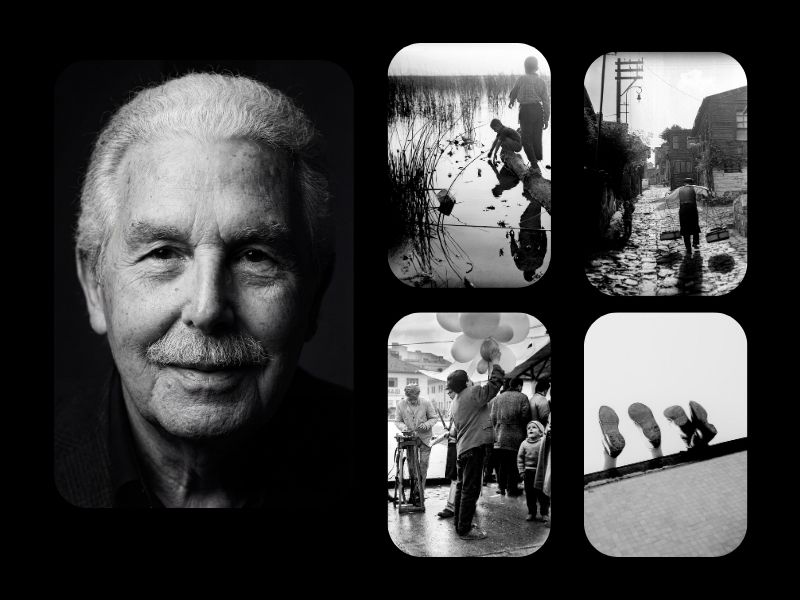
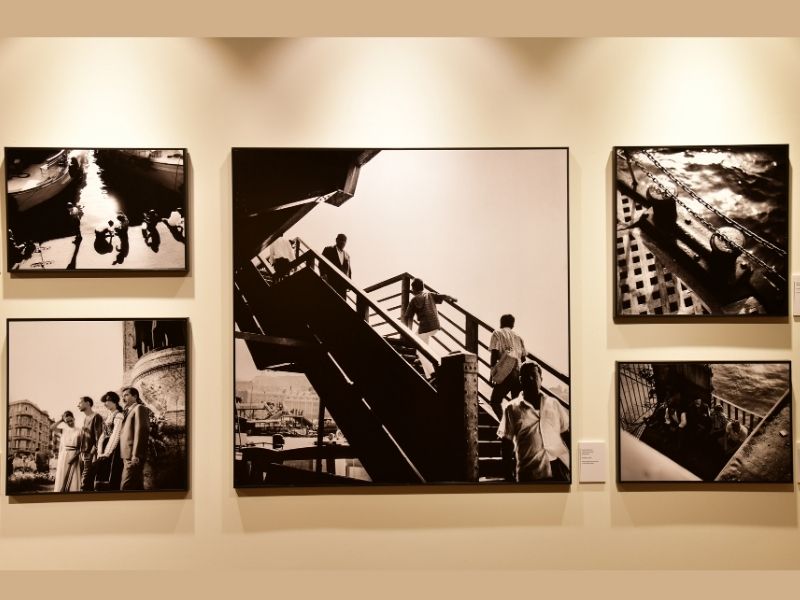
Feruz Ertürer is bringing a retrospective spanning more than 75 years of his photographic journey, along with a selection from his family archive, to audiences at Bulgur Palas until August 16. The exhibition, “Another World Where He Looks,” reflects the social and cultural traces of its era through scenes from everyday life while also revealing the artist’s distinctive perspective. Drawing on the exhibition, which features photographs never before published anywhere, we spoke with Ertürer about the nostalgic atmosphere of the analogue era and his approach to photography.
Interview: Nihan Özgen Meleke
Photographs: Feruz Ertürer
Exhibition Photographs: bkz İletişim
We learned that your first encounter with photography was closely connected to your family’s photographic tradition. Could you tell us a little about those early days?
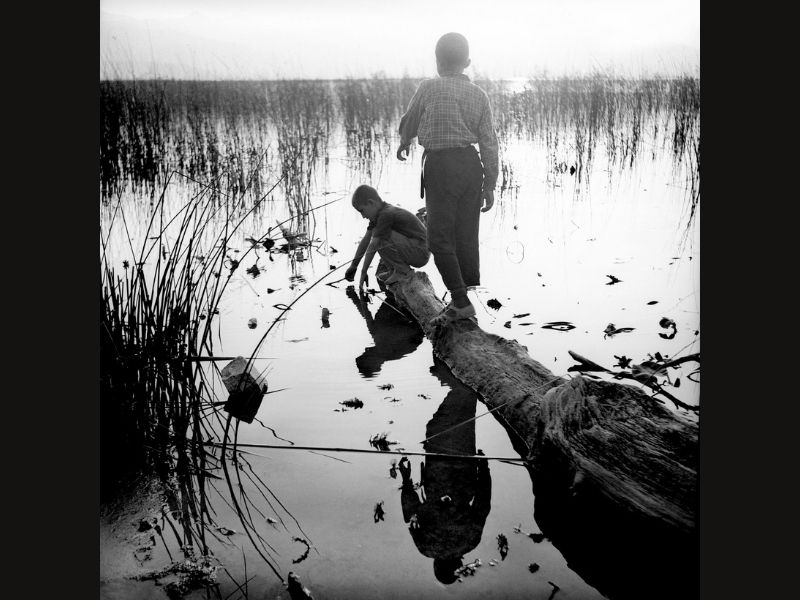
I did not choose photography later in life; I was born into it as the son of photographer Ahmet Ertürer in Adapazarı. My childhood years passed among the smell of chemicals in the darkroom, glass negatives, and cameras. My father was a well-known photographer who took his work seriously, helped the people he photographed look their best, and developed some distinctive techniques of his own. In Adapazarı, everyone knew him as “Snapshot Photographer,” or, as he was also known, Ahmet Bey the Alaminüt photographer. My older brother, Mümtaz Ertürer, took the legacy he inherited from our father one step further, carrying it beyond the profession and transforming it into an art form. He became one of the founders of “GRUP-5,” which represented a significant milestone not only in Adapazarı but also in Turkish photography.
From an early age, he taught me about light, framing, approaching subjects and, above all, how to look. Even today, whenever I pick up a camera, that meticulousness kicks in instinctively. I will never forget the first time I entered the darkroom alone. I was 15. I was curious. I started photographing everything I could get my hands on. Watching the negative slowly emerge on paper seemed like a miracle to me. Apparently, what you breathe in during childhood is what you go on breathing for the rest of your life.
Turning to the exhibition, and taking the title “Another World Where He Looks” as a starting point: Is photography about documenting what you see, or reconstructing what you see?
For me, photography is both testimony and the interpretation I bring to a subject. I never interfered with the subjects I photographed; the frame and subject I chose were already a representation of that moment. I pressed the shutter because I found the meaning and emotion there, in that particular moment. A camera mechanically records reality; but the photographer chooses a world from within that reality. What I leave outside and what I include within the frame is, in a sense, a form of construction.
Did you have difficulty selecting photographs from your archive for the exhibition? What kind of work did you undertake during the preparation process?
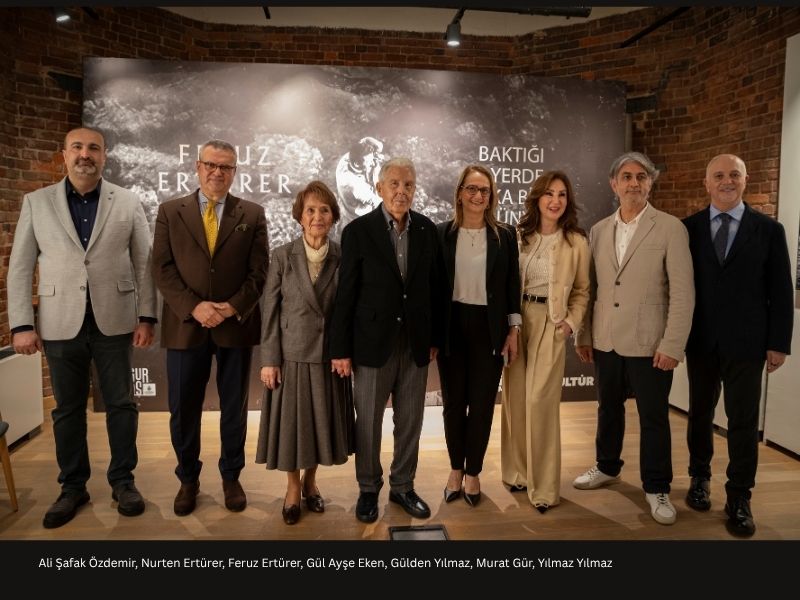
About a year ago, my dear daughter Gülden Yılmaz suggested that I bring my archive together in a book. That proposal also paved the way for the exhibition. We got to work together with my dear longtime friend, curator Murat Gür, and my nephew Enis. It is not easy to make a selection from an archive spanning more than seventy-five years. Thousands of frames...
During this process, we initially focused on my early work. Around 500 negatives, which I had carefully preserved in very good conditions for many years, were reviewed. Murat Bey oversaw the scanning of the negatives, the enhancement of the images, the selection process, and the preparation of the photographs for printing. As the art director and curator of both the book and the exhibition, he put an enormous amount of work into every detail of the project.
The book contains 143 photographs, while the exhibition features 69 works. We regularly met with dear Nurten Yalçın Erüs, who wrote the story of the book and the exhibition. I tried to describe the period in which each photograph was taken and the story behind it. It was not easy; the photographs go all the way back to the 1950s. It felt like travelling through time.
Your photographs contain both documents that mirror their era and original experiments that move beyond conventional perspectives. How do you strike a balance between documentary and artistic expression?
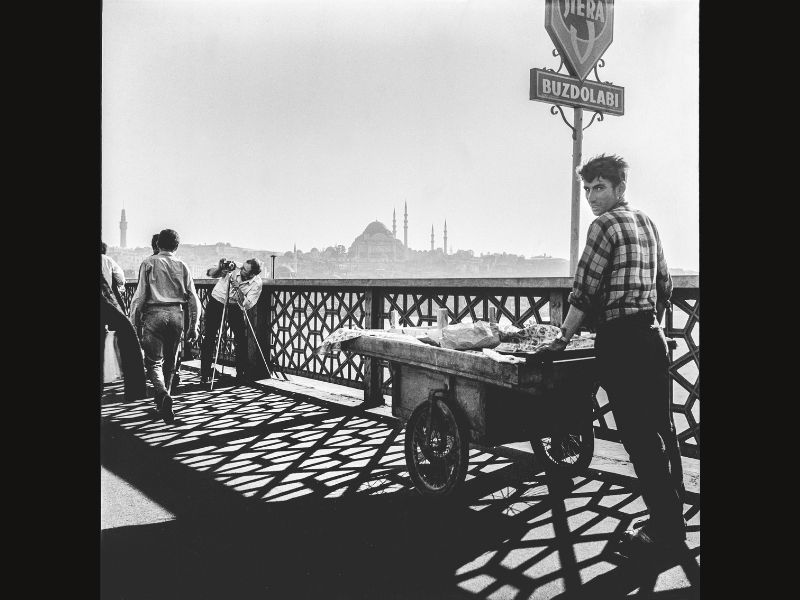
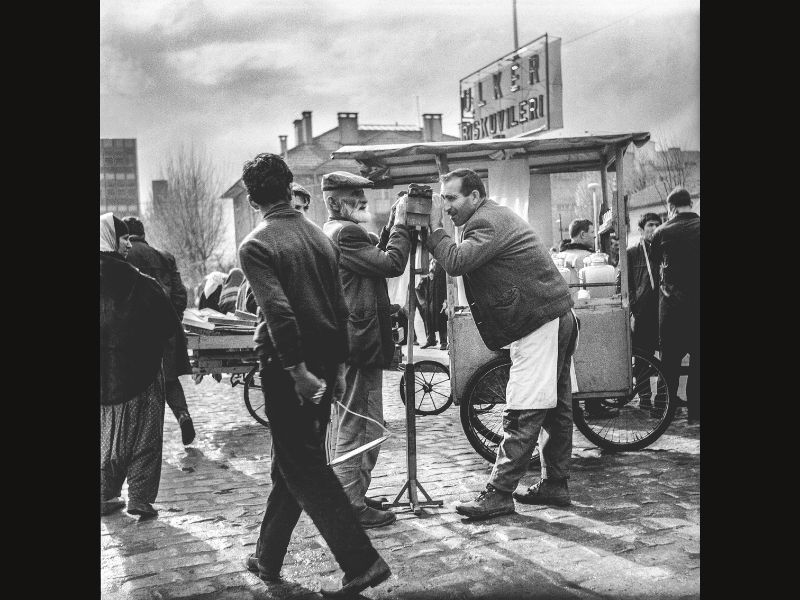
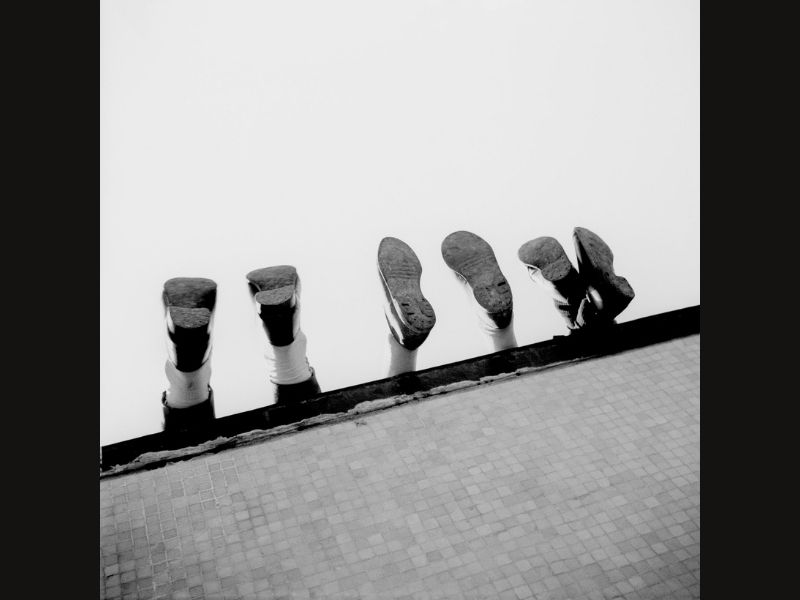
I photographed life as it was, but what we call “as it was” actually contains an aesthetic filter shaped by my own eye. Streets, squares, people... At first glance, these may seem like photographs in which the documentary aspect predominates. But when you turn a shadow into an abstract form, or capture a rhythm among pipes in a scrapyard, the photograph becomes a product of your aesthetic vision.
To be honest, I did not make a conscious effort to create artistic expression. I simply reflected the way I perceived the world in my photographs. I never drew a deliberate, clear line between art and documentation. My training as a technical draftsman and my profession also played a role in this; my sense of line, proportion and balance naturally found its way into my photography.
Fairs, squares, street vendors, celebrations and children... There is a strong representation of public space in your photographs. What drew you specifically to these socio-cultural traces?
Fairs, squares, street vendors, crowds. These were not places I deliberately chose as “subjects.” Life was already there. I simply went where life was happening. I suppose the environment in which I grew up also had an influence. In a small-town life, the street is almost an extension of the home. People know one another, and life is lived outside. When a fair came to town, everyone was there; when there was a holiday, the square would fill up. I wanted to capture that atmosphere. But not merely for the sake of documentation—I also wanted to preserve the spirit of those days.
People and children on the street do not pose; they are there in their most natural state. I wanted to show the story without exaggerating or dramatizing it, just as they were. Perhaps that is the point: I was never in pursuit of extraordinary moments. I looked for the intensity within the ordinary.
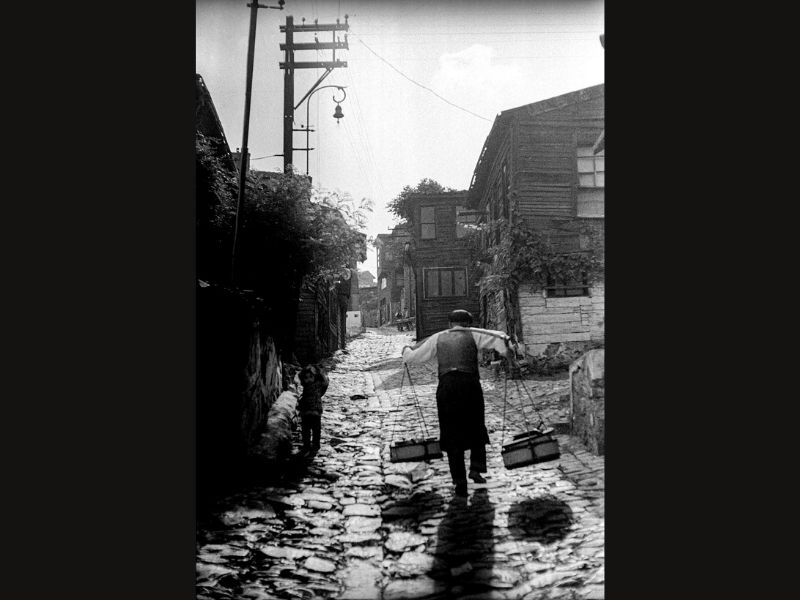
I like the small moments within a crowd. For example, at a fair, while everyone is watching the Ferris wheel, I might notice the child waiting off to the side. During a ceremony in a square, the face of an old man watching the ceremony may catch my attention. Rather than the major event itself, I look for the human detail within it. Because for me, that is where photography begins.
I took these photographs in Adapazarı and Istanbul, during a time when life moved at a slower pace. Compared with the urban life we have today, my photographs are not only testimonies to a particular period; they are also a human expression of the traces left by that period.
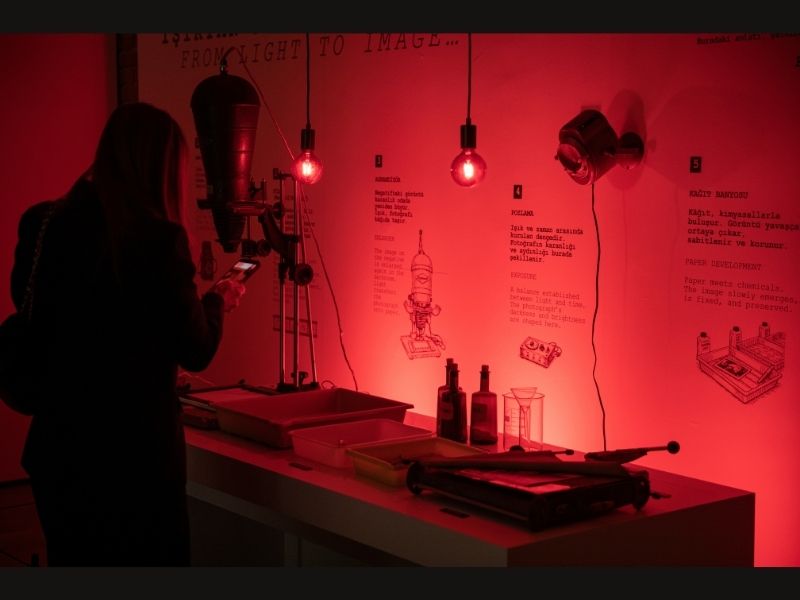
What does the darkroom process mean to you in your analogue work? How did you determine the limits of your intervention as you moved from negative to print?
The darkroom was not merely a technical stage for me; it was where the photograph truly “came into being.” The moment of taking the photograph is exciting, but the real encounter begins in the darkroom. When you hold the negative up to the light, you see a possibility; under the enlarger, you turn that possibility into reality.
Time slows down during that process. The smell of the chemicals, the red light, the moments of waiting... All of these are part of the photograph.
My intervention at the printing stage was limited. I tried to establish the frame at the moment of taking the photograph. That is why almost all of the photographs in the exhibition are displayed uncropped. The decision is made when you press the shutter; the darkroom transforms that decision, but it does not change it. I never had the approach of adding something that was not in the frame or removing something that was.
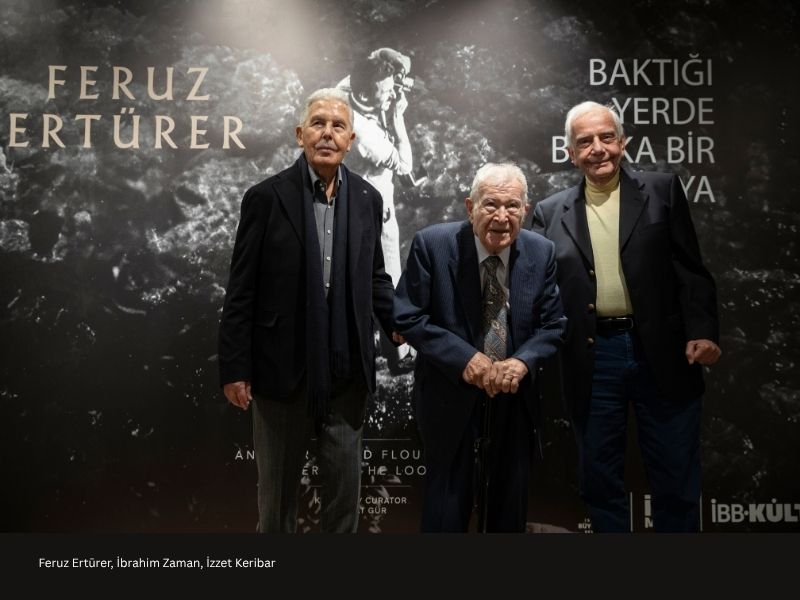
The first floor of the exhibition features your family archives, personal documents and darkroom equipment. It also includes texts written about you by masters such as your curator Murat Gür, Coşkun Aral, İzzet Keribar and İbrahim Zaman. What did it feel like to see yourself through the eyes of your colleagues?
To be honest, it is not easy to look at your own life from the outside. Especially when it is people you have respected for many years who are doing the looking...
I took photographs for years, but I never felt the need to explain myself. I did my work, preserved my negatives and made my prints. So having my family archive, personal documents, the camera I used and my enlarger displayed in an exhibition space was, in itself, an emotional experience.
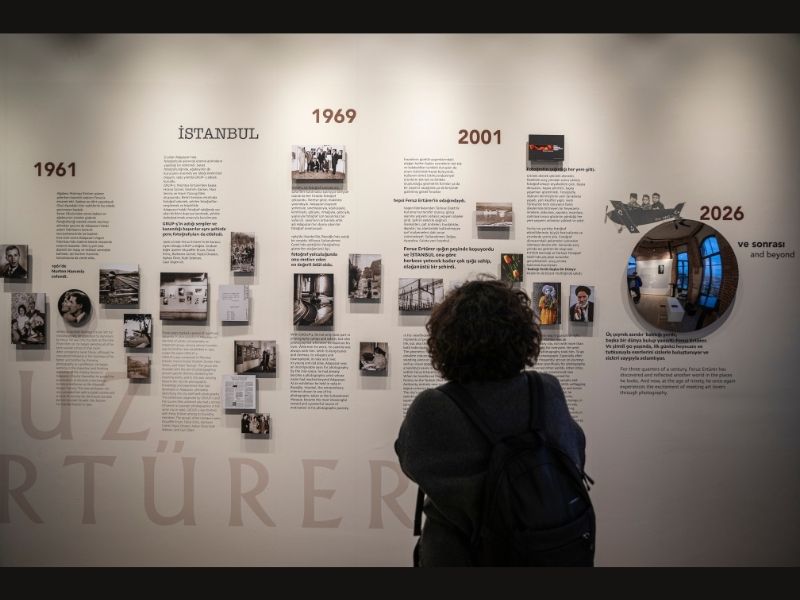
The way Murat Gür approached this process has been very meaningful to me. He looked not only at the photographs but also at life. He drew a story out of the archive. That was something I could not have done on my own.
Sometimes you understand the value or context of what you have created better when an outside observer points it out. Reading the texts written by masters such as Coşkun Aral, İzzet Keribar and İbrahim Zaman was another kind of emotion altogether. We are people who have worked in similar fields for years and have seen each other’s work. But having someone look so carefully at your photographs, think about them and interpret them in their own words both honors you and places a responsibility on you.
What I felt most was this: apparently, the work I had done had found a response somewhere. I was never chasing grand claims when I took photographs. I went out into the street and photographed what I saw, as I felt compelled to. Now, seeing that my friends recognize consistency, a discipline of vision and a testimony to an era in those photographs makes me happy.
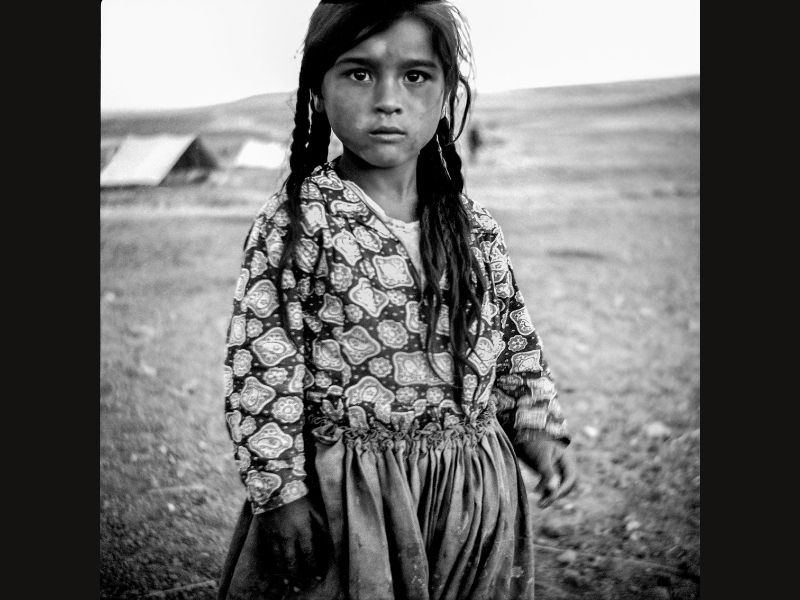
The portraits of children and scenes from everyday life in the exhibition carry both historical and emotional memory. In your opinion, what is the most fundamental element that makes a photograph timeless?
When you look at portraits of children or scenes from everyday life, you naturally see traces of the period: the clothes, the texture of the streets, the details of a fair... But if the emotion in that frame can still touch people today, that is where timelessness begins.
I never took photographs thinking, “This will be valuable in the future.” I looked for sincerity within the moment. Is the child’s gaze genuine? Is the person on the street simply being themselves? Does the light fall naturally on the scene, without forcing it? If the answers to these questions feel right to me, the photograph already has the strength to withstand time.
Timelessness is also somewhat connected to simplicity. I tried to stay away from unnecessary dramatization. I neither amplified nor diminished the emotion. I left life as it was. Because an artificial effect ages very quickly. What is sincere, however, remains.
Today, young photographers work amid speed, digital production and an abundance of images. From the perspective of masters of the analogue era, what is the most important thing today’s photographers can learn from you?
Technology has changed, speed has increased and possibilities have multiplied. I have no objection to that. But the essence of photography still remains in the same place: in the gaze.
In the analogue era, every frame was precious. Film was limited and printing was laborious. So before pressing the shutter, we would stop, think, and consider whether the frame was really worth taking.
Today, that physical limitation no longer exists in digital production, but a mental limitation is still necessary. Perhaps this is the most important thing young photographers can learn: slowing down.
In the past, we took fewer photographs and thought more; today, we need to take many photographs and think even more. The real issue is not the number of photographs you produce, but the courage to choose.
Another issue is patience. In the analogue process, you could not see the result immediately. The negative had to be developed, dried and printed... There was time between you and the photograph. That time gave you emotional distance from the image.
Today, everything appears on the screen instantly. This is a great convenience, but it can also be a danger. Sometimes, instead of sharing immediately, waiting a little can save a photograph.
And I would also like to say this: technique can always be learned. Software can be learned, equipment can be learned. But vision is not easily learned. Looking, truly looking, trying to understand people and places... This has something to do with the relationship you have with life.
What you pay attention to while walking down the street, how you approach people, how you read the world...
Technology will continue to change. But good photography will always ask the same question: Did you really see, or did you merely look?
What do you think is the indispensable quality of a good photographer?
I think the most fundamental quality is curiosity. Genuine curiosity. An endless interest in people, life and the small details on the street...
If there is no curiosity, photography soon becomes repetitive. Patience comes alongside curiosity. A good photographer does not rush. They do not force the moment; they wait. They wait for the light to find its place, for a person to return to their natural state. Sometimes the best frame comes after the frame you chose not to take.
Honesty is also important. Both toward yourself and toward the image. It is easy to make a photograph seem greater than it is, to exaggerate an emotion or dramatize it. But remaining simple is difficult. A good photographer steps back and lets the photograph come forward.
Technical knowledge is, of course, necessary. You need to understand light, composition and tone. But technique should serve your vision. When it is the other way around, the photograph may be impressive, but it will not be lasting.
And finally, consistency... A photograph can be good. But what makes a photographer good is a discipline of vision maintained over many years. It is the ability to preserve the same sensitivity and seriousness.
Is there anything else you would like to add for our readers?
Photography has taught me this: even if you look at the same place, you can see a different world every time. Produce a lot, but listen to yourself. It is easy to resemble others; finding your own vision takes time. Give yourself that time.
Ultimately, photography is not simply about recording what you see. It is an expression of how you look at life. If your vision is sincere, your photography will be sincere as well.
Now that I have reached the age of 90, when I look back, I see that I never really took a break from photography. Even when I was not taking photographs, I was always pursuing exhibitions, books, presentations and conversations. I never disconnected from the world of photography. Photography is a passion for me. It is only when you have that passion that you can truly succeed.
For the exhibition and book project as well, I worked with family members and friends who listened to me and understood me, and that was a great privilege. You trust competent people who know you well, and something beautiful emerges as a result. Each of them contributed something valuable in their own way.
Always value the opinions of experienced, competent people around you whom you trust and respect. What keeps a person alive is curiosity and a passion for learning. When you try to do things as well as you can, add value, and combine that with sharing, your life gains meaning.