




















Assateague Island is a thin, flat island stretching for 60 kilometers parallel to the mainland in front of the Delmarva Peninsula on the east coast of the USA, with sand dunes formed by wind and tide on its shores. These types of islands are called 'barrier islands' because they protect the coasts of the mainland by forming a barrier like a wall in front of severe storms in the oceans, slowing down their speed.What makes the island attractive for visitors is not only its beautiful nature but also the wild horses that live there.













Text and Photos: Sevgin AKIŞ RONEY
Horses wandering around the camp
Horses wandering around the camp
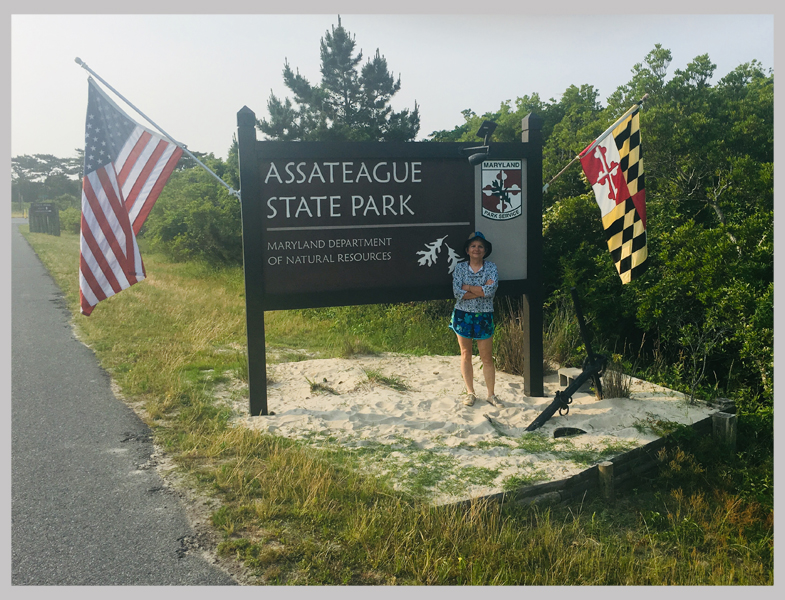
Last summer, we went and camped twice for two days on this beautiful island, which is a three-hour drive from our home in Baltimore. Our first visit was at the beginning of June. We were in the part of the island called “Assateague State Park”. As soon as we crossed the Verrazano Bridge and entered the island, we saw a few horses grazing in the greenery on the side of the road. I immediately got out of the car and started taking photos. After setting up our tent, we went to the beach and took a long walk. The water was deep blue but cold, we just put our feet in it. At night, we slept in our tiny tent listening to the sounds of nature. The next morning, when the sun was getting dark, we were on the beach again. I've seen amazing photos of wild horses on the beach before, early in the day. I was thinking that maybe I could see the horses in the morning fog, but unfortunately it didn't happen. Instead, I took photos of the fishermen on the beach, and the surfer standing on a long skinny board and using one paddle to sail through the golden stream created by the rising sun on the surface of the water. Everything seemed like a dream... During the day, we went to Ocean City, right next to Assateague. Ocean City, a typical "resort" on the Atlantic coast, hosts an average of 8 million visitors in summer, making it the second most populous city in Maryland. I don't think there was anything attractive about it. After filling our stomachs, we walked around for a while and came back. In the evening, I took another long walk and took photos of the horses wandering around happily. We had to sleep in the car because of a severe storm at night. Our sleep was interrupted by frequent lightning strikes. The next morning we packed up our tent and left the camp.
Golden river
We went to Assateague Island for the second time, exactly two months later, at the beginning of August, and this time we stayed in a different part of it called "Assateague Island National Seashore". We set up our newly purchased larger tent and immediately went to the beach. The weather was hot and the beach was quite crowded. I think the oceans are not attractive waters for swimming, but the Atlantic was still blue and attractive on these shores. At one point while swimming, I closed my eyes and pretended I was in the Aegean Sea! After lingering on the beach all day, we returned to our campsite in the evening and lit a fire. While we were cooking and eating the sausage and milk corn we bought from the Indian grocery store, a group of horses began to wander around us, grazing. The smell of food must have whetted their appetite (!), so they started eating the food on the picnic table of a large family next to us. They left the table to these uninvited guests and stepped aside with their plates in their hands. After eating the food on the table, they must not have had enough because they started coming towards us. Of course we did too! Within half an hour - without rushing - they wiped out everything we left open. While I was watching the horses from a distance, I thought, "We humans are threatening the lives of other creatures in nature by brutally intervening in their lives, we have no right to complain now." After a while, camp officials came and gently led the horses away.
Horses wandering around the camp
Horses coming to our camping table
Early the next morning, we went to the beach again with excitement, hoping that maybe this time we would see the horses on the beach. As I passed the sand dunes covered with reeds, I saw some silhouettes in the distance in the fog. "I hope I'm not mistaken," I said and started to move forward quickly. As I got closer, I realized I was not mistaken. About ten horses were on the beach beaten by the waves. Some were lying down, some were standing. It was like I was in another world. My heart beat faster and my eyes filled with tears. I watched this beautiful view for a long time and of course I did not forget to take photos! So, where and how did these horses come to this island? According to legend, they are descendants of horses that survived a Spanish galleon that sank more than 300 years ago and were able to land on the island. However, the truth of this story has not been proven. The more common explanation is as follows: In the 17th century, since free-roaming horses, cows, sheep and pigs damaged the products of the surrounding farms, every farmer had to keep his animals in a pen and pay taxes for them. Since people did not like paying taxes at that time, local farmers released these beautiful horses to Assateague Island, a natural shelter with a wetland where the animals could feed freely. Today, the total number of wild horses in these two regions within Maryland is said to be between 80 and 100.
Horses coming to the neighbor's table
On the way home, Patrick and I were in such a good mood that we declared Assateague Island our “favorite campsite in Maryland”! The first thing to do next season is to camp in the "Chincoteague National Wildlife Refuge" in the south of the island, which belongs to Virginia. The horses there were tiny horses that we call 'ponies'. Let's see, day by day...
Horses on the beach
Horses on the beach