




















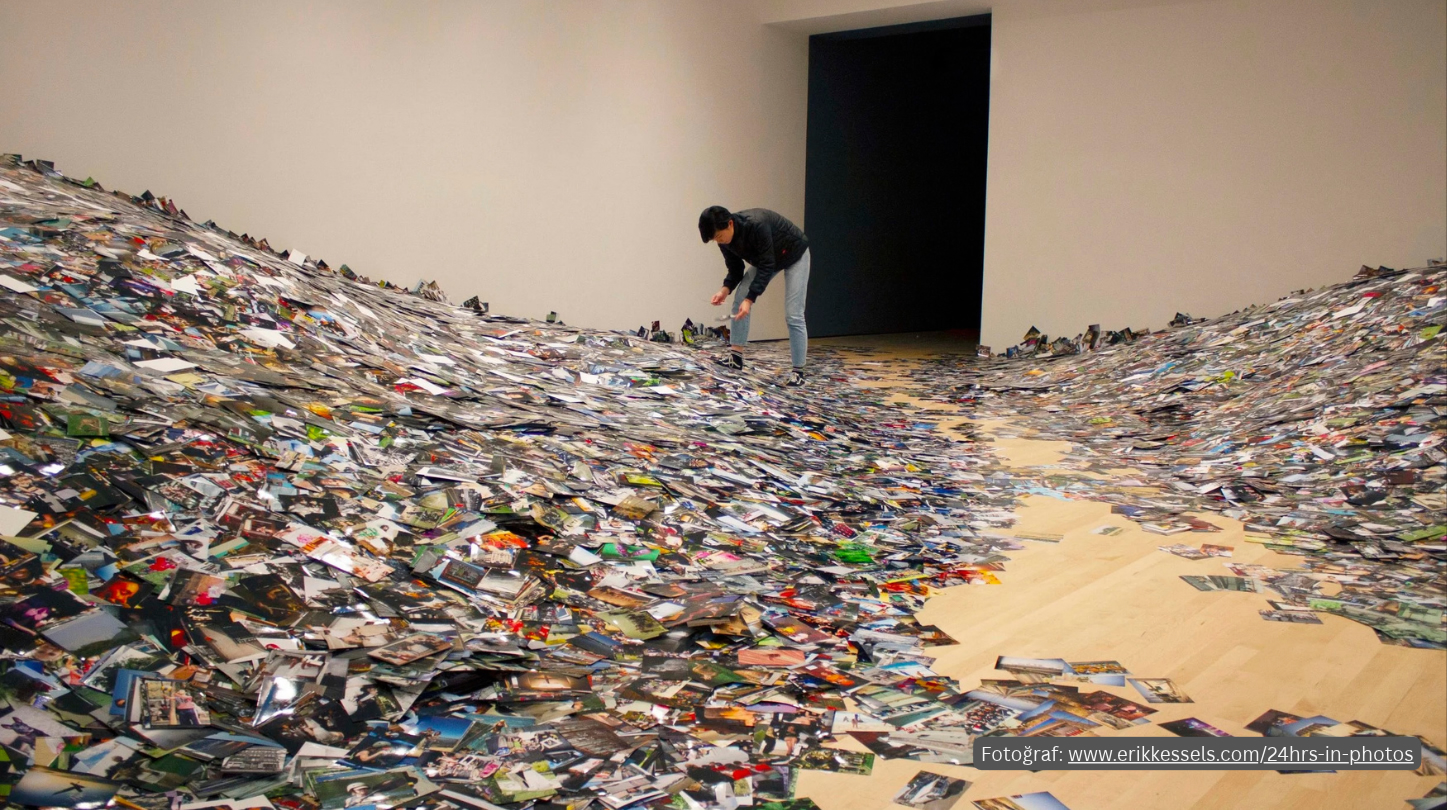
Smartphones, high-resolution cameras, social media, and artificial intelligence are rapidly increasing the amount of visual data humanity generates. According to estimates by the international research firm IDC, the global volume of photo and video data will reach 144 zettabytes in 2026. However, this enormous figure does not represent the total size of all photographs and videos stored worldwide.













Throughout the two-century history of photography, humanity has reached an unprecedented era in image production. Analog cameras, once limited to a fixed number of exposures, have been replaced by high-resolution digital cameras, smartphones, drones, and AI-powered image generation systems. We no longer simply capture images; we edit, duplicate, share, publish, and repeatedly consume them. According to estimates by the international technology research firm International Data Corporation (IDC), the global volume of data generated by photographs and moving images will reach approximately 144 zettabytes in 2026. This figure is expected to reach 234 zettabytes by 2030.
But does humanity really possess such an enormous archive of photographs and videos? Or does this figure reflect an entirely different kind of digital transformation?
What Is the Source of the 144 Zettabyte Estimate?
The estimate first came to public attention in an article by Associated Press (AP) journalist John Leicester, published on November 19, 2026, focusing on analog film preservation efforts in France. In an email statement to the Associated Press, IDC Senior Research Director Adam Wright stated that photographs and moving images would generate approximately 144 zettabytes of data in 2026. According to Wright, the calculation includes not only captured images but also videos watched online, broadcast content, and replicated digital copies.
How Big Is 144 Zettabytes?
Today, photographers primarily work with storage units measured in gigabytes and terabytes. A zettabyte, however, is a unit of data measurement that goes far beyond these scales. One zettabyte is equivalent to 10²¹ bytes. The mathematical equivalent of 144 zettabytes in more familiar units is as follows:
| Data Unit | Equivalent of 144 Zettabytes |
|---|---|
| Exabyte (EB) | 144 thousand |
| Petabyte (PB) | 144 million |
| Terabyte (TB) | 144 billion |
| Gigabyte (GB) | 144 trillion |
| Megabyte (MB) | 144 quadrillion |
This volume is theoretically equivalent to the combined storage capacity of 36 billion 4 TB hard drives. Assuming an average RAW photo file size of 40 MB, 144 zettabytes would correspond to the storage space occupied by approximately 3.6 quadrillion RAW photographs. When distributed evenly throughout the year, this represents approximately 4.57 petabytes of visual data per second. Of course, these comparisons are purely mathematical calculations intended to illustrate the magnitude of the figure. They do not represent the actual number of photographs taken or hard drives in use.
Are 144 Zettabytes of Photos and Videos Really Stored Worldwide?
No. This is precisely where the most important detail of the research emerges. IDC evaluates global digital data volumes through two separate research programs:
Global DataSphere: Measures the total volume of data created, captured, replicated, and consumed within a year.
Global StorageSphere: Examines the installed storage capacity worldwide and how that capacity is utilized.
Global DataSphere does not represent the total volume of files accumulated over time. Instead, it measures data-related activities occurring within a calendar year.
IDC's estimates for 2026 make this distinction even clearer.
| Data Category | 2026 Estimate | 2030 Estimate |
|---|---|---|
| Total annual data generation | Over 274.4 ZB | 718.5 ZB |
| Annual photo and video data | 144 ZB | 234 ZB |
| Global installed storage capacity | Approximately 13 ZB | Over 26 ZB |
In 2026, the volume of data generated by photographs and videos is equivalent to approximately 11 times the world's total installed storage capacity. Although this may appear contradictory at first, the explanation is that not all generated data is permanently stored. Temporary files, video streams, cached images, deleted content, and repeatedly transferred files increase annual data volumes without requiring an equivalent amount of permanent storage space.
A Single Video Can Generate Data Millions of Times
Consider a simple example. Imagine a 1 GB video captured by a nature photographer that is watched one million times online. Assuming that 1 GB of data is transferred during each viewing, the total data transfer would amount to 1 petabyte. Yet there is still only one original video. Preparing the video in different resolutions, transferring it to other devices, backing it up, and replicating it across multiple servers can also generate additional data. According to IDC's June 2026 estimates, replicated and consumed data accounts for approximately 90 percent of annual data generation across all data categories worldwide. This statistic is not exclusive to photographs and videos; it encompasses the entire global digital data ecosystem. Therefore, it is impossible to determine how many unique photographs or videos exist worldwide based on the 144 zettabyte figure alone.
Photos and Videos Account for Approximately Half of Global Data Generation
A comparison of IDC's published figures reveals that photo and video data accounts for approximately 52 percent of global data generation in 2026. This proportion highlights the importance of visual communication in the digital world. Photography is no longer limited to content produced by dedicated cameras. From smartphones and surveillance systems to satellite imagery and scientific research, from documentaries to social media broadcasts, visual data is generated in almost every aspect of life.
However, although the volume of visual data is expected to continue growing through 2030, its proportional share of total global data may decline. Based on the published estimates, this share could fall to approximately 32.6 percent by 2030. This calculation is consistent with projections that other data categories, such as artificial intelligence and enterprise data processing, will grow at a faster rate.
234 Zettabytes by 2030: Visual Data Volume Set to Grow by 62.5 Percent
According to IDC's projections, the annual volume of photo and video data will increase by 90 zettabytes between 2026 and 2030. This represents a total increase of 62.5 percent over four years, equivalent to a compound annual growth rate of approximately 12.9 percent. The key technological developments that could support this growth include:
- High-resolution smartphone cameras
- High-megapixel digital cameras
- The increasing adoption of 4K and 8K video production
- Short-form video-focused social media platforms
- Drones and surveillance cameras
- Cloud-based photo and video services
- AI-generated images and videos
Generative artificial intelligence technologies, in particular, are reducing the dependence of visual content production on physical cameras or real-world shooting environments. Unlike an image created by a photographer through a single exposure, an AI-assisted production process can generate numerous alternative images, videos, edits, and experimental files within a short period. However, category-specific data revealing the exact contribution of artificial intelligence to the 144 zettabyte figure is not available through publicly accessible sources.
A Growing Challenge for Photographers: Digital Archive Management
The increase in global data volumes also has significant implications for individual photographers and professional visual content creators. While higher resolutions provide greater detail and editing flexibility, they can also increase storage and backup costs. For example, the archive of a photographer working with RAW files averaging 40 MB in size could grow as follows:
| Number of Photographs | Approximate Storage Requirements |
|---|---|
| 10,000 | 400 GB |
| 25,000 | 1 TB |
| 50,000 | 2 TB |
| 100,000 | 4 TB |
| 250,000 | 10 TB |
These calculations do not include edited TIFF files, JPEG exports, videos, catalogs, or backups. Storing three complete copies of a 4 TB archive containing 100,000 RAW photographs would theoretically require at least 12 TB of storage capacity. For this reason, investing in digital archiving infrastructure is just as important for photographers as investing in photographic equipment. You can check out storage products here.
The 3-2-1 Backup Strategy for Photo Archives
One method that can help preserve digital images for many years is the 3-2-1 backup rule. The fundamental principles of this approach are as follows:
3: Maintain at least three copies of your photographs in total.
2: Store the copies on at least two different types of storage media.
1: Keep at least one copy in a physical location separate from the primary archive.
This approach is particularly important for travel, nature, documentary, and wildlife photographers, as it may not always be possible to recreate a lost image under the same conditions. In addition to backups, consistent file naming, the preservation of date and location information, the use of keywords, and periodic archive checks are also essential components of long-term digital preservation.
Forgotten Analog Photographs in the Shadow of the Digital Data Explosion
It is particularly noteworthy that the 144 zettabyte estimate first appeared in an article about preserving old family films. The French Ofnibus team, featured in the Associated Press article, contributes to the preservation of cultural memory by digitizing amateur films and videotapes recorded in previous decades. While trillions of gigabytes of visual data are being generated today, countless images stored in family albums, old negatives, photographic slides, and videotapes are still waiting to be digitized. In particular, historical cityscapes, records of wildlife, changing coastlines, vanished buildings, and photographs documenting traditional ways of life may serve as valuable historical resources for future generations. The value of a photograph cannot be measured by the number of megabytes it occupies. Even a small, technically imperfect image can become an irreplaceable historical document decades later.
Gezginfoto's Perspective:
Never in the history of photography has creating images been as easy as it is today. However, the proliferation of images does not necessarily mean that they will be preserved or passed on to future generations to the same extent. Today, the fundamental challenge is not simply to capture higher-resolution photographs or produce more videos, but to carefully select, interpret, document, and preserve the images we create. A wetland photographed years ago by a nature photographer, an old village documented by a traveler, or images of everyday life preserved in a documentary photographer's archive may acquire far greater documentary value in the future than they hold today. The figure of 144 zettabytes is a striking illustration of the scale the digital world has reached. From a photographic perspective, however, the real question is not how much data we generate, but how much meaningful visual heritage we can preserve and pass on to future generations...
Sources and Further Reading:
- Associated Press – In the land that gave us 'cinema,' activist archivists are bringing back old home movies
- IDC – What Are the Global DataSphere and Global StorageSphere?
- IDC – Assessments of Global Data Generation, Artificial Intelligence, and Storage Capacity
- PetaPixel – The World Will Generate 144 Zettabytes of Photo and Video Data in 2026
- PTTL – 144 zettabytes of photo and video data in 2026: What it means for the world of imagery