





















If you are thinking about entering a photography competition or organizing one yourself, you may have wondered: How do judges select the winners from hundreds or even thousands of photographs? Is technical perfection enough for a photograph to win an award? How important are framing, lighting, color, and sharpness? Can an original idea, a compelling story, or the emotions a photograph evokes make up for technical shortcomings? There is no single, universal answer to these questions. The judging criteria of photography competitions vary depending on the competition's purpose, photographic genre, category, and jury structure. While documentary photography places greater emphasis on authenticity and storytelling, conceptual approaches and originality may carry more weight in fine art photography. Nevertheless, an examination of the rules and judging processes of international photography competitions reveals several common principles. In this article, we explore how photographs are judged, which criteria matter most, how scoring systems work, and what both photographers and competition organizers should consider.
Article: Nihan Özgen Meleke













How Are Photographs Judged in Photography Competitions?
The judging process in photography competitions generally begins after the submission deadline. Photographs that do not comply with the competition rules, have been entered in the wrong category, or fail to meet the technical requirements are usually eliminated during the preliminary screening stage. Eligible entries are then submitted to the jury for evaluation.
Judging may take place in a single round or involve several stages. Large-scale international competitions often use multiple rounds, including preliminary screening, category-based evaluation, finalist selection, and a final decision-making stage. For example, World Press Photo has announced a multi-stage judging model for its 2027 competition, consisting of six regional juries and one global jury. The regional juries evaluate entries from their respective regions, while the global jury selects the winners. The organization identifies visual quality, storytelling, and diversity of representation among its guiding evaluation principles. See World Press Photo – Judging Process.
This does not mean that all competitions follow the same procedure. Some use numerical scoring systems, while others determine the winners through collective assessment and discussion among jury members.
What Is Blind Judging?
Blind judging is a process in which jury members evaluate photographs without knowing the identity of the photographer. This commonly used approach aims to reduce the influence of a photographer's reputation, previous awards, professional connections, or personal relationships on the evaluation process.
The International Photography Awards (IPA) states that photographers' identities are concealed from jury members during judging and that entries are scored on a scale of 10 to 100. Its evaluation criteria include originality, creativity, execution, overall impact, and suitability for the category. See IPA – Official Rules.
The Sony World Photography Awards also explains that its judging process is anonymous and that photographers' names are not shown to jury members. See Sony World Photography Awards – Help and FAQ.
Blind judging is an important method for supporting impartiality. However, it does not guarantee a fair competition on its own. Clear and consistent evaluation criteria, effective management of conflicts of interest, and the independence of jury members are equally important.

The Most Important Judging Criteria in Photography Competitions
Although every competition has its own rules, photographs are generally assessed according to several fundamental criteria.
1. Relevance to the Subject and Competition Theme
One of the first things judges consider is how closely a photograph relates to the competition's subject or category. For example, submitting a visually beautiful photograph to a competition themed "Nature and Life" may not be enough. The image is expected to meaningfully reflect nature, wildlife, or the specific theme defined by the organizers.
When assessing thematic relevance, judges may consider the following questions:
- Does the photograph genuinely reflect the competition's subject?
- Is the image appropriate for the selected category?
- Is the subject communicated clearly and effectively?
- Does the photograph offer an original interpretation of the theme?
Even a technically outstanding photograph may rank lower if it does not align with the competition's theme.
2. Originality and Creativity
Originality is one of the most important qualities that distinguishes a photograph from other entries in a competition. In a field where similar subjects are often photographed repeatedly, judges may pay particular attention to images that offer a fresh perspective.
This originality may come from choosing an unusual subject, but it can also emerge from presenting a familiar subject through a new composition, lighting approach, or visual narrative.
Some of the elements considered when evaluating originality include:
- Approaching the subject from a different perspective
- Moving beyond conventional photographic approaches
- Creative use of framing and lighting
- A strong and coherent visual concept
- The ability to encourage new thoughts or interpretations in the viewer
Originality does not necessarily mean photographing something that has never been seen before. Even an ordinary moment can become a powerful photograph when captured through a distinctive personal perspective.
3. Composition and Framing
Composition refers to the visual arrangement of elements within a photograph. The lines, shapes, colors, negative space, and objects used within the frame guide the viewer's eye.
A strong composition makes the main subject easier to recognize and helps create a more effective image. When evaluating composition, judges may consider:
- The placement of the main subject within the frame
- Visual balance and harmony
- The distribution of light and shadow
- The relationship between foreground, middle ground, and background
- Visual depth and perspective
- The use of negative space
- Leading lines that guide the viewer's eye
- The presence of distracting elements within the frame
Compositional techniques such as the rule of thirds, symmetry, framing within a frame, and the golden ratio can help photographers. However, these are not rigid rules. An unconventional composition can also be highly successful when used deliberately. What matters most is whether the compositional choices support the photograph's message.
4. Technical Quality
Technical quality covers the photographer's skill during both the capture and post-processing stages. Sharpness, exposure, lighting, color, contrast, and overall image quality may all be considered under this criterion.
Technical aspects that judges may examine include:
- Whether the image is sharp in the appropriate areas
- Whether the exposure suits the photograph's purpose
- Whether details in highlights and shadows are preserved
- Whether colors are balanced
- Whether unnecessary digital noise is present
- Whether the photograph meets the required resolution and file specifications
- Whether digital editing supports or undermines the photograph's message
However, technical perfection is not always the highest priority in every competition. In documentary or street photography, an image capturing a particularly significant moment may have a strong impact despite minor technical imperfections. In contrast, technical control and precision may be more important in fields such as architectural, product, or commercial photography.
5. Emotional Impact and Storytelling
Some photographs remain memorable because of the emotions they evoke rather than their technical qualities. A glance, an encounter, an unexpected moment, or a compelling human story can increase the impact of an image.
Storytelling is particularly important in documentary, news, and street photography competitions. Judges may consider the following questions when reviewing photographs:
- Does the photograph evoke an emotional response?
- Does the image capture the viewer's attention?
- Can the photograph tell a meaningful story on its own?
- Does it encourage curiosity or reflection?
- Is the context and intended message of the photograph understandable?
Emotional impact is not limited to dramatic images. A quiet, simple, or everyday moment can also create a powerful narrative.
6. Use of Light, Color, and Atmosphere
Lighting determines not only the technical quality of a photograph but also its mood and atmosphere. Different approaches to light, including hard light, soft light, backlighting, shadows, and natural light, can transform the way an image communicates.
Color similarly contributes to a photograph's visual language. Color harmony, contrast, the balance between warm and cool tones, and deliberate black-and-white choices can all strengthen an image's impact.
When evaluating the use of light and color, judges may consider not only whether they are aesthetically pleasing but also whether they contribute to the subject and narrative of the photograph.
7. Suitability for the Category
The success of a photograph can vary depending on the category in which it is judged. An image that performs exceptionally well in one category may be considered less successful in another. This is why selecting the appropriate category is important.
| Photography Genre | What Judges May Look For |
|---|---|
| Landscape Photography | Light, atmosphere, depth, composition, and the visual relationship with nature |
| Portrait Photography | Expression, character, lighting, background, and the visual connection with the subject |
| Street Photography | Timing, spontaneous moments, storytelling, and observations of everyday life |
| Documentary Photography | Authenticity, context, narrative coherence, and ethical approach |
| Architectural Photography | Perspective, geometric structure, lines, and technical precision |
| Macro Photography | Detail, sharpness, lighting, and the discovery of unusual subjects |
| Fine Art Photography | Conceptual approach, originality, aesthetic language, and creativity |
| Wildlife Photography | Natural behavior, timing, technical execution, and minimal interference with wildlife |
These differences can also be seen in the rules of international competitions. For example, World Press Photo considers visual quality alongside storytelling and representation in photojournalism and documentary photography. IPA, meanwhile, lists originality, creativity, execution, overall impact, and suitability for the category among its judging criteria. See World Press Photo – Judging Process and IPA – Rules.
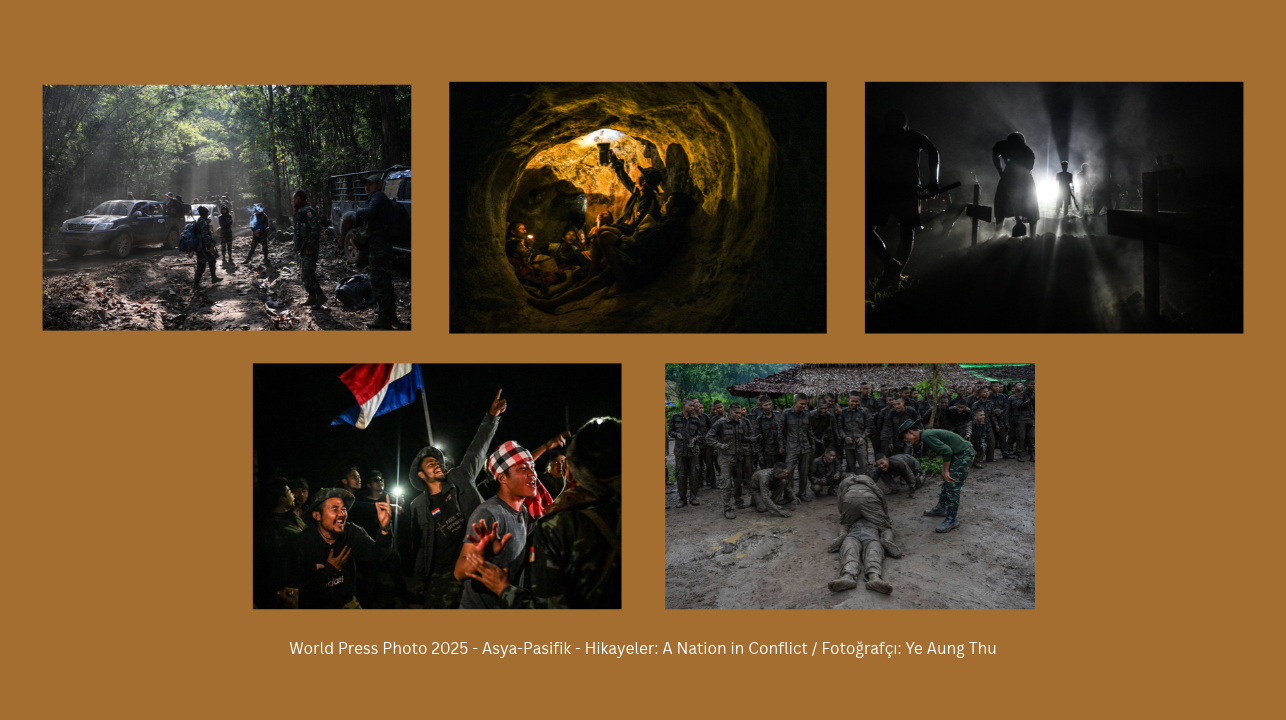
How to Enter the Series Category in Photography Competitions
The series category (photo series / photo story) in photography competitions is quite different from submitting a single strong photograph. In this category, judges look not only at the individual quality of each image but also at the overall story and visual coherence created when the photographs are presented together.
In other words, the goal is not simply to take several good photographs of the same subject. It is to communicate an idea, story, or visual investigation through a sequence of images. To develop a project for this category, photographers should create a photographic story or a coherent visual narrative.
1. Start by Developing a Project Idea
A photographic series should be built around a specific subject, question, or concept. Rather than choosing an extremely broad topic, it is generally more effective to define a subject that can be researched and explored through photography.
For example:
- Vanishing Professions: The everyday lives of people working in traditional crafts.
- The Transformation of a Neighborhood: The impact of urban change on people and places.
- Invisible Labor: The stories of workers whose contributions often remain behind the scenes.
- Loneliness in the City: The experience of individuals living amid the crowds of a major city.
- A Family's Story: Changing lifestyles and values across generations.
The important thing is not simply to choose an interesting subject, but to select one with enough narrative potential to be developed throughout a photographic series.
2. Define the Central Idea or Message of the Series
Every photographic series should have a central idea. Before beginning the shoot, photographers should be able to answer the following questions:
- What do I want to communicate through this project?
- Why am I photographing this subject?
- What do I want viewers to think or feel when they see the photographs?
- Why does this story need to be told through a series rather than a single image?
- What makes my approach different from similar projects?
For example, "Fishermen in Istanbul" is a relatively broad subject. However, "The Changing Lives of Small-Scale Fishermen in Istanbul" is a more clearly defined project idea.
With the second approach, the photographer does not simply take portraits of fishermen. They can also explore working conditions, boats, harbors, daily routines, changes along the waterfront, and concerns about the future of the profession. In this way, the photographs come together to create a coherent narrative.
3. Plan the Visual Structure of the Series
A successful series should not consist of repetitive photographs of the same subject taken from different angles. Each photograph should have a distinct role within the narrative.
For example, an eight-image documentary series could follow this structure:
- Opening Image: Introduces the location and overall atmosphere of the story.
- Main Character: Introduces the person or people at the center of the story.
- Details: Shows hands, tools, objects, or other small but meaningful details.
- Action and Work: Communicates the daily routine and movement of the story.
- Environment and Relationships: Shows how the main character relates to other people and their surroundings.
- Conflict or Change: Reveals the problem, transformation, or tension within the story.
- Emotional Depth: Strengthens the human or conceptual dimension of the subject.
- Closing Image: Brings the story to a conclusion or leaves the viewer with something to reflect on.
This is not a mandatory structure. It can vary depending on the nature of the project. What matters is that the photographs complement one another and create a narrative from beginning to end.
4. Maintain Visual Consistency Across the Photographs
The relationship between photographs is particularly important in a series category. This connection can be established in several ways:
- Thematic Consistency: All photographs contribute to the same story.
- Visual Consistency: Similar approaches to color, light, contrast, or photographic style are used.
- Narrative Consistency: The photographs establish a sense of beginning, development, and conclusion.
- Conceptual Consistency: Even when different locations and people are photographed, the images support the same central idea.
However, visual consistency does not mean that every photograph must be taken in exactly the same style. On the contrary, wide shots, portraits, details, and different perspectives can make a series richer.
An important point: Every photograph should have a reason for being included in the series. An image that is visually beautiful but does not contribute to the story can weaken the overall coherence of the project.
5. The Sequence of Photographs Is Just as Important as the Shooting Process
In a series category, the order in which photographs are presented directly affects how viewers perceive the story. The same eight photographs can communicate different narratives when arranged in different sequences.
When selecting the order, photographers should ask themselves:
- Does the opening image capture the viewer's attention?
- Does the story progress in a clear and understandable way?
- Are there unnecessary repetitions between photographs?
- Is the emotional and visual intensity distributed effectively?
- Does the final image provide a meaningful conclusion?
For this reason, after completing the shoot, photographers should experiment with different sequences rather than arranging the images solely according to the dates on which they were taken.
6. Prepare a Project Statement and Image Captions
Some international competitions require a project statement, a short narrative, or individual image captions alongside series submissions. Rather than simply describing what is visible in the photographs, the project statement should explain the background of the work and the photographer's approach.
Example Project Title: The Ones Left on the Shore
Example Project Statement
Traditional fishing along Istanbul's coastline is struggling to survive amid changing urban life and economic conditions. This photographic series documents the everyday lives and working conditions of small-scale fishermen, as well as their relationship with the sea.
Through images of boats, fishing nets, harbors, and portraits of fishermen, the project aims to reveal not only a profession but also a way of life and a cultural heritage undergoing transformation.
If image captions are required, information about people, locations, dates, and events should be accurate and clearly presented. Contextual accuracy is particularly important in documentary projects.
7. What Do Judges Look for in a Photographic Series?
The judging approach for a single photograph differs significantly from that of a photographic series.
| Evaluation Criterion | What Judges Look for in a Series |
|---|---|
| Thematic Coherence | Do the photographs support the same central idea? |
| Storytelling | Does the series create a meaningful narrative? |
| Originality | Does the project offer a fresh perspective on the subject? |
| Photographic Quality | Are the individual images strong enough in their own right? |
| Visual Consistency | Is there aesthetic and narrative coherence between the photographs? |
| Sequencing | Does the order of the images strengthen the story? |
| Depth | Does the project explore the subject meaningfully rather than superficially? |
| Ethical Approach | Are people, events, and reality represented accurately and responsibly? |
One particularly important point is that every photograph in a series does not necessarily need to be powerful enough to win an award on its own. Sometimes a transitional image, a detail, or a quieter photograph can play a crucial role in the overall narrative. For this reason, judges should evaluate both the quality of individual photographs and the combined impact they create when presented together. This approach can also be seen in international competitions. In its evaluation of stories and long-term projects, World Press Photo considers not only the impact of individual images but also the coherence, context, and visual storytelling of the overall narrative. See World Press Photo – Judging Process

How Do Scoring Systems Work in Photography Competitions?
There is no single international scoring standard for photography competitions. Some organizations ask jury members to assign scores to each photograph, while others compare the entries and select the winners through collective decision-making.
In competitions that use numerical scoring, each jury member evaluates the photograph according to predefined criteria. Scores may then be added together or averaged to establish a ranking. In some competitions, however, individual scores are used only for the preliminary selection stage, while the final decision among shortlisted entries is made through discussion and voting.
The official IPA rules state that jury members score photographs on a scale of 10 to 100 and that winners are determined according to the total scores awarded by the jury. This is one example of a scoring method that can vary from one competition to another. See IPA – Official Rules
Example: A 100-Point Photography Evaluation System
The table below presents an example evaluation model that photography competition organizers could use. This is not the official scoring system of any international competition. The weighting of each criterion can be adjusted according to the competition's purpose and category.
| Evaluation Criterion | Points |
|---|---|
| Relevance to the Theme and Category | 20 |
| Originality and Creativity | 20 |
| Composition and Visual Storytelling | 20 |
| Technical Quality | 15 |
| Emotional Impact and Storytelling | 15 |
| Use of Light, Color, and Atmosphere | 10 |
| Total | 100 |
Assigning technical quality a weight of 15 percent in this model does not mean that technical skill is unimportant. The aim is to ensure that photographs are evaluated not only for their technical qualities but also for their storytelling and creativity.
For example, a documentary photography competition may assign greater weight to storytelling and thematic relevance. In an architectural photography competition, composition, perspective, and technical quality may receive higher scores.
Can Jury Members Give Different Scores to the Same Photograph?
Yes. Personal perspectives and aesthetic preferences inevitably influence photographic evaluation. One jury member may consider a photograph outstanding, while another may find it less compelling.
To reduce these differences, competitions should establish clear evaluation criteria in advance, provide jury members with consistent guidelines, and ensure that the scoring system is easy to understand.
If there are significant differences between the scores awarded by jury members, the photograph may be considered for reassessment. Whether such a procedure is used should be specified in the competition rules beforehand.
How Can Fair Judging Be Ensured in Photography Competitions?
The credibility of a photography competition is not measured solely by the quality of its winning photographs. Transparency, consistency, and fairness throughout the judging process are equally important.
In international competitions in particular, entries come from participants with different cultural backgrounds, nationalities, and photographic traditions. This makes diversity within the jury and transparency in the evaluation rules especially important.
Independence of Jury Members
Jury members should be able to make their decisions independently, without being influenced by personal relationships or pressure from the organizers. The role of the organizing institution should be to manage the process and ensure that the rules are followed, not to change jury decisions according to its own preferences.
In World Press Photo's 2027 judging process, the jury secretary is responsible for overseeing the correct implementation of procedures but does not participate in discussions about the artistic or editorial value of the entries and does not vote. This is an example of a division of responsibilities that supports the independence of jury decisions. See World Press Photo – Judging Process
Preventing Conflicts of Interest
If jury members evaluate photographs submitted by their friends or by participants with whom they have personal relationships, questions about impartiality may arise.
For this reason, competition rules should clearly explain how conflicts of interest will be handled. Where necessary, a jury member should refrain from evaluating the relevant entry.
Announcing Evaluation Criteria in Advance
Participants should know the criteria against which their photographs will be assessed. Competition announcements should clearly state not only the subject and categories but also the technical requirements, judging criteria, and any scoring weights.
All of this information should be published in the competition guidelines or regulations and made accessible to every participant.
Diversity Within the Jury
Jury members from different photographic disciplines, cultural backgrounds, and professional fields can bring a broader range of perspectives to the evaluation process.
World Press Photo emphasizes the importance of regional jury members being familiar with the cultural, social, and political context of the regions they evaluate. Its stated approach to jury selection also draws on the expertise of photographers, editors, curators, researchers, and other photography professionals. See World Press Photo – Jury Profile

Digital Editing and the Use of Artificial Intelligence: A Frequently Debated Issue in Photography Competitions
Photo-editing software is widely regarded as a natural part of digital photography. Adjustments to exposure, contrast, color, sharpness, and cropping can all affect the final appearance of an image. However, competitions do not all take the same approach to these modifications.
In documentary and news photography competitions in particular, images are expected to represent reality accurately. Adding a new object, removing an existing one, or making changes that alter the content of an event may violate competition rules.
According to the rules of the 2027 World Press Photo competition, adding or removing people or objects, repositioning them, or distorting them within an image is not permitted. AI-generated images and the use of generative fill are also prohibited in the relevant categories. However, certain limited adjustments that do not alter the content of the image may be allowed. See World Press Photo – What Counts as Manipulation? and World Press Photo – Entry Rules
It is important to make one distinction here: World Press Photo's rules do not apply to all photography competitions. Fine art, digital art, and creative photography competitions may have different policies regarding artificial intelligence and digital manipulation. Participants should always review the specific rules of each competition.

What Should Photographers Pay Attention To?
- Keep the original image files from your camera.
- Do not exceed the editing limits permitted by the competition.
- Do not add new content to a photograph or secretly alter existing elements.
- Check the rules regarding the use of artificial intelligence tools.
- Be prepared to explain your shooting and editing process if requested.

A Guide to Entering Photography Competitions
There is no guaranteed formula for winning a photography competition. However, there are several steps photographers can take to make their work more competitive during the judging process.
1. Research the competition and the category you intend to enter: Read the competition's objectives, theme, and category descriptions before submitting your photograph. Even a strong image may fail to reach its full potential if entered in the wrong category.
2. Choose a photograph that captures attention at first glance: Jury members review large numbers of photographs. A clearly identifiable subject, a strong visual focal point, and effective composition can help an image stand out.
3. Present familiar subjects in an original way: Originality does not always require finding an unusual subject. A familiar topic can also stand out when approached from a personal and creative perspective.
4. Pay attention to technical quality: No matter how compelling your story is, sharpness, exposure, color, and file quality remain important. Avoid excessive editing that weakens the photograph's message.
5. Think about the story behind your photograph: Context is particularly important in documentary and portrait photography. Ask yourself what your photograph communicates and why it matters.
6. Avoid submitting unnecessary photographs: Submitting a large number of images does not always provide an advantage. If the competition rules allow it, select only your strongest work.
7. Check the submission requirements one final time: Details such as file size, resolution, format, title, description, permissions, and submission deadlines can result in an otherwise successful photograph being disqualified.
A Guide to Jury Selection and Evaluation for Photography Competition Organizers
Organizing a photography competition involves much more than collecting submissions and announcing the winners. A successful competition needs a system that earns participants' trust and enables jury members to evaluate entries consistently.
The following recommendations are particularly important for competition organizers:
- Define the evaluation criteria before the competition begins: Clearly establish criteria such as thematic relevance, originality, composition, technical quality, and storytelling.
- Make the scoring system easy to understand: If numerical scoring is used, explain the weighting of each criterion and how the total score is calculated. If no scoring system is used, clarify how the jury will reach its decisions.
- Select jury members from different areas of expertise: Depending on the scope of the competition, photographers, art directors, editors, academics, curators, and sociologists may all contribute valuable perspectives.
- Consider anonymous judging: If appropriate for the competition, concealing photographers' names during the initial evaluation stage can help reduce the influence of personal reputation.
- Establish clear conflict-of-interest policies: Create a transparent procedure for managing personal relationships or other connections that could influence jury members' decisions.
- Separate technical screening from jury evaluation: Identifying entries that fail to meet the submission requirements during preliminary screening allows the jury to focus on the quality of the work.
- Communicate the results and rules transparently: The announcement of winners, prizes, image usage rights, and appeal procedures should all be clearly stated before the competition begins.
Conclusion
A strong photograph can bring together an original perspective, effective composition, thoughtful use of light, meaningful storytelling, and relevance to the competition's theme. Jury members also take the purpose and category of the competition into account when evaluating entries. For this reason, a photograph that wins an award in one competition is not guaranteed to achieve the same success in another. For photographers, the most important step is to understand the competition rules and continue developing their own visual language. For organizers, establishing clear evaluation criteria, an independent jury structure, and transparent procedures is essential. Ultimately, a good photograph is not simply one that is technically well executed; it is one that communicates an idea, evokes an emotion, or tells a story. Photographs that capture the jury's attention are often those that successfully combine these qualities with the expectations of their respective categories.