


















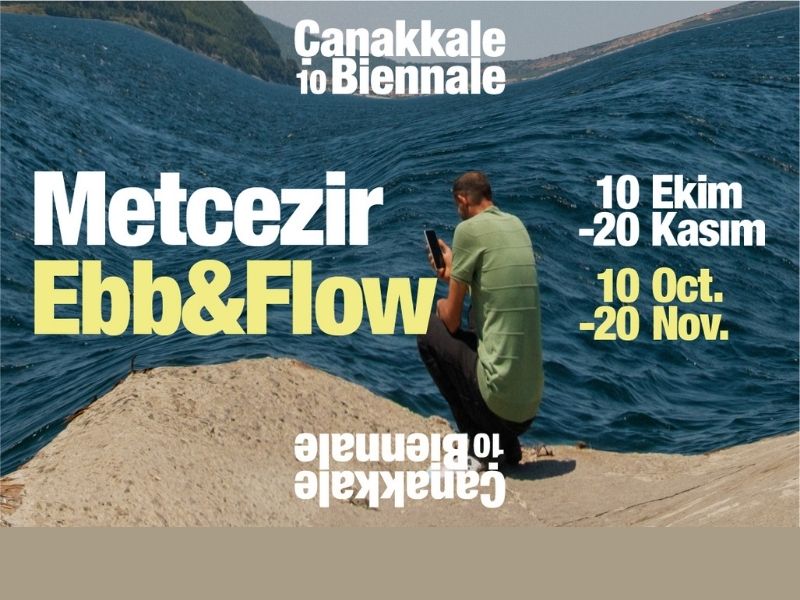
The 10th Çanakkale Biennial opened at the Troy Museum on October 10, bringing together more than 60 artists from nine countries. Titled “Metcezir // Ebb & Flow,” this edition coincides with the 20th anniversary of the Çanakkale Biennial Initiative (CABININ) and explores the relationship between water and land through coastal ecologies, ceramic production, and cultural memory. The program spans 15 venues, from the city center to Troy, Yukarı Tartışık, Adatepe, and Küçükkuyu, and includes “Special Focus: Ceramics,” a section presented for the first time. The main exhibitions will be open to visitors until November 20, while talks, panels, workshops for children and adults, concerts, and film screenings will continue until November 27.
A 20-Year Dream Reaches Its 10th Edition
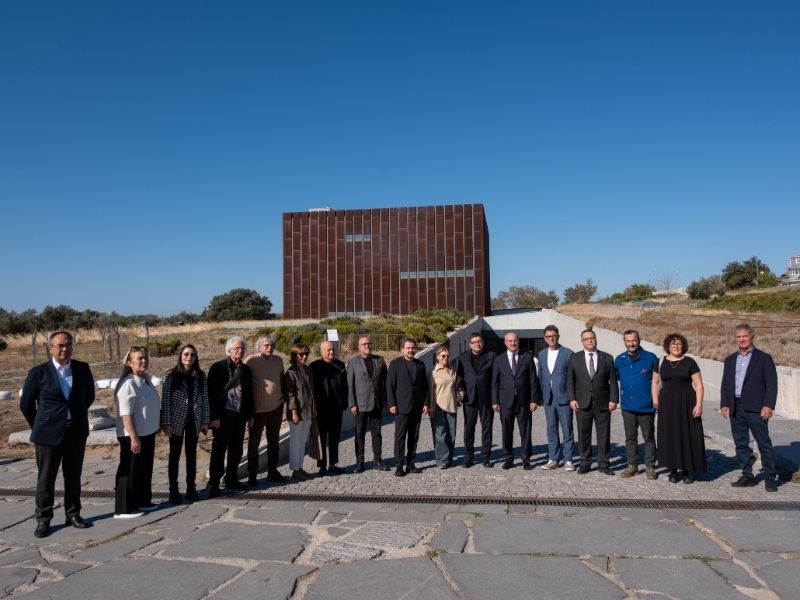
At the opening ceremony of the 10th Çanakkale Biennial at the Troy Museum, biennial founder Seyhan Boztepe, executive curator Deniz Erbaş, Dardanel Board Chair Niyazi Önen, and Kaleseramik Deputy General Manager for Operations Süleyman Soysal reflected on the biennial’s accumulated legacy in the city and the collaborations that have sustained it. Describing the biennial as a perfect fit for Çanakkale, Seyhan Boztepe expressed her joy that a dream conceived more than twenty years ago had reached its tenth edition, and voiced her hope that this cultural and artistic journey would continue with younger generations. Executive curator Deniz Erbaş emphasized that sustaining a biennial outside major metropolitan centers depends on solidarity among local institutions, universities, civil society, artists, and supporters.
Niyazi Önen, Board Chair of Dardanel, one of the biennial’s principal supporters, spoke about the company’s ties to the city, saying, “We were born in Çanakkale and grew up in Çanakkale.” He described the company’s support for culture, the arts, and sports as part of its responsibility to the city. Speaking on behalf of Kale Group, another principal supporter, Kaleseramik Deputy General Manager for Operations Süleyman Soysal drew attention to the memory embedded in ceramics in a region where Kale’s roots lie. He reflected on the meeting of contemporary art and the archaeological heritage of the Troy Museum as a connection between past and present, and outlined the contributions of Kale Group and the Kale Design and Art Center to the ceramics selection.
Other speakers at the opening at the Troy Museum included Mustafa Tanrıverdi, General Manager of the 1915 Çanakkale Bridge and Motorway, and İsmail Kaşdemir, Head of the Gallipoli Historical Site. Prof. Dr. R. Cüneyt Erenoğlu, Rector of Çanakkale Onsekiz Mart University; Muharrem Erkek, Mayor of Çanakkale; and Doç. Dr. Ömer Toraman, Governor of Çanakkale, also addressed the ceremony.
Mayor Muharrem Erkek underscored the importance of culture and the arts in urban life, saying, “When a city has culture and art, it is on the right path; it is free.” Governor Ömer Toraman highlighted the biennial’s continuity and the contributions made by artists who have settled in Çanakkale and established studios there, as well as by institutions and businesspeople who support the arts.
The 10th Çanakkale Biennial, titled “Metcezir // Ebb & Flow,” explores the relationship between water and land through Çanakkale’s coastal ecologies, ceramic production, and cultural memory.
The Troy Museum: Where Archaeology Meets Contemporary Ceramics
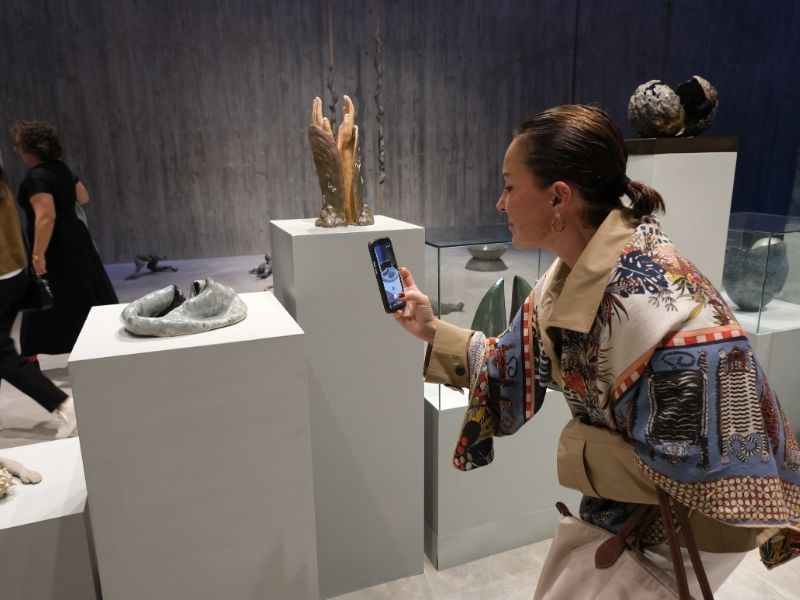
The Troy Museum, host of the opening ceremony, is also the main venue for “Special Focus: Ceramics,” a section presented for the first time at the biennial. Curated by Yasemin Ülgen, the selection invites visitors to consider Çanakkale’s ceramic heritage alongside experimental works by artists from different generations. The biennial exhibition at the museum features works by A. Serkan Aka, Ayça Telgeren, Aylin Zaptçıoğlu, Burçak Bingöl, Canan Bozbağ, Edward Burtynsky & Alkan Avcıoğlu, Elif Uras, Füreya Koral, Lara Ögel, Melike Abasıyanık Kurtiç, Meral Değer, Merve Mepa, Nermin Kura, Oddviz, SEDNA, SENA, Tardu Kuman, Uğur Cinel, Volkan Aslan, Yaren Yıldız, and Yasemin Özcan.
Mavi Ev: From Ceramics to Sound and Digital Images
Mavi Ev, located in the city’s bazaar district, brings together different materials and forms of expression in an exhibition spread across two floors. The ground floor presents a selection of ceramic and glass works curated by Ebru Nalan Sülün, featuring Derya Geylani, Gülden Ataman, and Kemal Tizgöl. Gülden Ataman’s ceramic musical instruments are accompanied by a video of musicians from Çanakkale playing them. The upper floor is devoted to works from the wider biennial selection, including an installation by Gerrit Frohne-Brinkmann, paintings by Gökçe Kınay, and a digital work by Süleyman Yılmaz that is activated through audience participation.
Traces of Archaeological Memory at the Korfmann Library
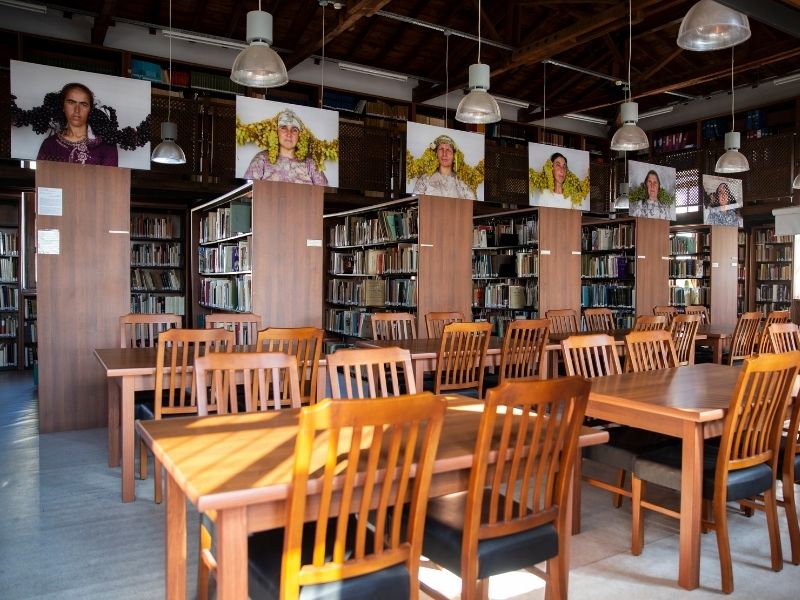
Housed in a building that once served as a school and tobacco warehouse, the Troia Foundation M. Osman Korfmann Library is one of the biennial’s venues in the city center, drawing on its scholarly resources on the archaeology of Troy and the Troad. The gallery presents works by Alex Long Yuan, Burcu Erden, Ece Kibaroğlu, Eymen Aktel, Funda Susamoğlu, and Murat Yıldız. The selection, which focuses largely on ceramics, engages with the library’s research-oriented identity. Funda Susamoğlu’s *Boy Carrying a Rooster* takes inspiration from a terracotta figure at the Troy Museum, while Eymen Aktel’s work with adobe brings Troy’s architectural finds into dialogue with the region’s building traditions. On the opening day, the library also hosted “Tidal Dream,” a musical performance by Çanakkale-based artist Babafonik.
Ecological Research at MAHAL, a Former Acorn Warehouse
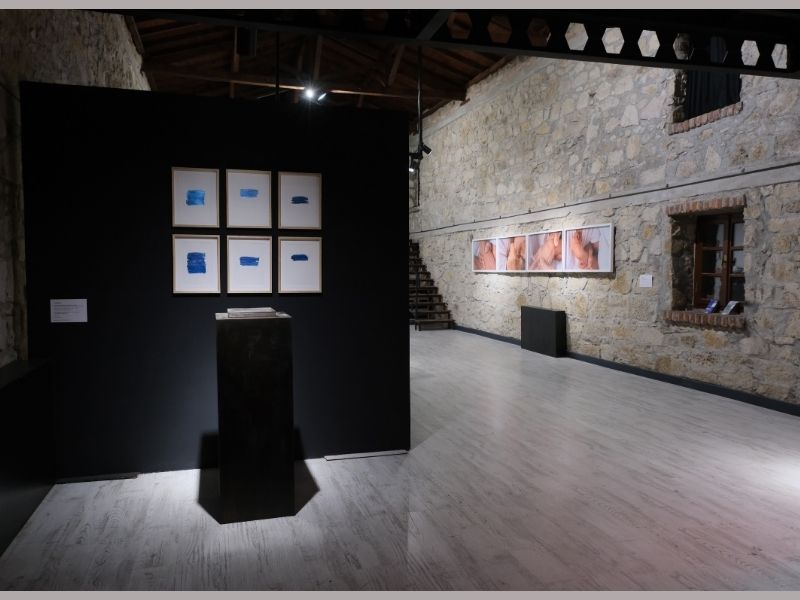
Converted from a former acorn warehouse on the banks of the Sarıçay River, MAHAL is CABININ’s year-round art space and one of the biennial’s central venues. The exhibition features Ece Kibaroğlu, Eda Çekil, Gözde Mimiko Türkkan, Hyeseung Lee, Johannes Vogl, Meliha Coşkun, and Sunbin Lim. Vogl’s project *Summer Rain – The Scent of Memories* traces the smell that rises after rain, drawing on the soil and plants of the Aegean region. The project was developed as part of “Sea Villas – Ecological Transitions,” a program launched in 2025 by Institut français de Turquie and Goethe-Institut Izmir.
Hakan Yılmaz at StudioMAHAL
Next to MAHAL, StudioMAHAL hosted the biennial’s preparation process through its dedicated art-production workspace and artist-in-residence program. Hakan Yılmaz’s work can be seen here as part of the tenth edition. Throughout October and November, the venue will also host piano performances and conversations about art.
DemirHAN: The Material Memory of Water and Earth
Located beside MAHAL in the former acorn-warehouse district, DemirHAN presents works by Evren Karayel Gökkaya, Gülfidan Özmen, Halil Yoleri, Mesut Öztürk, Mustafa Tunçalp, and Ozan Atalan on its ground floor. The relationships among water, earth, memory, and time form the selection’s shared framework. Ozan Atalan’s four-channel video installation and Mesut Öztürk’s new works, inspired by ceramic fragments and firebricks he encountered in Çanakkale, offer different approaches to these themes.
Balıkhane: From Marine Life to River Deltas
The exhibition on the first floor of Balıkhane, a building where the city’s seafood trade continues, moves from marine ecosystems to coastal life and archaeology. Participating artists include Adina Mocanu, Andreas Treske, Annika Boll, Carmen Bouyer, Dilara Akay, Fulya Çetin, Gizem Boyacıoğlu, İlhan Sayın, Laurent Lacotte, Leyla Pekmen, Öznur Işır, and Serdar Yılmaz. Adina Mocanu’s fish paintings form a frieze extending throughout the space. As part of “Sea Villas – Ecological Transitions,” Carmen Bouyer’s project *From Delta to Delta* connects the Gediz and Rhône deltas, while Annika Boll’s *Digital Gardening Underwater* creates a digital landscape from 3D scans of marine life and underwater textures.
A Public Artwork Inspired by Troy’s Layers in the Biennial Park
Çanakkale Biennial Park at Köprübaşı hosts a site-specific public artwork by Kay Aplin. Nine tile patterns inspired by Troy’s nine settlement layers have been brought together with ceramics produced in Çan. The work is intended to remain in the city after the biennial ends.
ASTİM Opens Industrial Studios to Exhibition Visitors
ASTİM, a collective formed by artists working in an industrial estate, has opened its production spaces to biennial visitors. At Helin Boztepe Studio, participating as ASTİM 1, visitors can see works by A. Serkan Aka and Gözde Mimiko Türkkan. Manfred Heinze’s work is on view at Süleyman Yılmaz Studio, participating as ASTİM 2.
Yukarı Tartışık Village: The Biennial’s Rural Stop
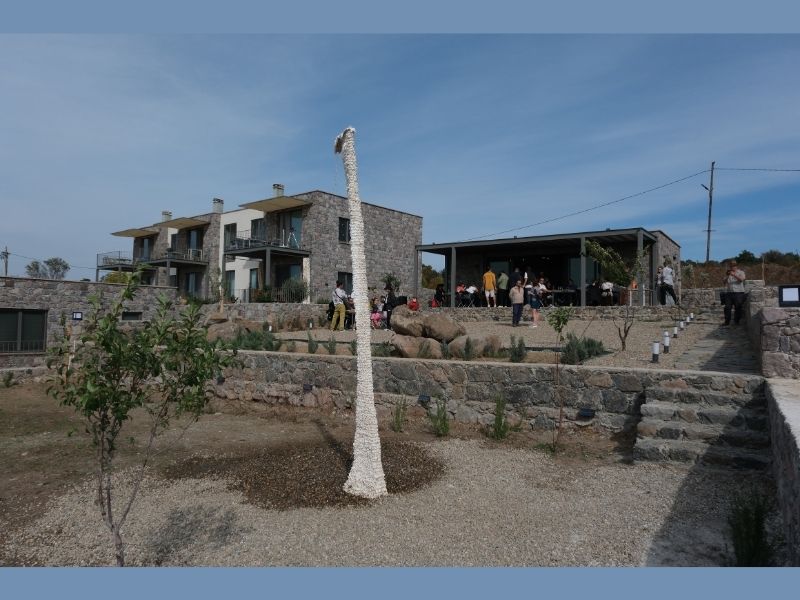
ORMOS in Yukarı Tartışık, a village in Ayvacık, is the biennial’s rural venue, with a settlement shaped by local stone and contemporary architecture. Works by Can Altay, Renée Levi, and Stijn Ank are exhibited here.
The Adatepe Olive Oil Museum Opens Its Production Heritage to the Biennial
Located in a former soap factory in Küçükkuyu, the Adatepe Olive Oil Museum preserves the region’s olive culture and the tools used in its production. Works by Andreas Treske and Fulya Çetin meet visitors at this biennial venue.
Three Artists in İda Blue’s Stone Houses
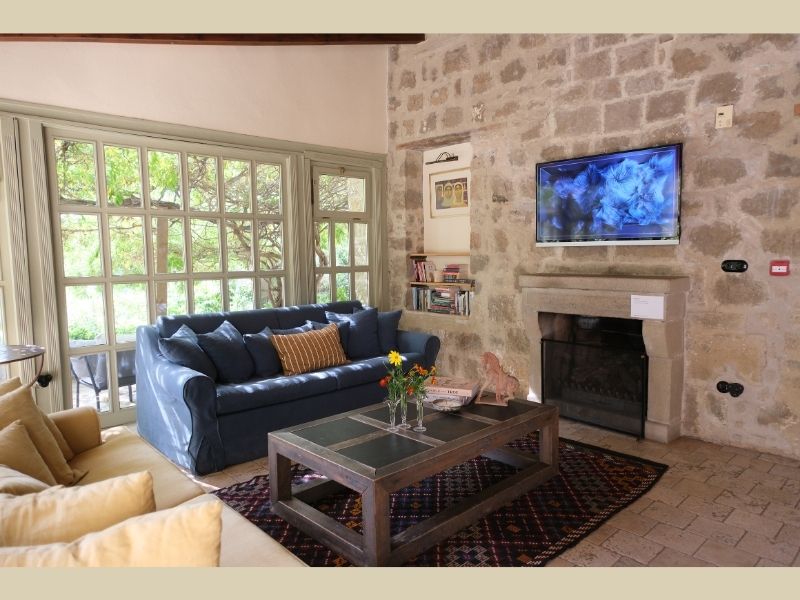
İda Blue, a collection of restored stone houses in Adatepe, hosts works by Dilara Akay, Hakan Yılmaz, and Meliha Coşkun in spaces scaled to domestic life. Alongside museums and studios, the biennial can thus also be experienced within the everyday fabric of the village.
From Exhibitions to Discussion, Music, and Collective Making
The program that began with the exhibition openings will continue throughout October and November with talks, panels, workshops, concerts, and film screenings. In collaboration with the Faculty of Fine Arts at Çanakkale Onsekiz Mart University and the Çanakkale Provincial Directorate of Culture and Tourism, a panel titled “The Relationship Between the Cultural-Artistic Ecosystem and Academia” will be moderated by Ebru Nalan Sülün. A closed workshop led by Sülün, titled “Museums, Cities, Possibilities, and Necessities,” will also focus on the relationship between institutions and the city. At StudioMAHAL, Erdinç Alnıak will take part in an art conversation titled “Alone Against the World” (*Ele Güne Karşı Yapayalnız*).
As part of StudioMAHAL’s music program, Mehmet Fatih Turan will perform Morton Feldman’s *For Bunita Marcus* and Dennis Johnson’s *November*. AVA Trio will give a concert at LODOS. Güneşane, an ecological farm and educational space in Paşaköy near Assos, will host screenings of Mark Verkerk’s documentary *Planet Soil*.
At ÇATKAV, Galip Dursun’s workshop for adults, “Stories Washed Ashore: What the Sea Brings Back,” will explore the biennial’s water theme through storytelling. The children’s program includes Kevser Şahin’s *Where the Water Recedes*, Yıldız Çapkan’s *A New Life for Ceramics in the Sea*, Nini Önözden’s *From Cilicia to the Troad*, and printmaking workshops by Aytuğ Aykut. Erdinç Alnıak’s biennial tour and workshop with children at MAHAL Sanat will also offer an opportunity to explore the exhibitions together.
Parallel events include “Kıyıda” at Mekan Blogspot, a group exhibition by the Kırsaldan Sanat Collective in Bayramiç, and the exhibition “Before It Disappears” at the State Fine Arts Gallery of the Çanakkale Provincial Directorate of Culture and Tourism. The exhibition *Pixels of Time*, led by project coordinator Didem Çatal, will open at the ÇOMÜ Faculty of Fine Arts. The program will culminate at the end of November with the opening of “Metcezir,” the 3rd Invitational International Poster Exhibition, organized in collaboration with the ÇOMÜ Faculty of Fine Arts at MAHAL Sanat.
The 10th Çanakkale Biennial was held with principal support from Dardanel, Kale Group, and the Kale Design and Art Center, in collaboration with the Çanakkale Provincial Directorate of Culture and Tourism, Çanakkale Municipality, and Çanakkale Onsekiz Mart University. The Troy Excavations Directorate, ÇATKAV, and the Troia Foundation were local partners, while the 1915 Çanakkale Bridge and Motorway served as an institutional supporter. New productions received support from Institut français Türkiye, Goethe-Institut, Tarabya Cultural Academy, the Consulate of the Netherlands, SAHA Association, ClubHouse, Dereli Art, and ORMOS.
The biennial’s main exhibitions are open to visitors until November 20, 2026. The events program continues until November 27. For venue opening days and hours and the latest program, visit [www.canakkalebienali.com]
Organizers: Seyhan Boztepe, CABININ – Çanakkale Biennial Initiative, Troya Culture Association
Biennial Board: Deniz Erbaş, Ebru Nalan Sülün, Gu Zhenqing, Halil Yoleri, Loukia Thomopoulou, Rüstem Aslan, Seyhan Boztepe, Vince Briffa, Yasemin Ülgen
Supporting and Partner Institutions:
Principal supporters: Dardanel, Kale Group, Kale Design and Art Center (KTSM).
In collaboration with: Çanakkale Provincial Directorate of Culture and Tourism, Çanakkale Municipality, Çanakkale Onsekiz Mart University.
Local partners: Troy Excavations Directorate, ÇATKAV, Troia Foundation.
Institutional supporter: 1915 Çanakkale Bridge and Motorway.
Supporters of new productions: Institut Français Türkiye, Goethe-Institut, Tarabya Cultural Academy, Consulate of the Netherlands, SAHA Association, ClubHouse, Dereli Art, ORMOS.
Participating Artists: A. Serkan Aka, Adina Mocanu, Alex Long Yuan, Andreas Treske, Annika Boll, Ayça Telgeren, Aylin Zaptçıoğlu, Burçak Bingöl, Burcu Erden, Can Altay, Canan Bozbağ, Carmen Bouyer, Derya Geylani, Dilara Akay, Ece Kibaroğlu, Eda Çekil, Edward Burtynsky & Alkan Avcıoğlu, Elif Uras, Evren Karayel Gökkaya, Eymen Aktel, Fulya Çetin, Funda Susamoğlu, Füreya Koral, Gerrit Frohne-Brinkmann, Gizem Boyacıoğlu, Gökçe Kınay, Gözde Mimiko Türkkan, Gülden Ataman, Gülfidan Özmen, Hakan Yılmaz, Halil Yoleri, Hyeseung Lee, İlhan Sayın, Johannes Vogl, Kay Aplin, Kemal Tizgöl, Lara Ögel, Laurent Lacotte, Leyla Pekmen, Manfred Heinze, Meliha Coşkun, Melike Abasıyanık Kurtiç, Mark Verkerk, Meral Değer, Merve Mepa, Mesut Öztürk, Murat Yıldız, Mustafa Tunçalp, Nermin Kura, Oddviz, Ozan Atalan, Öznur Işır, Renée Levi, SENA, SEDNA, Serdar Yılmaz, Stijn Ank, Süleyman Yılmaz, Sunbin Lim, Tardu Kuman, Uğur Cinel, Volkan Aslan, Yaren Yıldız, Yasemin Özcan.
For further information and contact details, visit www.canakkalebienali.com