




















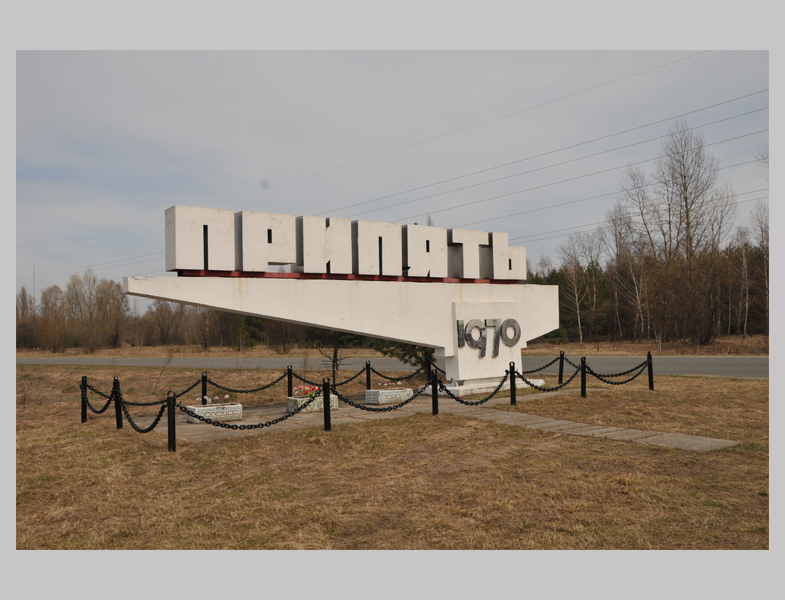
I had to make a special trip to go to the place I was most curious about in Ukraine, where I have traveled many times due to my work. In order to visit the Chernobyl Nuclear Power Plant, where one of the most important disasters in the world took place, special applications must be made at least twenty days in advance. Even today's radiation rate is at a level that threatens human life.













Text and Photos: Tulga OZAN
@tulgaozan @dunyadegismeden
Even though I was barely a child at the time of the explosion, I still remember the day of the Chernobyl disaster. This disaster was not perceived at first in our country, when we did not even know what nuclear energy was. I even remembered Cahit Aral, the Minister of Industry and Trade of the ANAP government at the time, drinking radiation tea to reassure the public. When I look at the increased cancer rates today and consider that most of us in the country have lost a loved one due to cancer, I cannot help but think of those days...
After traveling to Ukraine so much, I didn't want to return without seeing Chernobyl. I plan my trip in advance and send my passport information to my Ukrainian friend Xilinx. A period of 20 days is needed to obtain permission from official authorities and plan the trip. Of course, since it is not one of the most demanded places, it is important to arrange the date. It seems impossible for me to understand the explanation in English and I need to organize my travel dates according to the day the tour will be organized. Xilinx has not seen that region either and accepts to be a volunteer translator for me. The budget of a one-day trip is quite high. I'm paying $600 for the two of us, but it's well worth the experience.
We meet Xilinx very early in the morning and he takes me to the departure point of the tour. Before we leave, the police come, our passports are checked and they make us sign a waiver in Russian. One of the things that always surprises me in this country is the language. Even though they have their own native language, they even order in Russian in cafes. I only saw real use of Ukrainian in the city of Lviv in the west of the country.
The reason for signing the waiver is radiation. The human body's radiation exposure limit is 0.5 rem, but we will receive 22.5 rem of radiation during the day. It's really risky if we stay for a long time, but they say it won't affect us in such a short time. I was already nervous about coming and this event excites me even more.
The area affected by the Chernobyl Disaster at the first level is used as a military zone. We travel for about two hours from the city to the first checkpoint. The local guide who came with us doesn't seem very knowledgeable, but it doesn't matter; There will be private guides inside and I don't understand any Russian. Taking photos and the experience of being in the city of Pripyat is much more valuable. I chat with my friend along the way, but what I know about Chernobyl constantly wanders in the back of my mind. When we arrive at the military zone, entrance checks take about twenty minutes, and in the meantime I start taking photos.
Before the disaster, the Chernobyl Power Plant was on its way to becoming the largest power plant in the world. Although there were four reactors active at that time, it was the most shining region of the country, which would make a significant contribution to the energy needs of the USSR geography with a total of six reactors when completed. The city of Pripyat, located right next to the reactors, was known as the richest city of the Soviet Union. It was a city with a population of 50 thousand at that time, imagined as the future New York of the Eastern Bloc, to which the smartest minds from all Soviet countries migrated with the wealth brought by the power plant. On the way, the guide also claimed that these events were perhaps a conspiracy of the West, but I did not believe it so much.
Before our trip starts, they take us to an informational meeting. Here they explain the extent of the disaster that occurred with the explosion of the power plant. The biggest luck was the wind and Ukraine escaped with the least amount of injuries as the clouds sent it to the opposite side of Kiev. Only 3 million people were officially affected by the disaster, in which radiation 100 times the total of Hiroshima and Nagasaki combined was dispersed into the air, but it is said that 7.1 million people were indirectly affected in the later period. The saddest thing I saw on those maps was the direction of the radiation clouds when they left the country. They showed very clearly how they were advancing towards our country towards the south of the Black Sea. At that time, we thought it had passed us by. I wonder how many people got cancer because of this?
The most striking moment of the meeting is a heroic epic that happened at that time. When a disaster occurs, the government orders to evacuate the area quickly. Hundreds of buses arrive from surrounding provinces and while trying to get everyone they can out of the area, Kiev's firefighters sacrifice themselves to prevent more people from dying and extinguish the fire in the reactor until they die. None of them survived, but if it weren't for those heroes, the scale of the disaster would have reached an unimaginable level.
Now they give the final warnings and we go inside. Meanwhile, I learn how lucky I am because, due to security rules, the tour would be canceled if it rained. Since the rain stopped three days ago, permission has been granted today, but we are told that we should not step on places that are still damp. I came without knowing it, but if the tour had been canceled, the money I spent on the flight and hotel to come here would have been wasted. I would be really sad.
Before we start wandering around, they put us through a radiation test. The rate on each of us is noted and we will take a second test when we leave. They said that if there was a serious increase, they would quarantine it. I feel more comfortable because the guide inside speaks some English. I no longer pressure Xilinx to translate it every time, and after the explanations are finished, our guide briefly explains everything to me. He advises us to throw away our clothes when we return from here. I had already thought about this and came with the clothes I would use last, so it is not a problem for me.
While walking around Pripyat, I feel like I'm in Pompeii, Italy; It is a city where everyone suddenly left and ran away because of the disaster... But its past richness is also quite evident. The buildings in this settlement, where no nails have been hammered for almost 30 years and where no one will live due to radiation for another 900 years, still look more well-kept than the city of Kiev. It is not difficult to imagine what it would have been like if the disaster had not occurred. Buildings don't matter anyway. Considering that it was the brightest mass of all the Soviets who lost their lives here, this disaster has caused immeasurable financial wounds in the country.
One of the parts of the city that impressed me the most were the social facilities built in a way that was not available in the Eastern Bloc at that time. Serious gyms, pools and shopping malls appear to be intact. The Ferris wheel and bumper cars in the amusement park reminded me of American horror movies. I later learned that they were inspired by the images of this city for many urban war games on the computer. When I entered one of the houses, I saw a half-burnt doll standing on the ground, which made me say, "This is not enough, there is choreography," but there is a possibility that it is real.
When the first part is over, before going to the reactor, we take a lunch break in the social area established for the employees. As I was coming, I saw a few people on the street and asked who they were. Our guide told us that 5 thousand people live here. Since they no longer had a chance to survive cancer, they chose to die at least in their own city and returned here. They wander this city as the living dead.
No one can touch the food at the break point. Everyone brought sandwiches with them and they even drink water from their own stocks. I buy food and drinks thinking there is no problem considering what they sell here, but even Xilinx stays away. When I start eating, I start laughing at myself. If even I behave like this, we should not be angry with Cahit Aral; I guess this is a comfort that comes with being Turkish. But I still think they wouldn't sell it if there was a danger.
Our last stop is the reactor. When we come within 200 meters, our guide measures the air with a radiation measuring device: 24.5 rem. Approximately 50 times the human endurance limit. It's a strange feeling, it feels like I'm defying death even though I know there's no threat in such a short time. I have a strange peace inside me.
I am very happy to return to the power plant. One of the unforgettable days in my life is coming to an end. We thank Xilinx and say goodbye. To spend my last night in the city, I go to ArtCafe 44, one of my favorite places, listen to some jazz, and then continue with the Kiev nightlife. Since my flight is early in the morning, I don't have a chance to sleep much anyway. I enjoy living.