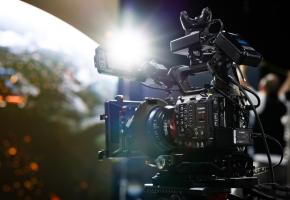





















We need light to take photos. In order to take good photographs, we need to know what light we need, for how long, and how much.













Our digital cameras make some measurements to detect the light in the environment, so we have information about the light in the environment. Using this information, we try to adjust values like Aperture, Shutter Speed, ISO, WB. But sometimes we may want our machine to do this, for example, so as not to miss the moment. Or sometimes we want to reflect our own preferences in our frame, not the machine's. In this article, you can find answers to your questions about how to use shooting modes effectively and how to achieve creative shots.
Text and Photos: Yüksel ALTUN
AUTO SHOOTING MODES
Auto Mode
In automatic mode; Our camera makes the best decision to choose shutter speed, aperture, ISO, White Balance (WB), sharpness and flash to get the best shot possible. On some cameras, it allows turning off the flash and controlling red-eye. However, it does not allow us to make changes at our discretion. We cannot control settings such as shutter speed, aperture, ISO, WB, exposure interference as we wish.
Although today's camera users do not use this mode much after receiving training, this mode is mostly used when shooting with mobile devices. Photography exists with light. If there is no light, there is no photo. For this reason, I personally recommend this mode on cameras for document moment photography where the light is very low.
Portrait Mode
When you switch to portrait mode, your camera will automatically choose an open aperture. (Aperture features will be explained in detail under the Depth of Field Priority Mode heading.) Open aperture (small value) keeps your background out of focus; It ensures that our model is clear and the background is blurred.
Portrait mode works best when photographing a single subject. For this, the object must be approached appropriately in the frame. Portrait mode on cameras works with depth of field priority. If we are shooting in backlight or if the light is insufficient, we activate the flash automatically and cannot turn it off.
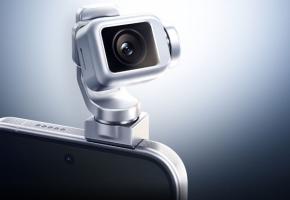
Portrait and depth-of-field priority shooting can also be done on mobile devices with Portrait Mode. As with most machines, the f value can be changed or the depth can be controlled with a slider. Depending on the model of mobile device, portrait depth of field can be changed after shooting if desired.
Macro Mode
Macro mode is used for close-up shots.Ideal for shooting flowers, butterflies, insects or other small objects.Different digital cameras may have macro modes with different capabilities, including different focusing. There may be clarity problems in the macro because the depth of field is very narrow. If possible, hold your camera parallel to the object you're photographing, otherwise you'll find most of it will be out of focus.
Since macro mode is also an auto mode, your camera's built-in flash will probably fire automatically when taking photos of close objects. For shooting without flash, Depth of Field Priority Semi-Automatic Mode should be used.
Macro mode can also be used on mobile devices. It activates when you get close to the subject in portrait mode or photo mode. In some models, it is available as Macro Mode.
Landscape Mode
This mode is the opposite of portrait mode, where we want the background depth of field to be greater. Depth is achieved in the photograph by narrowing the aperture, that is, by increasing the value. Thus, the clarity of the background is increased. Using a small aperture may cause slow shutter speed in low-light environments. In this case, we need to stabilize our camera and use a tripod.
Sports Mode
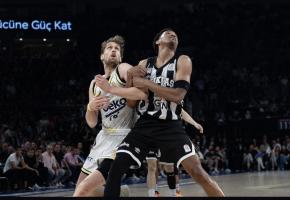
Taking photos of moving objects is what sports mode is designed for.People doing sports or pets, cars, wildlife, etc. Ideal for taking photos of moving objects, including Sports mode attempts to freeze the action by increasing the shutter speed.When taking photos of fast moving objects, you can increase your chances of capturing them by panning your camera with the subject and/or trying to pre-focus your camera on a spot where the subject will be when you want to take the photo.
When using sports mode on cameras, it would be correct to take burst shots appropriate to the speed of the movement. Although it is difficult to make a choice as a result of serial shooting, the desired movement can be captured and the others can be deleted.
On mobile devices, shooting can be done either by taking burst shots in automatic shooting mode or by adjusting the shutter speed in PRO mode.
Night Mode
It is a fun mode that can be shot at night and in low-light environments. Night mode is also called slow shutter speed. In low-light conditions, it sets your camera to use a longer shutter speed to help capture details of the background, but also fires a flash to brighten the foreground.In this mode, whether you use a camera or a phone camera, you must use a tripod, otherwise your photo will be blurred.
Night mode on mobile devices can be set by adjusting the shutter time. Motion effects can also be created in live action mode. In mobile devices with PRO mode, the shutter speed is reduced.
OTHER AUTO MODES
Apart from the commonly used modes above, the modes we will list now are generally included in our digital machines. Of course, with technological developments, there are also automatic mode machines with different features that we have not included in this article.
Movie Mode – The video shooting mode of our camera
Panoramic Mode – Mode to combine multiple photos taken panoramic
Snow Mode – Mode that controls the light due to reflection in the snow (Our camera underexposes as a result of light reflection in the snow. The photo may appear a little dark. We can fix this with + exposure intervention. This mode tries to control this.)
Fireworks Mode – Can be used in fireworks shows.
Child or Pet Mode – Automatic mode used to control shutter speed and focus on fast moving subjects.
Underwater Mode – Underwater photography has its own exposure and color settings. It can be used for this purpose. Of course, you need to use a housing when using it.
Beach Mode – As in snow mode, reflections are high and exposure problems occur. It controls these.
Indoor Mode – Helps adjust shutter speed and white balance.
SEMI-AUTO SHOOTING MODES
The most important task of shooting modes is to control the exposure triangle, namely Aperture, Shutter Speed and ISO. Aperture or Shutter Speed is controlled according to our priority of depth of field or movement, and ISO is controlled according to the light. This system was also present in the automatic modes above. Our machine was automatically trying to give the best setting. In the modes we will list now, this system will be controlled by us.
Unlike automatic mode, in all semi-automatic modes +/- exposure manipulation can be used to control lightness and darkness in the photo. Only in M-Manual mode, exposure manipulation can be made according to the selected aperture, shutter speed and ISO value.
Aperture Priority Mode (A/AV)
Aperture priority mode is used when we want to control the 'depth of field' in shooting. Before taking a photo, we determine a priority according to the characteristics of the photo we will take. When we want a clear object in the front and depth in the background, texture, detail and portrait shots, we narrow the clear area by using open aperture, that is, small values. In landscape or architectural shots, we generally prefer the clarity to be wider and use a small aperture, that is, we control the depth of field by increasing the aperture value.
In this mode, the aperture is determined by us according to the need. Our camera determines the shutter speed according to the light measurement system. If the shutter speed is below 1/50 or the selected focus, a tripod should be used.
For example, if we are shooting at 200 mm, the shutter speed should not be below 1/200. I'm assuming there is no anti-vibration in this example. The lower value requiring a tripod is determined according to the anti-vibration system.
If we are shooting in low light and want to shoot without using a tripod according to the above values, we should control the shutter speed by increasing the ISO value.
Shutter Priority Mode (S/TV)
Another preference in photo shoots is the 'action' priority. This is sometimes used to freeze movement in sports or bird shooting, and sometimes to create a veil effect in clouds or waterfalls. In this shooting mode, we determine the shutter speed according to need. Our camera automatically determines the aperture according to the light measurement system and ISO.
If the shutter speed is below 1/50 or according to the focal length, slow shutter speed shots are taken and it is necessary to use a tripod. In this shot, ISO is set to the lowest level (50-60-100) depending on the light.
To freeze the movement, the shutter speed is determined according to the speed of the movement. This value is at most 1/8000 on most machines. At high shutter speeds, it is necessary to increase the ISO value according to the light.
Program Mode (P)
Program mode is similar to automatic mode. Aperture and shutter speed are determined by the camera according to the light. We can adjust other settings such as ISO, white balance, exposure manipulation. (This is the difference from automatic mode; in automatic mode, all these settings were made by the camera.)
It can be used as a mode in which minor interventions are made for beginners in photography. On the other hand, in low-light environments, it can be preferred as a mode that provides flash control by automatically adjusting the ISO value, controlling exposure intervention and white balance. Because the flash cannot be controlled in automatic mode. (Some cameras have automatic mode without flash.)
Manual Shooting Mode (M)
In manual mode you have full control over your camera. Exposure is under your control. Shutter speed, aperture, ISO, white balance, flash, etc. You need to consider all the settings involved. This mode provides exposure flexibility depending on the effect you want in the photo.
Manual mode is used especially when using BULB mode, which is called long exposure. On most machines, BULB mode appears after 30 seconds. Some machines also have BULB mode. BULB mode is used for creative long exposures, star exposure, fireworks, lightning/lightning shots using an ND filter.
Last Word
I personally do not prefer manual mode in environments where the light and shooting priority change frequently. Whatever is my priority, I use that mode. However, I generally prefer manual mode for location and portrait shooting or in the studio where the light is constant.
Although it may be easy to use automatic mode on new model cameras and mobile devices, you can start using Manual Mode or Semi-Automatic Modes (A/AV, S/TV) to improve your photography and capture more pleasing frames.