



















Assoc. Prof. is one of the successful names who studied photography at the school and embarked on an academic journey on this path. Mustafa Bilge Satkın. He works and gives lectures in the fields of documentary and news photography at Marmara University Faculty of Fine Arts.













He is also busy with multiple social documentary photography projects. In the midst of this intensity, we asked our teacher, who accepted GezginFoto's interview offer, what we were wondering about photography.
Assoc. Who is Mustafa Bilge Satkın?
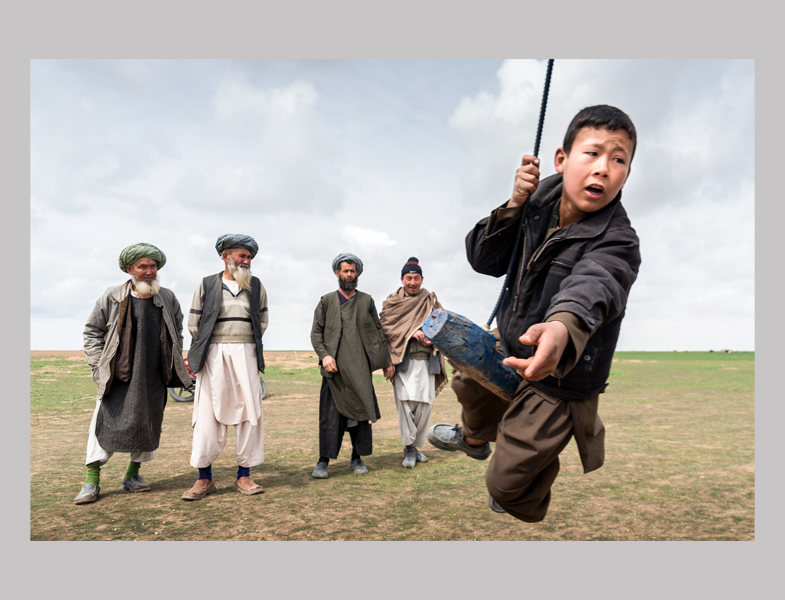
He completed his undergraduate and graduate studies at Marmara University, Faculty of Fine Arts, Department of Photography, and his Art Proficiency Education at Mimar Sinan Fine Arts University. He has been teaching at Marmara University Faculty of Fine Arts since 2006. He participated in many group exhibitions at home and abroad. He opened his first personal exhibition in 2010 with the exhibition titled "Black-White Istanbul", which consisted of photo interviews taking place in Istanbul. In 2011, his second personal exhibition titled "Scarecrow" was held at the Bursa International Photography Festival (BursaFotoFest) and his third personal exhibition, "Timeless Country Afghanistan", was held at the International Beşiktaş Photography Festival in 2014. The photo-interviews he took in countries such as Iran, Yemen, Afghanistan and Lebanon were published in Anadolu Agency, Afp and Getty Images. He still continues to work on documentary photography with social content.
Sir, can we get to know you briefly?
First of all, I greet all photography lovers and readers. I am an academician and documentary photographer living in Istanbul. I have been working as a faculty member at Marmara University, Faculty of Fine Arts, Department of Photography since 2005. I am leading the courses titled Documentary Photography and News Photography. Apart from my academic career, I have been working on documentary projects focusing on issues such as social injustice, climate change and migration for the last 25 years.
When and how did your interest in photography begin? What kind of education did you receive?
I became interested in photography at the age of 14. There were a few people in my family who were into photography. The camera and black and white darkroom equipment were easily accessible to me. In the beginning, for me it was an obsession with mechanical tools. I was trying to understand their working principles. After I started taking my first photographs, I decided to study photography at University.
Marmara University Faculty of Fine Arts, where I studied photography, is a school founded in 1956 to implement the Bauhaus School. During the establishment phase, Prof. Dr. Adolf Schneck served as a consultant to select course contents and teaching staff. The first students were trained by Turkish teachers trained in Germany and Austria and became the head of the teaching staff. Throughout my education, I worked with many instructors who are experts in the documentary, experimental and theoretical fields of photography. Prof. Dr. Güler Ertan, Prof. Dr. Getting advice about my work and benefiting from the knowledge of instructors who are experts in aesthetics, design and art history, such as Sabit Kalfagil and Kâmil Fırat, helped me discover myself. I believe this process is vital for a photographer because when you have enough knowledge and experience, you can overcome all the challenges you face while working on a project.
Can we hear from you a memory from your education years that you would like to share?
I can never forget our trips to Türkiye with the late Sabit Kalfagil, one of my teachers during my university student years. These trips were very challenging for me due to the disciplined attitude of Sabit teacher. We would hit the roads at 4 in the morning, chasing the light. His love for photography and education has been an example for me both in my student and academic life.
You took part in many group exhibitions at home and abroad. You had personal exhibitions. We would also like to hear about your work. Which field do you like to be in more?
I generally work on long-term Social-Documentary projects. Climate crisis, environmental migration and social injustice are among the issues I have been interested in for the last 10 years. I think the subjects photographers choose are in relation to their own past. Even if you focus on the stories of people with whom you have no organic connection, you try to find a connection with your own life. Actually, this explains my reflex of looking at my stories.
How do you create a plan when starting a documentary photography project?
First of all, I try to understand the subject by doing detailed field work on the subject. Who are these people? What's the problem? Am I the right person to tell this story? After finding answers to these questions, I write my article. The article constitutes my road map. I'm looking for photos that correspond to each sentence. Of course, there are always surprises encountered outside the road map. And these photographs can create unique narratives.
I build relationships with people while shooting my stories. First of all, we need to know that when the camera enters an environment, it affects the plot of the event there. To eliminate this, you need to get people used to your presence there. I take care of this. I spend as much time as possible with the subject. This is an important rule of slow journalism. An environment of mutual trust needs to be established. It's important to show them that I'm the right person to tell this story. Once these conditions are met, your presence there is not questioned. This can also create photographs in which the storyteller bears silent witness.
What are the essentials of documentary photography?
Critical perspective, Originality, Silent testimony, Communication and Hard work
As far as we know, you are working on projects of the United Nations Development Program Turkey (UNDP). Can you give us information about these projects?
In 2017, with an agreement between the University where I work and the United Nations Development Program Türkiye, I was assigned for 1 year to produce a photography project in the United Nations Strategic plans. During this period, I worked on projects in various parts of Turkey in line with UNDP's sustainable development goals, which include poverty reduction, democratic governance, climate change, disaster risk and economic inequality. The photo interviews I produced during this process were featured in various publications of the United Nations.
You have had academic studies and dozens of students in the field of photography for nearly 20 years. What does the academic aspect of photography add to the person?
Since its invention, photography has always been an art form dependent on technology. Especially in the process that started with the digitalization of photography, the introduction of smartphones and social media channels into our lives caused an increase in interest in photography. A large number of people interested in photography emerged from all segments of society. Nowadays, it is very common to think that taking a photo is just the act of pressing the shutter button. For this reason, I think that the formal aspect of the photographs produced is mostly dominant and the content aspect is not given much importance. At this point, the photography education provided by art schools or academies is important. Because in photography education, the photographer has to benefit from the theoretical theories of many branches such as visual anthropology, sociology and social science.
As an educator photographer, what advice would you give to those who want to learn photography? Where should those who haven't studied this business start?
First, you should start by learning basic photography information with the help of a course or a book containing this information. Then, this information should be applied in practice for a while and the technique should be mastered. The process so far is actually the easiest. It is especially important to have knowledge about art history and the theoretical theories of photography and to read on this subject. You need to know and understand how those before you saw it. This way you can have an idea about the concept of aesthetics. The photographer must be sensitive to the world in which he lives. Those who want to become photographers should get rid of the idea that photography is created only by the act of pressing the shutter button, and should not forget that it is a tool of expression and has a relationship with a person's intellectual knowledge.
We are curious about your thoughts about the work done in the field of photography in Turkey. (Photography trainings, trips, competitions, photo marathons, exhibitions, books)
I think that most of the studies in the field of photography that you mentioned in Turkey are generally aimed at amateur photographers. In this context, photography training and trips can be considered important for the development of amateur photographers. Although I think that photography competitions have a motivational effect on photographers, I think the format of these competitions should change. Turning such competitions into photography project grants will contribute more to the country's photography. Apart from this, having only one photography festival in Turkey is a significant loss for photography. Photography festivals are important meeting points for both photographers and photography lovers, bringing together amateur and professional photographers, where you can access many qualified exhibitions, portfolio evaluations and panels. I hope the number of these photography festivals increases.
Are there any photographers around the world and in Turkey that you follow with interest?
Actually there are too many names. I spend a lot of time following international photographers and reviewing their photo albums. If I had to mention a few names; The work of Diane Arbus, Vanessa Winship, Simon Norfolk and James Nachtwey has always impressed me. There are photographers I follow in Turkey. These are generally photographers who produce long-term projects in the field of social documentaries.
What is your take on the photo 'mania' on social media? How do such platforms affect photography?
Although the most obvious mission of photo-based social media platforms seems to be to mediate people's efforts to reflect their own image (personas), it is noteworthy that it has now become a medium where many branches of art are exhibited. The productions of amateur or professional artists, as well as the visual products of corporate structures, agencies, museums, art galleries and printed media, have gained a wide place on these platforms. The majority of amateur and professional photographers who take photographs use these platforms to share their portfolios and receive comments from other users (viewers).
What do you think about today's photography trends?
There is a misconception that the street photography style is newly emerging. Street photography is a style of photography that has been widely produced for nearly a century since cameras became portable. The best-known masters of the genre are photographers such as Henri Cartier-Bresson (who popularized the term "decisive moment"), Robert Frank (known for his groundbreaking book "The Americans"), Helen Levitt, Garry Winograndi, and Elliot Erwitt. Especially the popularization of the use of some photo-based social media channels has brought this style of production to the fore. There can be a difference in style between the street photographs produced in the past and the street photographs produced today. It is noticeable that the geometric structure and light properties of today's street photography productions are more prominent. The term "Contemporary Street Photography" is now used for these street photographs produced today in various sources.
What will those who look at today's photo/photography see after 50 years?
In fact, what we see when we look at photographs from 50 years ago, those who look at today's photographs 50 years later will have similar ideas. Currently, it still carries the mission of being a photographic document. Today, there is still information you can read about the period in which documentary photographs were taken. I think this will change in the future. I am skeptical about how accurate these photographs will provide information about the past in the future, especially due to the fiction-based structure of Post-Documentary productions, which have become widespread.
Can we get information about any projects you are planning or working on?
My priority for now is to complete my project called "Drowned History", which was awarded the Lucie Foundation Scholarship in 2021, by creating a photo book.I've been experimenting to find the right design and proper arrangement.I am also working on another photo story with sociological and devastating environmental impacts. I've been working on this project for just a year. I don't want to reveal his name right now. I generally prefer to work on several projects at the same time.I keep my excitement fresh by changing my focus between different projects from time to time.